
About Mahlon Hoagland
Lived 1921 – 2009 (aged 87). Mahlon Hoagland was an American biochemist, university teacher and molecular biologist.
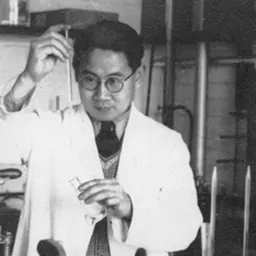
Mahlon Bush Hoagland (October 5, 1921 – September 18, 2009) was an American biochemist who discovered transfer RNA (tRNA), the translator of the genetic code.
Biography
Early life Mahlon Bush Hoagland was born in Boston, Massachusetts, in 1921 to Hudson Hoagland and Anna Hoagland. Hudson was an American physiologist who was known for co-founding the Worcester Foundation for Experimental Biology with Gregory Pincus. Mahlon Hoagland graduated from The Hill School in 1940 and attended Williams College, and in 1948 received his M.D. from Harvard Medical School with intentions of becoming a pediatric surgeon.
Hoagland took a research position at Massachusetts General Hospital in the lab of Paul Zamecnik, where he researched and detailed the role of transfer RNA in forming proteins.
From 1953 to 1967, Hoagland served as an associate professor of microbiology at Harvard Medical School. In 1970, Hoagland became scientific director of the Worcester Foundation for Experimental Biology, retiring in 1985 after 15 years in the directorship. In the early 1950s, Hoagland and his associates were able to show that polypeptide synthesis occurs on ribosomes. They did this by giving a rat injections of radioactive amino acids, waiting for a defined period of time, extracting the liver, and examining sub-cellular fractions for radioactivity. He found that after longer periods of times (hours, days) radioactively labeled proteins were present in all subcellular fractions. However, if they allowed less time to pass, radioactivity was found in only certain particles, which they deemed the sites of proteins synthesis. These particles were named ribosomes.
During their experiments with rat liver cells, Hoagland and Zamecnik noticed that in the presence of ATP, amino acids associate with heat soluble RNA, which was later named transfer RNA (tRNA). This amino acid and tRNA complex was later called aminoacyl-tRNA. Hoagland's major contribution to the laboratory was in his work with amino acid activating enzymes. He discovered that certain enzymes were required to activate amino acids so they could associate with tRNA molecules and eventually be incorporated into new protein molecules. These enzymes were named aminoacyl tRNA synthetases. Incidentally, this lab's discovery of tRNA supported the theory of complementarity (molecular biology) proposed by Watson and Crick.
He was awarded the Franklin Medal in 1976.
Mahlon Hoagland's other work involved the carcinogenic effects of beryllium, biosynthesis of coenzyme A, as well as liver regeneration and control.
Don’t just read it —
keep it.
Full-length biographies made to live with: read them, listen on the way to work, watch them tonight.
- E-book
- Audio
- Video
Instant download · yours to keep · every purchase keeps this site free
Important facts
People in Mahlon Hoagland's life
Named in this biography and alive at the same time


Related people
Same field, nearest in time




Contemporaries
People whose lives overlapped Mahlon Hoagland's




Frequently asked questions
Who was Mahlon Hoagland?
biochemist (1921-2009)
When was Mahlon Hoagland born?
Mahlon Hoagland was born on 5 October 1921 in Boston.
When did Mahlon Hoagland die?
Mahlon Hoagland died on 18 September 2009 in Thetford.
What was Mahlon Hoagland's occupation?
Mahlon Hoagland was a biochemist, university teacher and molecular biologist.
What nationality was Mahlon Hoagland?
Mahlon Hoagland was American.
Sources & further reading
Cite this page
APA: Biography.guide. (2026). Mahlon Hoagland. https://biography.guide/mahlon-hoagland/
MLA: "Mahlon Hoagland." Biography.guide, https://biography.guide/mahlon-hoagland/.
Chicago: "Mahlon Hoagland." Biography.guide. https://biography.guide/mahlon-hoagland/.
Data last updated: 2026-09-20 · Spot an error? Report a correction.
Page generated 2026-09-27 05:15 UTC