
About Luis Corvalán
Lived 1916 – 2010 (aged 93). Luis Corvalán was a Chilean politician, journalist and teacher.
Luis Nicolás Corvalán Lepe (14 September 1916 – 21 July 2010) was a Chilean politician, teacher, and writer. He was the general secretary of the Communist Party of Chile (PCCh) for more than three decades and was twice elected to the Senate of Chile.
Corvalán was detained by the Government Junta following the 1973 Chilean coup d'état. The USSR worked relentlessly for Corvalán's freedom, preparing plans for a military strike against Chile to rescue him, and orchestrating an international pressure campaign aimed at securing his parole. In 1976, the released Corvalán in exchange for the freedom of the Soviet dissident Vladimir Bukovsky, with the prisoner swap occurring in Switzerland. He later underwent plastic surgery to disguise his features before secretly returning to Chile to help organize opposition to the presidency of Augusto Pinochet.
Early life and education Luis Corvalán was born on 14 September 1916 to Moisés Corvalán Urzúa and Adela Lepe Roa near Puerto Montt, Chile; one of six children. His father abandoned the family when Corvalán was five. In 1950—during a period when the PCCh was outlawed—he was elected to the party's central committee. — he criticized Cuba's interventions into the political affairs of other Latin American nations, writing in Pravda that "the specific characteristics of one revolution, such as the Cuban revolution, can be repeated in another place but not in the same form". The following year, he supported the Warsaw Pact invasion of Czechoslovakia. A 1964 analysis by the U.S. embassy in Chile concluded that Corvalán based the decision to align with Salvador Allende's socialists on a "sureness of expectation that serious disagreements with Communists on Allende’s part will not arise" and that "even should Allende be tempted to turn on Communist partners once in office he would be unable do so". The coalition between the Communist Party and Socialist Party later continued in the Unidad Popular movement.
Corvalán has been credited with the growth of the Communist Party during the period of reemergence and, by 1970, it was receiving up to 20 percent of the vote in congressional elections and counted among its members the poet Pablo Neruda, the writer Francisco Coloane, and the songwriter Víctor Jara.
Arrest and campaign for release Two weeks after the 1973 Chilean coup d'état, Corvalán was placed under arrest on a charge related to alleged subversion of the Chilean armed forces.
During an October 1973 session of the United Nations General Assembly, a shouting match erupted among delegates after Soviet ambassador Yakov Malik issued a demand that the UN intercede to prevent Corvalán's execution, which was rumored to be forthcoming. Chilean ambassador Raúl Bazán denied that any such execution was planned, prompting a heated exchanged between Bazán and Malik that Saudi Arabian ambassador Jamil Baroody tried to break up. This prompted Bazán to call Baroody a "fool", which, in turn, provoked Baroody into an argument with the Chilean. F. Bradford Morse, representing the United States, attempted to calm the conflagration before Leopoldo Benites, presiding, was able to restore order. In 1975, the KGB planned an operation to rescue Corvalán from Dawson Island (pictured). Corvalán was subsequently transferred from the military academy to the prison colony on Dawson Island.
In 1975, the KGB conducted satellite reconnaissance of Dawson Island and drew up plans to launch an assault against it. The helicopters would then be destroyed in deep ocean so as to leave no physical evidence of the attack.
During the years of Corvalán's detention, an international campaign organized by the Soviet Union agitated for his release. the United Nations Commission on Human Rights made a formal request for his release from imprisonment; and demonstrations in support of Corvalán were held around the world in places such as West Germany, Italy, and the United States. Chilean artists living in the Netherlands formed the "Brigada Luis Corvalán", a collective that installed public art pieces protesting the Pinochet government. In East Germany, a series of two commemorative postage stamps memorializing Corvalán and the deceased president Salvador Allende, titled "Solidarity with the People of Chile", were released.
In 1975, the Inter-Parliamentary Union (IPU), acting on testimony given to an ad hoc investigative committee regarding the detention of Corvalán, enacted a resolution calling the matter "a grave international concern" and requested the Chilean government "to release all political prisoners forthwith". Testimony was provided to the IPU's committee by a variety of organizations and individuals, including the Women's International League for Peace and Freedom, Amnesty International, the International Union of Students, the Women's International Democratic Federation, Luis Guastavino, and others.
According to Michael Zourek of Charles University's Centre for Ibero-American Studies, the Soviet Union sought to catalyze international support for its policies in Latin America by positioning itself as the prime advocate for the imprisoned Corvalán who was presented as a hero.
Release In November 1976, according to Amnesty International, the Government Junta announced the release of 300 political prisoners, while an additional 17 were soon after released subject to expulsion from the country. The following month, Chile agreed to release Corvalán provided that the Soviet government similarly released the dissident Vladimir Bukovsky. The idea for a prisoner swap was first proposed by Andrei Sakharov and was brokered by the United States, as Chile and the Soviet Union had previously ended diplomatic relations. The transfer of prisoners occurred in Zürich, Switzerland.
Following the exchange, Corvalán was flown to Moscow where he received a rapturous welcome and was feted as the guest of honor at the 70th birthday of Leonid Brezhnev.
The Argentine newspaper La Opinión, commenting on the exchange, opined that it demonstrated "Santiago and Moscow have very similar concepts about the value of freedom and of people; both invoke elevated principles but reduce man to an object of barter."
Years abroad During his years abroad, Corvalán maintained his position as general secretary of the PCCh—which was now operating underground—leading it from the USSR. He called for the different Chilean political parties to temporarily put aside their conflicts and focus on the overthrow of the Government Junta.
In advance of the 1988 Chilean presidential referendum, Corvalán led a faction of the Communist Party that sought to boycott the election, preferring instead to continue the guerilla insurgency.
Later years In the 1980s, Corvalán underwent plastic surgery in the Soviet Union to alter his appearance. The procedures were reportedly performed by the alleged KGB-affiliated surgeon Aleksandr Shmelev; according to an account given by Corvalán in 2011, the surgery was done by a "Soviet Russian who had fought in the war". Disguised with new facial features, he secretly returned to Chile in 1988 to help organize opposition to the Pinochet government. Corvalán with Ernesto Araneda Briones and Volodia Teitelboim, ca. 2007 Corvalán stepped down as general secretary of the Communist Party of Chile in 1989, ending more than three decades of his leadership.
Personal life Corvalán married Lily Castillo Riquelme and, with her, had three daughters and a son, Luis Alberto. where he died of a heart attack, reportedly due to cardiac damage resulting from the methods used in his interrogation during his imprisonment.
In 2023, Russian Federation foreign minister Sergey Lavrov, in an article for the Rossiyskaya Gazeta observing the 50th anniversary of the 1973 Chilean coup, recalled that Russia, as successor state to the Soviet Union, was responsible for demanding "the release of Chile's heroic son Luís Corvalán from his imprisonment in a concentration camp, and succeeded in attaining this aim".
Cultural impact in East Germany
During the 1970s, Chilean politics and resistance to Pinochet became a popular theme among East German youth, even those who had limited contact with the ruling Socialist Unity Party of Germany. Chileans like Corvalán presented an appealing vision of radical activism that was more vibrant than that offered by the ossified government of the GDR.
Corvalán's 1977 tour of East Germany was documented in the DEFA film (We Will Overcome Through Solidarity), directed by Joachim Hadaschik. The film showed Corvalán's travels in East Germany where he met leaders of the Socialist Unity Party, gave public speeches, and attended rallies where Germans and foreign expatriates celebrated his freedom.
Don’t just read it —
keep it.
Full-length biographies made to live with: read them, listen on the way to work, watch them tonight.
- E-book
- Audio
- Video
Instant download · yours to keep · every purchase keeps this site free
Important facts
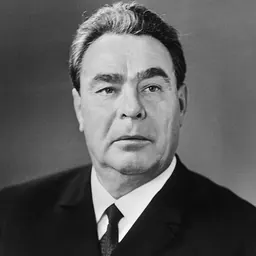
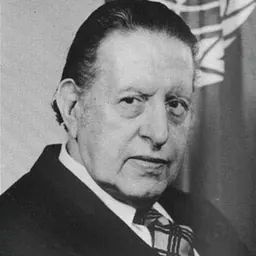
People in Luis Corvalán's life
Named in this biography and alive at the same time
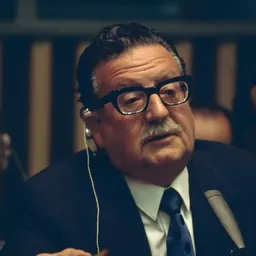

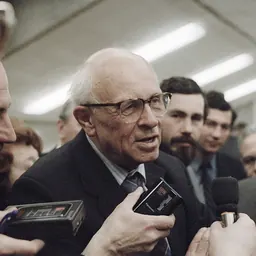
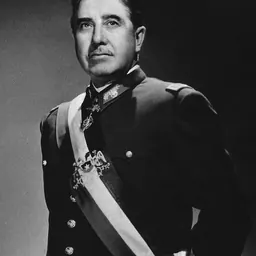
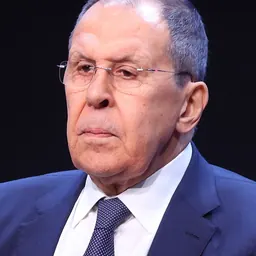

Related people
Same field, nearest in time






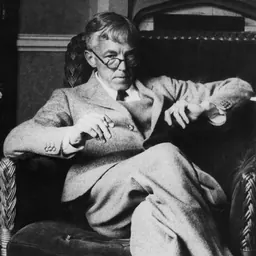
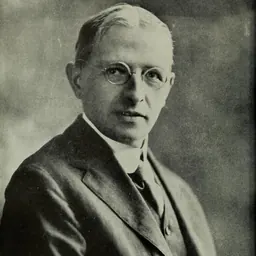
Contemporaries
People whose lives overlapped Luis Corvalán's



Frequently asked questions
Who was Luis Corvalán?
Chilean politician (1916-2010)
When was Luis Corvalán born?
Luis Corvalán was born on 14 September 1916 in Puerto Montt.
When did Luis Corvalán die?
Luis Corvalán died on 21 July 2010 in Santiago.
What was Luis Corvalán's occupation?
Luis Corvalán was a politician, journalist and teacher.
What nationality was Luis Corvalán?
Luis Corvalán was Chilean.
Sources & further reading
Cite this page
APA: Biography.guide. (2026). Luis Corvalán. https://biography.guide/luis-corvalan/
MLA: "Luis Corvalán." Biography.guide, https://biography.guide/luis-corvalan/.
Chicago: "Luis Corvalán." Biography.guide. https://biography.guide/luis-corvalan/.
Data last updated: 2026-09-20 · Spot an error? Report a correction.
Page generated 2026-09-27 05:20 UTC