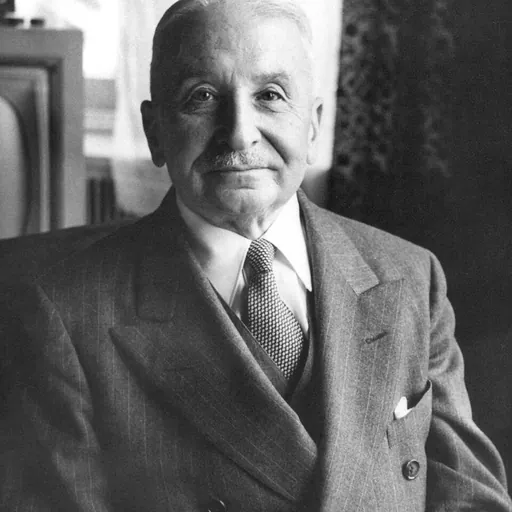
About Ludwig von Mises
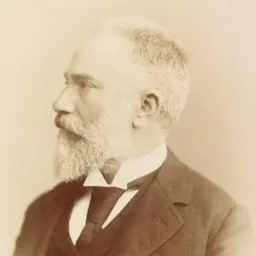
Lived 1881 – 1973 (aged 92). Ludwig von Mises was an American and Austrian economist, philosopher, university teacher and writer.
Ludwig Heinrich von Mises (; ; September 29, 1881 – October 10, 1973) was an Austrian and American political economist and philosopher of the Austrian school. Mises wrote and lectured extensively on the social contributions of classical liberalism and the central role of consumers in a market economy. He is best known for his work in praxeology, particularly for studies comparing communism and capitalism, as well as for being a defender of classical liberalism in the face of rising illiberalism and authoritarianism throughout much of Europe during the 20th century.
Since the mid-20th century, both libertarian and classical liberal movements, as well as the field of economics as a whole have been strongly influenced by Mises's writings. Economist Tyler Cowen lists his writings as "the most important works of the 20th century" and as "among the most important economics articles, ever". and the contemporary Austrian economics program led by scholars such as Peter Boettke at George Mason University.
Mises's most influential work, Human Action: A Treatise on Economics (1949), laid out his comprehensive theory of praxeology—a deductive, a priori method for understanding human decision-making and economic behavior. Rejecting empirical and mathematical modeling, Mises defended classical liberalism and market coordination as products of rational individual action. Beyond his published works, Mises shaped generations of economists through his longstanding private seminar in Vienna and later as a professor at New York University. His ideas deeply influenced students such as Friedrich Hayek, Murray Rothbard, and Israel Kirzner, who helped inspire the rise of postwar libertarian institutions in the United States, including the Foundation for Economic Education and the Ludwig von Mises Institute.
Mises received many honors throughout the course of his lifetime—honorary doctorates from Grove City College (1957), New York University (1963), and the University of Freiburg (1964) in Germany. His accomplishments were recognized in 1956 by his alma mater, the University of Vienna, when his doctorate was memorialized on its 50th anniversary and "renewed", a European tradition, and in 1962 by the Austrian government. He was also cited in 1969 as "Distinguished Fellow" by the American Economic Association.
Biography
Early life
Ludwig Heinrich Edler von Mises was born on September 29, 1881, into an Austrian-Jewish family in Lemberg, then the capital of the Kingdom of Galicia and Lodomeria in the Austro-Hungarian Empire and now part of Ukraine. A few months prior, his paternal great-grandfather Mayer Rachmiel Mises had been ennobled, receiving the honorific Edler (indicating a non-landed noble family) and the right to add the nobiliary particle von to his name; the Mises family had been involved in financing and constructing railroads. Mises's mother, Adele , was a niece of Joachim Landau, a Liberal Party deputy to the Imperial Council of Austria. His father, Arthur von Mises (died 1903), was stationed in Lemberg as a construction engineer with the Czernowitz Railway Company. Mises had a younger brother, Richard, a mathematician, probability theorist, and Vienna Circle member.
By the age of 12, Mises spoke fluent German, Polish, and French, read Latin, and could understand Ukrainian. There, Mises first encountered the works of Carl Menger, whose book Principles of Economics came to influence him significantly. In 1906, he was awarded his doctorate from the school of law. From 1913 to 1938, he was a professor at the university Mises's first major scholarly work, published in 1902, was an economic history of the region titled The Development of the Relation between Lord and Peasant in Galicia (1772–1848) (Die Entwicklung des gutsherrlich-bäuerlichen Verhältnisses in Galizien). In it, he analyzed the transition from feudalism to a liberal land-tenure system, showing an early interest in the mechanics of legal and economic freedom.
Throughout his life, Mises expressed an affinity for the Polish tradition of "Golden Liberty." He viewed the historical Polish-Lithuanian Commonwealth as a precursor to modern classical liberalism due to its decentralized power and resistance to absolute monarchy. He specifically praised the Polish victory over the Bolsheviks in the 1920 Battle of Warsaw, characterizing it as a defense of Western civilization against Eastern despotism. Biographers have noted that the "freedom-loving spirit" of the Galician Polish nobility remained a permanent part of his character, even after his move to Vienna and later the United States.
Life in Europe
In the years from 1904 to 1914, Mises attended lectures given by Austrian economist Eugen von Böhm-Bawerk. He graduated in February 1906 (Juris Doctor) and started a career as a civil servant in Austria's financial administration.
After a few months, he left to take a trainee position in a Vienna law firm. During that time, Mises began lecturing on economics and in early 1909 joined the Austrian Chamber of Commerce and Industry, serving as economic advisor to the Austrian government until he left Austria in 1934. During World War I, Mises served as a front officer in the Austro-Hungarian artillery and as an economic advisor to the War Department.
Mises was chief economist for the Austrian Chamber of Commerce and was an economic advisor of Engelbert Dollfuss, the austrofascist Austrian Chancellor. Later, Mises was economic advisor to Otto von Habsburg, the Christian democratic politician and claimant to the throne of Austria (which had been legally abolished in 1918 following the Great War). In 1934, Mises left Austria for Geneva, Switzerland, where he was a professor at the Graduate Institute of International Studies until 1940. Mises was invited to the Colloque Walter Lippmann, organized in Paris in 1938, and was a founding member of the Mont Pelerin Society in 1947.
While in Switzerland, Mises married Margit Herzfeld Serény, a former actress and widow of Ferdinand Serény. She was the mother of Gitta Sereny.
World War I During World War I, Ludwig von Mises was drafted by the Austrian government, despite being ideologically and morally opposed to the war. Like many who served in the front lines, he rarely spoke about his personal experiences, and even his Memoirs (1940) omits a detailed account of his time in the military. However, he briefly alluded to the harsh realities of war in his seminal work, Human Action (1949):
In Memoirs (1940), the only thing he had to say about the war was how it affected his work:
The same chapter concludes with how he coped with his involuntary servitude fighting as the aggressor in a war he wanted nothing to do with, and includes a quote from Virgil that would go on to become the slogan of the Mises Institute in Alabama:
It was during this service that he observed the war economy of Austria-Hungary, which would serve as the basis for his essay Economic Calculation in the Socialist Commonwealth (Die Wirtschaftsrechnung im sozialistischen Gemeinwesen), delivered first as a lecture to the Society for National Economy (Nationalökonomische Gesellschaft) in 1919 before being published in 1920. The institute was modeled after Ernst Wagemann's Berlin-based Institute for Business-Cycle Research. After the war, the institute was revived by Franz Nemschak as the Austrian Institute of Economic Research.
In 1934, Mises fled from Austria to Switzerland to escape the Nazis, and in 1940 he emigrated from Switzerland to the United States. On the day German forces entered Vienna during the Anschluss, they raided his apartment, confiscating his papers and library. These were believed to be lost or destroyed until rediscovered decades later in the Soviet archives in Moscow by Richard Ebeling and his wife Anna. At that time, Mises was living in Geneva, Switzerland. However, with the imminent Nazi occupation of France threatening to isolate Switzerland within Axis-controlled territory, he and his wife fled through France and reached the United States via Spain and Portugal. Mises became a visiting professor at New York University and held this position from 1945 until his retirement in 1969, though he was not salaried by the university.
For part of this period, Mises studied currency issues for the Pan-Europa movement, which was led by Richard von Coudenhove-Kalergi, a fellow New York University faculty member and Austrian exile. In 1947, Mises became one of the founding members of the Mont Pelerin Society.
In 1962, Mises received the Austrian Decoration for Science and Art for political economy at the Austrian Embassy in Washington, D.C. He is buried at Ferncliff Cemetery in Hartsdale, New York. Grove City College houses the 20,000-page archive of Mises papers and unpublished works. The personal library of Mises was given to Hillsdale College as bequeathed in his will.
At one time, Mises praised the work of writer Ayn Rand, and she generally looked on his work with favor, but the two had a volatile relationship, with strong disagreements for example over the moral basis of capitalism. The two thinkers' disagreement reached a critical point during a dinner conversation where Mises reportedly lost his temper and agreed that Rand was "a little Jewish girl who doesn’t know anything" during a heated argument, despite himself being Jewish. This was thought by the audience to be caused by impaired hearing on his part.
Creation of the Mises Institute
As a result of the economic works of Ludwig Von Mises, the Mises Institute was founded in 1982 by Lew Rockwell, Burton Blumert, and Murray Rothbard, following a split between the Cato Institute and Rothbard, who had been one of the founders of the Cato Institute. It was funded by Ron Paul.
The Mises Institute offers thousands of free books written by Ludwig Von Mises, Murray Rothbard, Hans-Hermann Hoppe, and other prominent economists in e-book and audiobook format. The Mises Institute also offers a series of summer seminars.
Contributions and influence in economics
Ludwig von Mises made significant contributions to the field of economics initially by seeking to integrate the teachings of Carl Menger and Eugen von Böhm-Bawerk into the classical economic framework of his time. He recognized the need to reformulate economic epistemology, which challenged the feasibility of socialism. Mises was also a forerunner in the movement to unite microeconomics and macroeconomics, arguing that macroeconomic phenomena have microeconomic foundations —nearly 50 years before this perspective was widely adopted by mainstream economics.
Ludwig von Mises acknowledged that, by the time of his writing, many core concepts from the Austrian school of economics had been integrated into mainstream economic thought. He noted that the distinctions between the Austrian school and other economic traditions had blurred, making the label "Austrian" more of a historical reference than a marker of a distinct, contemporary doctrine. This integration occurred as concepts like marginal utility, opportunity cost, and the importance of subjective value became widely accepted among economists.
In his first article "Economic Calculation in the Socialist Commonwealth", Mises describes the nature of the price system under capitalism and describes how individual subjective values are translated into the objective information necessary for rational allocation of resources in society. Mises argued the absence of market pricing results in inefficiencies within the economic system because central planners are deprived of the crucial information regarding opportunity costs needed to make informed decisions about resource allocation. and debate surrounding it would be pivotal in the Austrian revival that surrounded Hayek's 1974 Nobel Prize.
Mises developed his critique of socialism more completely in his 1922 book Socialism: An Economic and Sociological Analysis, arguing that the market price system is an expression of praxeology and cannot be replicated by any form of bureaucracy.
Mises emphasized that catallactics explains prices as they are, rather than as they "should" be. By adopting a value-neutral stance, it does not judge whether a price is "too high" or "too low", or "fair" or "unfair"; instead, it seeks to explain why a price exists at a particular level based on the interplay of supply and demand.
By focusing on prices as they are, catallactics aimed to avoid the pitfalls of culturally or ideologically biased assumptions, where economic policies are designed around idealized notions of what "ought" to happen, (i.e. some works that aim to prescribe the economy, not just describe it) which Mises argued carried them outside of the realm of the descriptive (or ) sciences. For Mises, introducing normative judgments transforms economics from a descriptive science into an ideological discourse. offering a systematic approach to understanding human behavior and decision-making. This work laid the groundwork for a comprehensive economic theory that accounted for the subjective nature of value and the complexity of individual choices, marking a significant departure
Mises used praxeology to further critique socialism, arguing that it is fundamentally flawed because it treats economics as a solvable, static problem akin to mathematical or engineering challenges. Instead, he argued, economics involves an open-ended coordination process that aims to align the diverse and equally valid subjective appraisals of millions of individuals.
However, while praxeology has been influential within the Austrian school of economics, it is not widely adopted in contemporary economic practice, which predominantly relies on empirical and mathematical methods to analyze and predict economic phenomena. Most mainstream economists view praxeology as lacking empirical validation and testability, thereby limiting its acceptance as a scientific approach within the broader discipline.
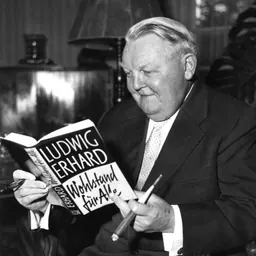
Personal connections Friends and students of Mises in Europe included Wilhelm Röpke and Alfred Müller-Armack (advisors to German chancellor Ludwig Erhard), Jacques Rueff (monetary advisor to Charles de Gaulle), Gottfried Haberler (later a professor at Harvard), Lionel, Lord Robbins (of the London School of Economics), Italian President Luigi Einaudi, and Leonid Hurwicz, recipient of the 2007 Nobel Memorial Prize in Economic Sciences.
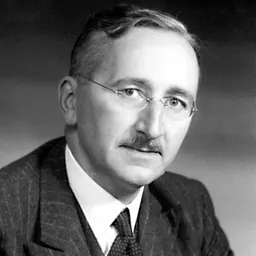
Economist and political theorist Friedrich Hayek first came to know Mises while working as his subordinate at a government office dealing with Austria's post-World War I debt. While toasting Mises at a party in 1956, Hayek said: "I came to know him as one of the best educated and informed men I have ever known".
Views on the methodology and epistemology of economics
In his economic studies, Mises concerned himself with the persons making decisions. He maintained that organizations such as the government, class, and association did not perform any action since only persons could perform actions. Group action depended upon the perception of the people forming the group. Mises stated that there had to be different approaches for social science than those used in natural sciences due to the purposeful nature of the actions of human beings.
In the theory of Mises, "action" denotes a situation where a person engages in an act intentionally to achieve an objective. What he means is that individuals apply some mechanism in an attempt to realize their objectives.
"Mises coined the word 'praxeology' for the investigation of all human action." Cardwell points out that Austrian economists have not all used the same method. Many of them did not follow Mises's apriorism.
However, within such a methodological framework, Mises considered that there was room for empirical evidence, which could be useful in discovering instances in which a theory was applicable, explaining historical events, and making useful predictions. According to Caldwell, the praxeologists do not oppose the empirical methods of investigation, but rather consider it in a different way.
Another concept criticized by Mises is what he referred to as polylogism. According to him, Theory and History applied the term to views asserting that human of a socialist society that could be practically implemented. To learn from this mistake, after publishing his lengthy critique of socialism, Theory and History: An Interpretation of Social and Economic Evolution, in his next book, Liberalism (1927), Mises articulated a positive vision of free society rooted in individual liberty, private property, free markets, and limited government coercion. He argued that these principles are essential for creating a peaceful and prosperous society. He was critical of central planning, in particular due to the .
In his 1956 book The Anti-Capitalistic Mentality, Ludwig von Mises explored the psychological roots of intellectual opposition to the free market; in his view, this opposition comes from an unwarranted resentment toward the necessity of obeying mass demand, which is the basis of prosperity in big business. and was a staunch anti-imperialist. He viewed the Great War as a watershed moment in human history, arguing that it marked a significant departure from previous conflicts due to the advanced technology employed. His experience in the first World War led to a lifelong obsession of finding a workable doctrine of peace among nations, which at the same time would not ask any individual nation to give up their own self interest. Regarding the birth of total war, Mises wrote:
Comments about fascism and Nazism Marxists Herbert Marcuse and Perry Anderson as well as German writer Claus-Dieter Krohn accused Mises of writing approvingly of Italian fascism, especially for its suppression of leftist elements, in his 1927 book Liberalism. In 2009, economist J. Bradford DeLong and sociologist Richard Seymour repeated the accusation. In the book, Mises writes:
Mises biographer Jörg Guido Hülsmann says that critics who suggest that Mises supported fascism are "absurd" as he notes that the full quote describes fascism as dangerous. He notes that Mises said it was a "fatal error" to think that it was more than an "emergency makeshift" against up-and-coming communism and socialism as exemplified by the Bolsheviks in Russia and the surging communists of Germany.
In his earlier work, Socialism (1922), Mises remarked that Mussolini did his best to prop up Austria-Hungary as a means of protecting Italian-speaking minorities, but regardless concludes that he was one the most wretched figures in history.
In regards to Nazism, Mises called on the Allies in his 1944 book Omnipotent Government to "smash Nazism" and to "fight desperately until the Nazi power is completely broken". In his Notes and recollections, Mises wrote of his experience being personally persecuted by the Nazis for his attacks on Italian Fascism and the National Socialist party.
Central banking Mises was strongly opposed to central banking, instead preferring either a free banking or gold standard system. He also believed that fiat money and the military industrial complex were interdependent of one another. In 1919, Mises wrote, "one can say without exaggeration that inflation is an indispensable means of militarism. Without it, the repercussions of war on welfare become obvious more quickly and penetratingly; war weariness would set in much earlier."
Legacy Economic historian Bruce Caldwell wrote that in the mid-20th century, with the ascendance of positivism and Keynesianism, Mises came to be regarded by many as the "archetypal 'unscientific' economist". In a 1957 review of his book The Anti-Capitalistic Mentality, The Economist said of Mises: "Professor von Mises has a splendid analytical mind and an admirable passion for liberty; but as a student of human nature he is worse than null and as a debater he is of Hyde Park standard". Conservative commentator Whittaker Chambers published a similarly negative review of that book in the National Review, stating that Mises's thesis that anti-capitalist sentiment was rooted in "envy" epitomized "know-nothing conservatism" at its "know-nothingest". More recent commenters, such as Tyler Cowen of George Mason University, have listed it alongside Socialism (1922), and Liberalism (1927) as one of the most important books of the 20th century, despite describing Human Action (1949) as "cranky and dogmatic". In the same blog post, Cowen states that: starting in Hutchison's 1938 book The Significance and Basic Postulates of Economic Theory and in later publications such as his 1981 book The Politics and Philosophy of Economics: Marxians, Keynesians, and Austrians.
Hayek viewed Mises as one of the major figures in the revival of classical liberalism in the post-war era. Hayek's work "The Transmission of the Ideals of Freedom" (1951) pays high tribute to the influence of Mises in the 20th-century libertarian movement.
Economist Milton Friedman considered Mises inflexible in his thinking, but added that Mises's difficult life, persecution by Nazis, and lack of acceptance by academia are the likely culprits:
Economist Murray Rothbard, who studied under Mises, agreed he was uncompromising, but disputes reports of his abrasiveness. In his words, Mises was "unbelievably sweet, constantly finding research projects for students to do, unfailingly courteous, and never bitter" about the discrimination he received at the hands of the economic establishment of his time.
After Mises died, his widow Margit quoted a passage that he had written about Benjamin Anderson. She said it best described Mises's own personality:
Works The Theory of Money and Credit (1912, enlarged US edition 1953) Full text available. Nation, State, and Economy (1919) Full text available. Economic Calculation in the Socialist Commonwealth (1920) (long-form essay) Full text available. Socialism: An Economic and Sociological Analysis (1922, 1932, 1951) Full text available. Liberalism: In the Classical Tradition (1927, 1962) Full text available. A Critique of Interventionism (1929) (collection of essays) Full text available. Epistemological Problems of Economics (1933, 1960) Full text available. Memoirs (1940) Full text available. Interventionism: An Economic Analysis (1941, 1998) Omnipotent Government: The Rise of Total State and Total War (1944) Full text available. Bureaucracy (1944, 1962) Full text available. Economic planning. With Rufus S. Tucker. New York : Dynamic America, 1945. Planned Chaos (1947, added to 1951 edition of Socialism) Full text available. Human Action: A Treatise on Economics (1949, 1963, 1966, 1996) Full text available. Planning for Freedom (1952, enlarged editions in 1962, 1974, and 1980) (Collection of essays and addresses) Full text available. The Anti-Capitalistic Mentality (1956) Full text available. Theory and History: An Interpretation of Social and Economic Evolution (1957) Full text available. The Ultimate Foundation of Economic Science (1962) Full text available. The Historical Setting of the Austrian School of Economics (1969) (long-form essay) Full text available. Notes and Recollections (1978, written in 1940–41) On the Manipulation of Money and Credit (1978) (collection of essays, reissued as The Causes of the Economic Crisis) Full text available. Economic Policy: Thoughts for Today and Tomorrow (1979, collection of lectures given in 1959) Full text available. Money, Method, and the Market Process (1990) (collection of essays) Full text available. Economic Freedom and Interventionism (1990) (collection of essays and addresses) Full text available. The Free Market and Its Enemies (2004, collection of lectures given in 1951) Full text available. Marxism Unmasked: From Delusion to Destruction (2006, collection of lectures given in 1952) Full text available. Ludwig von Mises on Money and Inflation (2010, collection of lectures given in the 1960s) Full text available.
Don’t just read it —
keep it.
Full-length biographies made to live with: read them, listen on the way to work, watch them tonight.
- E-book
- Audio
- Video
Instant download · yours to keep · every purchase keeps this site free
Important facts
People in Ludwig von Mises's life
Named in this biography and alive at the same time





Related people
Same field, nearest in time


Contemporaries
People whose lives overlapped Ludwig von Mises's
Frequently asked questions
Who was Ludwig von Mises?
Austrian-American economist (1881–1973)
When was Ludwig von Mises born?
Ludwig von Mises was born on 29 September 1881 in Lviv.
When did Ludwig von Mises die?
Ludwig von Mises died on 10 October 1973 in New York City.
What was Ludwig von Mises's occupation?
Ludwig von Mises was an economist, philosopher, university teacher and writer.
What nationality was Ludwig von Mises?
Ludwig von Mises was American and Austrian.
Sources & further reading
Cite this page
APA: Biography.guide. (2026). Ludwig von Mises. https://biography.guide/ludwig-von-mises/
MLA: "Ludwig von Mises." Biography.guide, https://biography.guide/ludwig-von-mises/.
Chicago: "Ludwig von Mises." Biography.guide. https://biography.guide/ludwig-von-mises/.
Data last updated: 2026-09-24 · Spot an error? Report a correction.
Portrait: Wikimedia Commons · author & licence
Page generated 2026-09-27 05:08 UTC