
About Tyler Cowen
Born 1962. Tyler Cowen is an American economist, pedagogue, writer, blogger, university teacher and podcaster.
Tyler Cowen (; born January 21, 1962) is an American economist, author, and public intellectual. He is the Holbert L. Harris Professor of Economics at George Mason University and serves as chairman of the university’s Mercatus Center. Cowen is widely known for his blog Marginal Revolution, which he has co-authored with Alex Tabarrok since 2003, and for hosting the interview podcast Conversations with Tyler.
Cowen’s work spans economics, philosophy, and cultural commentary. He is known for advocating a pragmatic form of libertarianism that emphasizes strong governance, economic dynamism, and technological progress—an approach he terms state capacity libertarianism. In 2011, he was included in Foreign Policy'''s list of the 'Top 100 Global Thinkers,' and Prospect magazine ranked him #21 among its "World Thinkers 2015." The Economist named him among its "Most Influential Economists" in 2024.
Education and early life Cowen was raised in Hillsdale, New Jersey, and attended Pascack Valley High School. At 15, he became the youngest ever New Jersey state chess champion. Cowen is of Irish ancestry.
He graduated from George Mason University with a Bachelor of Science degree in economics in 1983 and received his PhD in economics from Harvard University in 1987 with his thesis titled Essays in the Theory of Welfare Economics. At Harvard, he was mentored by game theorist Thomas Schelling, the 2005 recipient of the Nobel Memorial Prize in Economics.
Academic career
Cowen joined the faculty of George Mason University shortly after completing his doctorate and has remained there throughout his career. He holds the Holbert L. Harris Chair of Economics and serves as chairman of the Mercatus Center, a research institution that promotes market-oriented analysis of policy issues.
His early research focused on the economics of culture, public goods, and welfare economics. Cowen’s 1998 book In Praise of Commercial Culture argued that markets foster artistic creativity by broadening audiences and increasing opportunities for innovation. Later works explored globalization, philanthropy, and the economics of inequality.
Cowen has also written extensively on the economics of cultural consumption and economic growth. His 2011 book The Great Stagnation contended that the U.S. economy’s slower growth stems from a depletion of “low-hanging fruit” such as cheap land, mass education, and technological breakthroughs. The book was widely discussed across media and academia for reframing debates about innovation and productivity.
Cowen’s later scholarship continued this theme in works such as Average Is Over (2013), which predicted that artificial intelligence and automation would widen income inequality, and Stubborn Attachments (2018), a philosophical defense of long-term economic growth as a moral imperative.
In 2018, Cowen founded Emergent Ventures, an incubator fellowship and grant program housed at the Mercatus Center that supports entrepreneurs and researchers pursuing "zero to one" ideas. The program launched with a $1 million grant from the Thiel Foundation. In 2020, together with Stripe CEO Patrick Collison and UC Berkeley bioengineering professor Patrick Hsu, Cowen spun off Fast Grants from Emergent Ventures to fund COVID-19 research; Fast Grants ultimately raised over $50 million and awarded 260 grants. The concept gained attention across political commentary as a possible synthesis between libertarian and pragmatic governance traditions.
Views on innovation and growth
Cowen consistently stresses innovation and productivity as moral and economic imperatives. In Stubborn Attachments, he argues that sustained economic growth generates most of humanity’s welfare improvements and should guide long-term policymaking. He often criticizes cultural pessimism and risk aversion, contending that societies thrive when they reward entrepreneurship and intellectual curiosity.
Cultural economics and globalization
Cowen has written extensively on the interaction between markets and culture. In Creative Destruction (2002), he argued that globalization enhances cultural diversity by enabling cross-border exchange of art, food, and ideas rather than homogenizing them. His writings challenge both cultural protectionism and economic nationalism, asserting that cosmopolitan exchange strengthens cultural vitality.
Culture Cowen has drawn attention to the negative consequences of marijuana legalisation, while remaining in favour of legalisation.
Artificial intelligence Cowen had announced that OpenAI's o3 model was indicative of being AGI. In 2025, he praised the development of AI actresses, in particular Tilly Norwood, without her being adapted to play an actress in any media, including television or film. The article highlighted how she met beauty standards and was a virgin, aspects Cowen found important. The article received backlash by Lyz Lenz and other journalists for Cowen's lack of consideration of the state of the technology and focus on her feminine aesthetic.
Media and public commentary
Cowen is an influential public economist whose writings and interviews bridge academic economics and mainstream discourse on politics and sociology.
Marginal Revolution
In August 2003, Cowen and fellow economist Alex Tabarrok launched the blog Marginal Revolution, which became one of the most widely read economics blogs in the world. The site covers economics, culture, politics, and global development, and has been cited by academics and policymakers alike. The Wall Street Journal called it “required reading for anyone serious about economic ideas.”
In addition to daily commentary, Cowen and Tabarrok use the platform to announce academic research, book reviews, and cultural reflections. Their posts have been collected in several anthologies and cited in economic literature for their early discussion of “markets in everything” — the blog’s long-running theme examining unexpected market mechanisms.
Conversations with Tyler
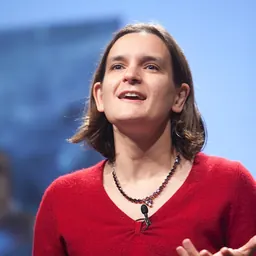
Since 2015, Cowen has hosted Conversations with Tyler, a podcast produced by the Mercatus Center that features long-form interviews with leading thinkers in economics, philosophy, science, and culture. His guests have included Amartya Sen, Esther Duflo, Margaret Atwood, and Peter Thiel. The show’s conversational style and Cowen’s deep preparation have been praised for eliciting substantive discussion. The Atlantic described it as "a masterclass in curiosity."
Columns and publications
Since April 2025, Cowen has written a regular column for The Free Press, having moved there after roughly eight years as a Bloomberg Opinion columnist. He previously wrote the "Economic Scene" column for The New York Times. His essays have also appeared in The Wall Street Journal, Forbes, Newsweek, and other major outlets.
Reception and influence Cowen is often cited as one of the most prominent public intellectuals translating economic thinking for a broad audience. The Economist called him "an evangelist for rational optimism," while The New Yorker described his intellectual style as "an unrelenting curiosity about everything, informed by a moral seriousness about growth and human flourishing."
Cowen has been recognized multiple times among the world’s top thinkers. In addition to appearing on Foreign Policys list of "Top 100 Global Thinkers" (2011) and Prospect magazine's "World Thinkers" list at #21 (2015), he was named one of the "Most Influential Economists" by The Economist in 2024.
Journalists have described Cowen's influence as extending beyond academia. The Financial Times called him "a bridge between the ivory tower and the real world of policy and technology." In 2012, David Brooks called Cowen "one of the most influential bloggers on the right", writing that he is among those who "start from broadly libertarian premises but do not apply them in a doctrinaire way".
Cowen has not been ranked in Research Papers in Economics' top economist database, and no h-index is available for his academic contributions.
Personal life Cowen is a teetotaler, saying he is "with the Mormons" on alcohol, and "I encourage people to just completely, voluntarily abstain from alcohol and make it a social norm".
Publications Books
Talent: How to Identify Energizers, Creatives, and Winners Around the World, with Daniel Gross. New York: St. Martin's Press, 2022,. Big Business: A Love Letter to an American Anti-Hero. New York: St. Martin's Press, 2019..
. (Wikipedia page) With Alex Tabarrok:
The Age of the Infovore: Succeeding in the Information Economy (2010)
Explorations in the New Monetary Economics (1994)
Selected journal articles
Select articles
"The Lack of Wars May Be Hurting Economic Growth", NYTimes'', June 14, 2014
Don’t just read it —
keep it.
Full-length biographies made to live with: read them, listen on the way to work, watch them tonight.
- E-book
- Audio
- Video
Instant download · yours to keep · every purchase keeps this site free
Important facts
People in Tyler Cowen's life
Named in this biography and alive at the same time




Related people
Same field, nearest in time




Contemporaries
People whose lives overlapped Tyler Cowen's





Frequently asked questions
Who is Tyler Cowen?
American economist, columnist and blogger
When was Tyler Cowen born?
Tyler Cowen was born on 21 January 1962 in Bergen County.
What is Tyler Cowen's occupation?
Tyler Cowen is an economist, pedagogue, writer, blogger, university teacher and podcaster.
What nationality is Tyler Cowen?
Tyler Cowen is American.
Sources & further reading
Cite this page
APA: Biography.guide. (2026). Tyler Cowen. https://biography.guide/tyler-cowen/
MLA: "Tyler Cowen." Biography.guide, https://biography.guide/tyler-cowen/.
Chicago: "Tyler Cowen." Biography.guide. https://biography.guide/tyler-cowen/.
Data last updated: 2026-09-20 · Spot an error? Report a correction.
Page generated 2026-09-27 05:27 UTC