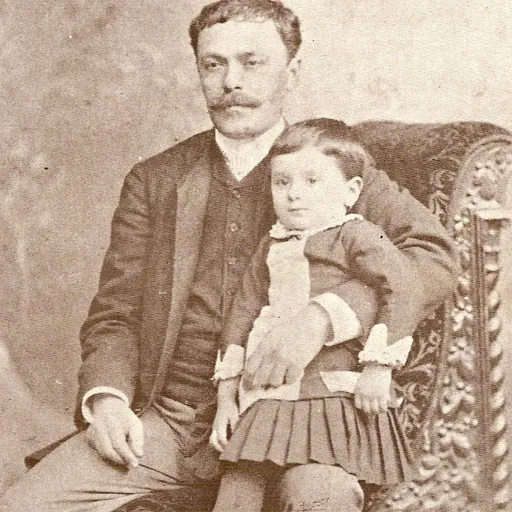
About Luca Caragiale
Lived 1893 – 1921 (aged 27). Luca Caragiale was a Romanian linguist, novelist, translator and poet.
Luca Ion Caragiale (; 3 July 1893 – 7 June 1921), also known as Luki, Luchi or Luky Caragiale, was a Romanian poet, novelist and translator, whose contributions were a synthesis of Symbolism, Parnassianism and modernist literature. His career, cut short by pneumonia, mostly produced lyric poetry with cosmopolitan characteristics, distinct preferences for neologisms and archaisms, and willing treatment of kitsch as a poetic subject. These subjects were explored in various poetic forms, ranging from the conventionalism of formes fixes, some of which were by then obsolete, to the rebellious adoption of free verse. His poetry earned posthumous critical attention and was ultimately collected in a 1972 edition, but sparked debates among literary historians about the author's contextual importance.
The son of dramatist Ion Luca Caragiale and the half-brother of writer Mateiu Caragiale, Luca also became the son-in-law of communist militant Alexandru Dobrogeanu-Gherea. It was with Alexandru's brother, philosopher Ionel Gherea, that Luca wrote his work of collaborative fiction and sole novel. Titled Nevinovățiile viclene ("The Cunning Naïvetés"), it created controversy with its portrayal of adolescent love. Here and in his various modernist poems, Caragiale made a point of questioning established perceptions of love and romance.
Biography
Childhood and adolescence Born into the Caragiale theatrical and literary family, of Greek-Romanian heritage, Luca was, through his mother Alexandrina, a descendant of the middle class Burelly family. A famed beauty and a prominent socialite, Alexandrina was the model of visual artist Constantin Jiquidi (whose drawing of her in national costume became the first Romanian-issued postcard). According to genealogical investigations conducted by Luca's father, she was also of Greek descent. According to researcher Ioana Pârvulescu, while Mateiu felt permanently uneasy about his illegitimacy, Luca was "without doubt" his father's favorite, and, unlike his older brother, "effortlessly knew how to make himself loved."
Luca's childhood and adolescence, coinciding with his father's itinerant projects, was spent abroad: while Luca was still a young child, he was taken by his family on a trip to France, Switzerland, Austria-Hungary and Italy, and they all eventually settled in the German Empire's capital city, Berlin (1905). Both he and Ecaterina were "almost confined to their home" by Ion Luca, who had a maniacal fear of disease and accidents. Around 1909, with his father's consent, Luca was being tutored in scientific subjects by poet-philosopher Panait Cerna, who was being hosted by the Caragiales in the German Empire while completing his studies. In the end, literary historian Șerban Cioculescu argues, the young man acquired "a vast, albeit unschooled, culture", added to his native "ease of improvisation" and "outstanding memory". Ion Luca took a direct approach to his adolescent son's education, and the two often debated on cultural subjects, or on Luca's left-wing opinions, such as his support for the Social Democratic Party of Germany. Ion Luca and his youngest son traveled intensely throughout Northern Germany, spending time on the Baltic coast, and once making their way into Denmark.
War years Alexandrina, Ecaterina and Luca Caragiale spent two more years in Berlin, living on a Romanian state pension; in mid 1914, sensing that world War I was about to start, the family moved back to Romania, and Luca was forced to give on his plans to attend a French college.
After his marriage to Fany Gherea (tentatively dated to 1919), Fany was Constantin's granddaughter. Her father was journalist Alexandru "Sașa" Gherea (later a founding figure of the clandestine Romanian Communist Party), and her mother a native of Bavaria. Luca and Constantin's other son, Ionel, were working together on Nevinovățiile viclene, a novel. It was first published in the 1910s by the Iași-based literary review Viața Românească, and immediately sparked controversy for describing the sexual desires of the educated youth. Marghiloman also recorded an incident of December 1917, during which Luca, as Arion's chief of staff, humiliated Tzigara-Samurcaș when he requested a Police presence at one of his Culture Ministry functions directly from his German commanders. In June 1918, Luca took the controversial decision of publicly rallying himself with the Central Powers supporters in Romania: probably instigated by the more politically minded Mateiu, Luca signed his name to an open letter which called on Conservative Party leader Petre P. Carp to take hold of a hypothetical Germanophile cabinet.
Late activity During the early interwar period, Luca Caragiale remained settled in Romania, and frequented its literary circles. He authored memoirs of his father's life, published in January 1920 by Ideea Europeană journal. Titled Amintiri despre Caragiale ("Memories of Caragiale"), they notably include details about Ion Luca's deep dislike for lyric poetry, as well as accounts of his aging father's leftist flirtations (from the outrage he felt at learning about the authorities' violence in quelling the 1907 peasants' revolt to his friendship with socialist activist Christian Rakovsky). The same year, he published with Viața Româneascăs sister company a translation of Knut Hamsun's novel Pan. His other translation work covered Edgar Allan Poe,
By 1921, Luca was working to publish his new poetry as a volume, which was to be titled Jocul oglinzilor ("The Game of Mirrors"). In late March of that year, he was one of the noted witnesses at a Romanian Academy public readings, which included the licentious poem Răsturnica (roughly, "She-tumbler"; from a răsturna, "to tumble"), written, but unsigned, by the avant-garde poet Ion Barbu. In May, he also appeared as a witness for the birth of Ecaterina's son, Vlad Geblescu-Caragiale. These were some of his final records of his activities. Described as a man of "sickly" constitution by literary historian Tudorel Urian, Caragiale fell ill with influenza shortly afterward, and quickly developed a form of pneumonia that caused his death in June. Zarifopol witnessed his "insane agony" experienced by his young friend, who "broke a bottle over his head, tore out clumps of his own hair" in an attempt to quell his pain.
Fany Gherea remarried Radu Lipatti, a relative of pianist Dinu Lipatti; she moved to Switzerland, where she continued to play host to her Caragiale inlaws. Luca was also survived by his sister, who, after several failed marriages, became the wife of bureaucrat Petre Logadi in or around 1933. Both she and her husband were arrested by the Romanian communist authorities in 1951–1952; in 1955, Luca's exiled nephew, Vlad, became an editor for the anticommunist station Radio Free Europe. Luca's mother Alexandrina died in 1954, and shares his grave at Bellu.
Work
Symbolist and Parnassian poetry Luca and Mateiu Caragiale's stylistic affiliation with Symbolism illustrated a secondary stage in the development of Romania's own Symbolist current. This ideological choice, literary historian George Călinescu notes, pitted Luca against his father, a noted adversary of first-generation Symbolists such as Alexandru Macedonski: "[Caragiale senior] disliked the Symbolists and he anguished Luki so badly, that the latter broke out crying and declared his father to be without understanding for 'real poetry'." For Șerban Cioculescu, the overall nature of young Caragiale's contribution was outstanding: "Luca Ion was in fact a virtuoso who tried his hand on all instruments and keyboards with the same dexterity, in search of not just a poetic fixation, but in one's own fixation among the chaos of one's time. Beyond the mirages that his unquestionable talent puts on display for us, one catches a glimpse of a dramatic process of consciousness."
A large part of Caragiale's contribution to poetry comprises bucolic poems, which Călinescu acknowledges for their "vibrant" depiction of wild landscapes. One poem, titled Ars poetica (Latin for "The Poetic Art"), is described by the same critic as evidence of Caragiale's Parnassian affiliation, and, although written in imperfect Romanian (verses in line with "cadence", but not "in agreement" with Romanian grammar), similar to the purist approach of the nominally Symbolist author Mihai Codreanu. He also notes that the implicit aestheticism of this credo creates a natural link between Luca and Mateiu, opposing them both to their more practical father. I want my verse to be as sonorous as springs Shouting their frisson on the winged wind; That it be a dangling morning church bell When it rings its pious call into the skies
This series of poems offers insight into Luca Caragiale's lyrical perspective on nature. According to Cioculescu, Dintr-un oraș de munte and other nature-themed poems show that Luca had inherited his father's feelings of despair in front of bad weather, that they both found autumn rains to be unbearable. The depressive state in such poems is enhanced by Caragiale's preference for antithesis, and in particular by his understanding of the universe as oppressive, deceptive and stagnant—according to Cioculescu, his "Weltanschauung is dominated by a genius that, when not malignant, is in any case perfidious, treacherous."
To the bareness of autumnal landscapes, Caragiale the younger opposed a universe dominated by floral ornamentation. According to Cioculescu, the poems reference "more than forty species" of flowers, ranging from rose, carnation, jasmine or lily to the rarely sung corydalis (Romanian: brebenel), basil (busuioc), honeysuckle (caprifoi), chamomile (mușețel) or white dittany (frăsinel). Luca turned the flower species into symbols of emotional or meditative states, often placing them in a direct relationship with capital-letter references to poetic ideals (Autumn, Love, Pathos, Death, Hopelessness etc.). One such allegory, present in the series titled Alte stanțe ("Other Stanzas"), associated lost love, mourning and the scent of jasmine flowers:
This prosaic preoccupation, Călinescu notes, led Caragiale to depict the dust-covered mahala quarters, the passage of loaded trucks, and the clamor of boarding school girls walking down boulevards. In more or less allusive poems, included by Cioculescu among the "desacralizing" texts, Caragiale also tests the limits of propriety, and questions the sexual taboos of his generation, from schoolgirls fantasizing about being kept women, to the moral severity imposed on churchgoers and the impact of sexual inhibition on the subconscious. The poet's sensibility for such themes touched not just his choice of subjects, but also his appreciation of other poems. In a 1922 letter to critic Tudor Vianu, Ion Barbu recalled that Caragiale's enthusiasm for Răsturnica, which can be read as a grotesque but compassionate homage to a dead prostitute, far exceeded his own: in Barbu's definition, Răsturnica was "that smut which wrung tears from Luchi Caragiale".
Other writings With Nevinovățiile viclene, Pârvulescu argues, the young Caragiale produced a "more interesting" work than his poems, but the text's nature made it impossible to delimit "what part is owed to which author." The text moves from issues related to Luca's physical appearance ("lifeless" eyes, "unpleasant and stupid" hair) to self-admitted moral weakness (the joy of being confronted with other people's defects, the "cowardice" which prompts him to "say things I do not mean" etc.).
Don’t just read it —
keep it.
Full-length biographies made to live with: read them, listen on the way to work, watch them tonight.
- E-book
- Audio
- Video
Instant download · yours to keep · every purchase keeps this site free
Important facts
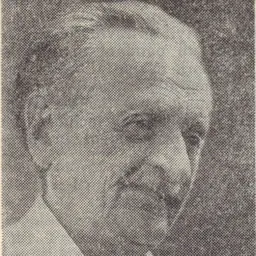
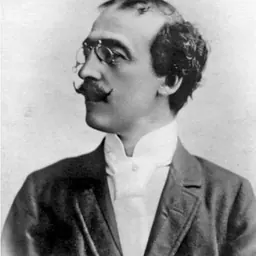
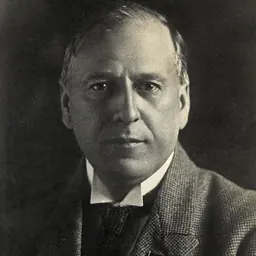
People in Luca Caragiale's life
Named in this biography and alive at the same time




Related people
Same field, nearest in time

Contemporaries
People whose lives overlapped Luca Caragiale's





Frequently asked questions
Who was Luca Caragiale?
Romanian writer
When was Luca Caragiale born?
Luca Caragiale was born on 3 July 1893 in Bucharest.
When did Luca Caragiale die?
Luca Caragiale died on 7 June 1921 in Bucharest.
What was Luca Caragiale's occupation?
Luca Caragiale was a linguist, novelist, translator and poet.
What nationality was Luca Caragiale?
Luca Caragiale was Romanian.
Sources & further reading
Cite this page
APA: Biography.guide. (2026). Luca Caragiale. https://biography.guide/luca-caragiale/
MLA: "Luca Caragiale." Biography.guide, https://biography.guide/luca-caragiale/.
Chicago: "Luca Caragiale." Biography.guide. https://biography.guide/luca-caragiale/.
Data last updated: 2026-09-22 · Spot an error? Report a correction.
Portrait: Wikimedia Commons · author & licence
Page generated 2026-09-27 05:03 UTC