
About Lu Dingyi
Lived 1906 – 1996 (aged 89). Lu Dingyi was a Chinese politician.
Lu Dingyi (; June 9, 1906 – May 9, 1996) was a leader of the Chinese Communist Party. After the establishment of the People's Republic of China and before the Cultural Revolution, he was credited as one of the top officials in socialist culture.
Biography Former residence of Lu Dingyi in Wuxi. The house was bought by Lu's grandfather in late Guangxu period.Lu Dingyi joined the Chinese Communist Party in 1925, while he was studying electrical engineering at the Nanyang Public School. After graduation, he fully joined revolutionary activities, being mainly involved in the Communist Youth League, writing articles for its newspaper Chinese Youth (later renamed Proletarian Youth and then Leninist Youth). In 1927 he took part at both the 5th CCP National Congress and the CYL Congress, being elected a member of the CYL Central Committee working with its Propaganda Department. He was actively involved in countering Chiang Kai-shek's anti-communist coup, organizing communist unities in Guangdong. In 1928 Lu Dingyi took part at the 6th CCP National Congress and the CYL Congress, both of which were held in Moscow, remaining in the Soviet Union until 1930 as a junior representative of the CYL to the Comintern.
Lu Dingyi then returned in China. He was a member of the CCP Propaganda Department starting from 1934. He participated in the Long March, during which he was editor of the Red Star newspaper. Also during the Long March, he was the head of the Propaganda Department of the Eighth Route Army. Later, he was the head of the Eighth Route Army's Political Department. Lu was made the head of the culture and education group. Shortly after the Cultural Revolution broke out, Lu was accused of being a promoter of the reactionary line in culture, since he did not adhere to Mao Zedong's idea that culture should extensively serve proletarian politics. In April 1966 he was accused of being part of the "Peng-Luo-Lu-Yang anti-Party clique" (the others being Peng Dehuai, Luo Ruiqing and Yang Shangkun) In 1990, he contended that the turmoil in Eastern Europe demonstrated that had the protestors in Tiananmen Square not been suppressed, they would have implemented "another Cultural Revolution." Though Anna Louise Strong identifies the translator as Lu Dingyi in her 1948 memoir Tomorrow's China,
Don’t just read it —
keep it.
Full-length biographies made to live with: read them, listen on the way to work, watch them tonight.
- E-book
- Audio
- Video
Instant download · yours to keep · every purchase keeps this site free
Important facts
People in Lu Dingyi's life
Named in this biography and alive at the same time
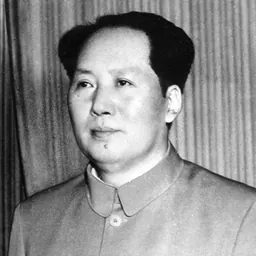
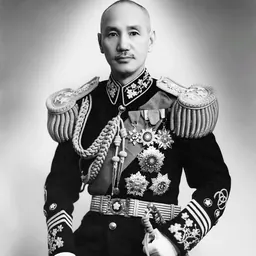
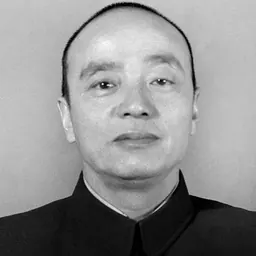

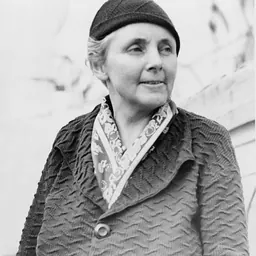

Related people
Same field, nearest in time





Contemporaries
People whose lives overlapped Lu Dingyi's


Frequently asked questions
Who was Lu Dingyi?
Chinese politician (1906–1996)
When was Lu Dingyi born?
Lu Dingyi was born on 9 June 1906 in Wuxi.
When did Lu Dingyi die?
Lu Dingyi died on 9 May 1996 in Beijing.
What was Lu Dingyi's occupation?
Lu Dingyi was a politician.
What nationality was Lu Dingyi?
Lu Dingyi was Chinese.
Sources & further reading
Cite this page
APA: Biography.guide. (2026). Lu Dingyi. https://biography.guide/lu-dingyi/
MLA: "Lu Dingyi." Biography.guide, https://biography.guide/lu-dingyi/.
Chicago: "Lu Dingyi." Biography.guide. https://biography.guide/lu-dingyi/.
Data last updated: 2026-09-20 · Spot an error? Report a correction.
Page generated 2026-09-27 05:27 UTC