
About Louisa Stuart
Lived 1757 – 1851 (aged 93). Louisa Stuart was a British writer.
Lady Louisa Stuart (12 August 1757 – 4 August 1851) was a Scottish writer of the 18th and 19th centuries. She was a daughter of the Scottish politician John Stuart, 3rd Earl of Bute.
Most of her memoirs and her letters were published posthumously. Her memoir of Lady Mary Coke also covered the political career of Lady Mary's husband Edward Wortley Montagu, and the political rivalries between the Whigs and Tories. Stuart was herself a loyal Tory, and her political views were consistently conservative. She also wrote poetry, fables, and a ballad about a family of human cannibals. Her writings tend to contain malicious humour.
Early life
Portrait of the Earl of Bute by Joshua Reynolds, 1773. Stuart's father, the Earl of Bute Stuart was one of the six daughters of John Stuart, 3rd Earl of Bute, who at the time of her birth in 1757 was the closest friend of the future King George III. Her mother was Mary Stuart, Countess of Bute. Lord and Lady Bute also had five sons. Although Bute was Scottish, he spent much of his time at his grand London house in Berkeley Square. In 1762, he bought the estate of Luton Hoo in Bedfordshire.
George III came to the throne in 1760, and in 1762 his friend Bute became prime minister. As a statesman, Bute was massively unpopular with the English, for a variety of reasons. He was a Scot, a Royal favourite, and a handsome man who was lampooned for his vanity, and was constantly the butt of biting political satire, scandal, and gossip. This included frequent allegations of an affair with Princess Augusta of Saxe-Gotha, the widow of Frederick, Prince of Wales. Bute's ministry fell in 1763, when his daughter Louisa was five years old, and Bute retired from public life to Luton Hoo and thereafter devoted himself to botany, horticulture and other country pursuits.
With her mother, the young Lady Louisa Stuart attended the balls, routs and soirées of London society, but she also followed the literature of the day and corresponded with friends. She had great powers of observation from an early age, and a manuscript notebook survives in which she describes her circle.
On another occasion, in 1786, Burney found both Stuart and her mother at the house of Mary Delany after a return from the spa town of Bath and writes that they were:
Her sisters were Lady Mary Stuart (c. 1741 – 1824), who married James Lowther, later the 1st Earl of Lonsdale; Lady Anne Stuart (born c. 1745), who married Lord Warkworth, later the 2nd Duke of Northumberland; Lady Jane Stuart (c. 1748 – 1828), who married George Macartney, later the first Earl Macartney; and Lady Caroline Stuart (before 1763–1813), who married The Hon. John Dawson, later first Earl of Portarlington. Later the same year, Medows married another lady, Frances Augusta Hammerton, and went on to become a Lieutenant-General, a Knight of the Bath, and Governor-General of Madras.
Stuart was not a beautiful woman. Fanny Burney wrote of her in 1786:
Louisa Stuart does not seem to have fallen in love again, but she had at least two other pursuers. Her next was Henry Dundas, member of parliament for Midlothian and Lord Advocate of Scotland, later created Viscount Melville. Dundas was a gallant and good-looking man who had been married but was legally separated from his wife. His devotion worried the Bute family, but it turned out to be brief and merely amused Lady Louisa. Her last serious suitor was John Charles Villiers (1757–1838). He was the second son of Thomas Villiers, 1st Earl of Clarendon, and for a time overwhelmed Stuart with his admiration. Her parents encouraged the match, and she was tempted, but she finally decided that a "love match without any love is but a bad business". As a result, she never married. society gossip quickly linked his name with Stuart's, leading Lady Diana Beauclerk to remark "So Lady Louisa Stuart is going to marry her great-grandfather, is she?" However, Stuart looked on Strafford merely as an elderly uncle, and not as a suitor, and he for his part did nothing to promote such an alliance. Lockhart's Life of Scott (1837–1838) had contained several of Sir Walter Scott's letters to Stuart.
Much of Stuart's writing is still in the form of unpublished memoirs and letters, mostly addressed to women,
Stuart's memoir of Lady Mary Coke, written in 1827, represents Coke as a virtuous woman suffering from a brutal husband, but also as a tragedy queen subject to paranoia. Devoney Looser considers that Stuart (whom she calls "the socially correct octogenarian") was troubled by her grandmother's focus on sexual intrigues and says that Stuart did not see Lady Mary's Account of the Court of George I at his Accession as history.
Conscious of Walter Scott's, Alexander Pope's and Samuel Johnson's poetry, Stuart wrote verses of her own, including fables and a ballad about cannibal brothers and what happens to an unfortunate woman who has married for money.
Jill Rubenstein describes Stuart as "Tory to the bone, never having forgiven the pain inflicted on her father by the scurrilous personal attacks of Wilkes and others" and compares her politics to those of Sir Walter Scott, "a principled and consistent conservatism".
Professor Karl Miller, in the Oxford Dictionary of National Biography, praises Stuart's "magnificent pieces of writing". He also reports on her inconsistencies. On the matter of the emancipation of women, she was both for and against it, and while she favoured the old order in politics and had an aversion to the mob, she also admired "unadorned human worth". Miller calls Stuart "the least-known, but by no means the least, of the good writers of her long lifetime".
By mistake, a shorter version of this notice appeared again in The Gentleman's Magazine Obituary pages for December 1851, preceded by the date "Oct. 4.". Much the same obituary appeared in the annual The Musical World for 1851, but by then Stuart's age had been corrected to "aged nearly ninety-four". The quarterly The Eclectic Magazine for September to December 1851 had the same correction and reported Stuart's death together with that of Harriet Lee under the heading DEATH OF LITERARY LADIES. The Annual Register for 1851 carried a shorter version of the obituary, repeating the mistake of listing Stuart's death as on 4 October.
Don’t just read it —
keep it.
Full-length biographies made to live with: read them, listen on the way to work, watch them tonight.
- E-book
- Audio
- Video
Instant download · yours to keep · every purchase keeps this site free
Important facts
Family & relationships
People in Louisa Stuart's life
Named in this biography and alive at the same time
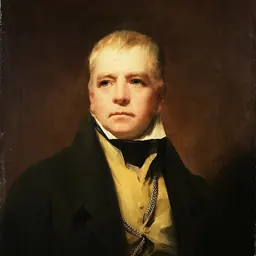
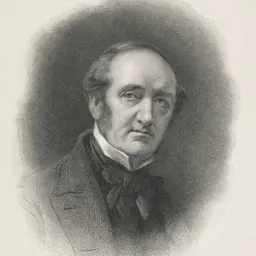
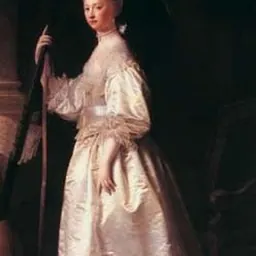
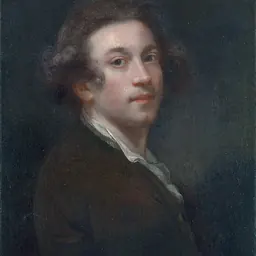
Related people
Same field, nearest in time



Contemporaries
People whose lives overlapped Louisa Stuart's




Frequently asked questions
Who was Louisa Stuart?
noblewoman; Daughter of British Prime Minister
When was Louisa Stuart born?
Louisa Stuart was born on 12 August 1757.
When did Louisa Stuart die?
Louisa Stuart died on 4 August 1851 in London.
What was Louisa Stuart's occupation?
Louisa Stuart was a writer.
What nationality was Louisa Stuart?
Louisa Stuart was British.
Sources & further reading
Cite this page
APA: Biography.guide. (2026). Louisa Stuart. https://biography.guide/louisa-stuart/
MLA: "Louisa Stuart." Biography.guide, https://biography.guide/louisa-stuart/.
Chicago: "Louisa Stuart." Biography.guide. https://biography.guide/louisa-stuart/.
Data last updated: 2026-09-20 · Spot an error? Report a correction.
Page generated 2026-09-27 05:25 UTC