
Louis-Bernard Guyton de Morveau
French chemist and politician
About Louis-Bernard Guyton de Morveau
Lived 1737 – 1816 (aged 78). Louis-Bernard Guyton de Morveau was a French chemist, magistrate, balloonist, politician and jurist, known for Chemical nomenclature.
Louis-Bernard Guyton, Baron de Morveau (also Louis-Bernard Guyton-Morveau after the French Revolution; 4 January 1737 – 2 January 1816)
Early career Guyton de Morveau was born on 4 January 1737 in Dijon, where he served as a lawyer, then avocat général, of the Dijon parlement.
In 1773, already interested in chemistry, he proposed use of "muriatic acid gas" for fumigation of buildings and as a result is sometimes given credit for having suggested chlorine in this use. However, chlorine was not well characterized at that time, and hydrogen chloride (made by reacting sodium chloride and sulfuric acid) was actually the active gaseous fumigation agent.
He was criticized by Jean Pierre Chardenon who told him that he should rest in his literary achievements and stay away from chemistry. This challenge led to his resigning his post in 1782 to dedicate himself to chemistry, collaborating on the Encyclopédie Méthodique and working for industrial applications.
In 1783, he was elected a foreign member of the Royal Swedish Academy of Sciences, and in 1788 a Fellow of the Royal Society.
Revolution During the Revolution, Guyton de Morveau (then styled Guyton-Morveau) served as Procureur général syndic of the Côte-d'Or département in 1790. He was elected a deputy to the Legislative Assembly in August 1791 and served as the president of the Legislative Assembly from 4 to 18 March 1792, early in the Girondin ministry. After the Girondins were dismissed in June 1792, he was elected to the National Convention and served in the Commission of Twelve , which advised the Assembly on how to handle events following the declaration of war against Austria on 20 April of that year.
He voted with the left wing, including a vote in favor of the execution of King Louis XVI, but according to one historical account, "he does not seem to have become a member of the Jacobin Club". Guyton de Morveau served on the Committee of Public Safety from 6 April 1793 to 10 July 1793, when he resigned in order to devote his time to the French Revolutionary Army, working to perfect the manufacture of gunpowder and saltpeter for firearms.
Guyton de Morveau re-entered the Committee of Public Safety on 6 October 1794, two months after the overthrow of Robespierre, then left again on 3 February 1795.
Later life and death Guyton de Morveau published his first essay on a new chemical nomenclature in 1782, and actively debated with contemporary chemists to defend his new system. He joined and became a proponent of the Lavoisierian school of chemistry, which held that the old Phlogiston theory was incorrect. He, together with Antoine Lavoisier, Claude Louis Berthollet, and Antoine-François de Fourcroy, published the , which effectively established the modern standardized chemical nomenclature that is still in use in the 21st century. He became a first-class member of the Académie des sciences in chemistry on 20 November 1795, and subsequently elected vice-president of the class (1806) and then president (1807). In 1798 he married Claudine Picardet, a recently widowed friend and colleague. Under the Directory, he served on the Council of Five Hundred from 1797, elected from Ille-et-Vilaine, and was Treasury administrator of the Consulate in 1799.
In 1801 he wrote , which described methods of disinfection using vapors of hydrochloric acid and chlorine, based on his successful use of the methods at Dijon in 1773. In 1802 he heard that James Carmichael Smyth had received a £5000 award from the British Parliament for proving that mineral acids such as nitric acid vapor were effective disinfectants, and applied for an award for himself, claiming that he discovered the method first. He was not successful, but some British scientists, such as Richard Kirwan and Thomas Beddoes, expressed agreement with him.
He remained an active editor of Annales de chimie until his death.
Guyton de Morveau died in Paris on 2 January 1816.
Méthode de Nomenclature Chimique was honored by a Citation for Chemical Breakthrough Award from the Division of History of Chemistry of the American Chemical Society, presented at the Académie des Sciences (Paris) in 2015.
Don’t just read it —
keep it.
Full-length biographies made to live with: read them, listen on the way to work, watch them tonight.
- E-book
- Audio
- Video
Instant download · yours to keep · every purchase keeps this site free
Important facts
Family & relationships
People in Louis-Bernard Guyton de Morveau's life
Named in this biography and alive at the same time



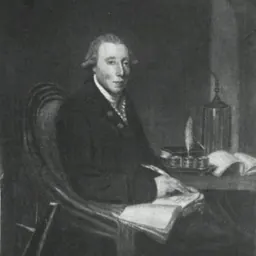

Related people
Same field, nearest in time
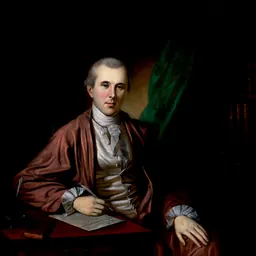
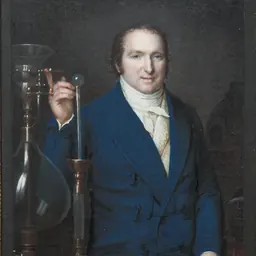


Contemporaries
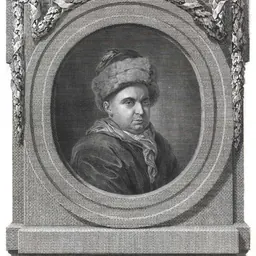
People whose lives overlapped Louis-Bernard Guyton de Morveau's





Frequently asked questions
Who was Louis-Bernard Guyton de Morveau?
French chemist and politician (1737-1816)
When was Louis-Bernard Guyton de Morveau born?
Louis-Bernard Guyton de Morveau was born on 4 January 1737 in Dijon.
When did Louis-Bernard Guyton de Morveau die?
Louis-Bernard Guyton de Morveau died on 2 January 1816 in former 10th arrondissement of Paris.
What was Louis-Bernard Guyton de Morveau's occupation?
Louis-Bernard Guyton de Morveau was a chemist, magistrate, balloonist, politician and jurist.
What was Louis-Bernard Guyton de Morveau known for?
Louis-Bernard Guyton de Morveau was known for Chemical nomenclature.
What nationality was Louis-Bernard Guyton de Morveau?
Louis-Bernard Guyton de Morveau was French.
Sources & further reading
· Wikipedia: Louis-Bernard Guyton de Morveau
· DBpedia: Louis-Bernard Guyton de Morveau
Cite this page
APA: Biography.guide. (2026). Louis-Bernard Guyton de Morveau. https://biography.guide/louis-bernard-guyton-de-morveau/
MLA: "Louis-Bernard Guyton de Morveau." Biography.guide, https://biography.guide/louis-bernard-guyton-de-morveau/.
Chicago: "Louis-Bernard Guyton de Morveau." Biography.guide. https://biography.guide/louis-bernard-guyton-de-morveau/.
Data last updated: 2026-09-20 · Spot an error? Report a correction.
Page generated 2026-09-27 05:22 UTC