
About Lorna Arnold
Lived 1915 – 2014 (aged 98). Lorna Arnold was a British diplomat, known for Nuclear weapons and the United Kingdom.
Lorna Margaret Arnold (; 7 December 1915 – 25 March 2014) was a British historian who wrote several books connected with the British nuclear weapons programmes.
A graduate of Bedford College, London, she trained as a teacher at the Cambridge Training College for Women, but left teaching in 1940. During the Second World War, she served with the Army Council secretariat. In 1944, she transferred to the Foreign Office to head a section of the secretariat of the European Advisory Commission. In June 1945, she moved to Berlin as part of the Allied Control Council, working in the Economic Directorate alongside counterparts from France, America and Russia to co-ordinate administering the districts and supplying food to the population. She was posted to Washington, D.C., in November 1946 as part of the British negotiating team that agreed to merge the U.S. and British zones of Allied-occupied Germany into Bizonia, and remained at the Pentagon until 1949.
In January 1959, she joined the United Kingdom Atomic Energy Authority (UKAEA), where she worked within its Authority Health and Safety Branch (AHSB), coordinating the investigation of the 1957 Windscale fire, about which she would later write a book. In 1967, she joined Margaret Gowing in writing the history of the British nuclear weapons programmes. As its second official historian, she had access to previously secret documents and personally knew many of the people involved. She produced histories of the 1957 Windscale fire, the nuclear weapons tests in Australia and the British hydrogen bomb programme. In her old age she was still an active participant in intelligence/historical community debate.
Early years Lorna Margaret Rainbow was born at 35 Craven Park, Harlesden, Middlesex, on 7 December 1915, the eldest of five children of Kenneth Wallace Rainbow and Lorna Pearl Rainbow (née Dawson). She had three younger sisters, Hilary, Rosemary and Ruth, and a younger brother, Geoffrey. Her father served in the First World War with the Royal Naval Division and the Royal Navy Air Service. She sat exams for both Reading University and the University of London in 1934, and was offered scholarships by both. She opted to enter Bedford College, London, a small women's college of the University of London. It was the first college in the United Kingdom to award degrees to women. She studied English, graduating in 1937 with a Bachelor of Arts degree with upper second-class honours.
After graduation, Rainbow trained as a teacher at the Cambridge Training College for Women, a small women's college with about fifty or sixty students at the time. Although it is adjacent to Fenner's, the University of Cambridge's cricket ground, it was not at the time a college of the University, and would not be accepted as one until 2007. She graduated with her teaching certificate, which allowed her to secure a position teaching English at Belper School in 1938. She began having fainting spells, and returned to the family's Little Prestwick Farm in 1940.
Second World War, Berlin and Bizonia Una Ellis-Fermor, who had been one of Rainbow's lecturers at Bedford, found her a position as a clerk at the Ministry of Pensions in Cambridge, where she also lectured part-time for adult education classes. At this point she received a telegram from the Ministry of Labour and National Service, who were tracking down graduates not working for the war effort, and was instructed to report for duty at the War Office. She served as part of Army Council secretariat, working for Lieutenant Colonel Alan Mocatta. There she took on increasing responsibilities, many related to supply and logistics for the war effort. As D-Day drew near, her workload became intense, and she took Benzedrine. During this time, she lived in London with her aunt Phyl on Kensington High Street. After her father joined the Army, her mother and siblings left the family farm and moved to the same street, about away. Like many Londoners, they experienced the hazards of the German air raids on London. She served as a neighbourhood fire warden. The windows of her office at the War Office were blown in twice, and were then replaced with scrim.
Soon after D-Day in 1944, Rainbow transferred to the Foreign Office to head a section of the secretariat of the European Advisory Commission (EAC) at Norfolk House, making arrangements for the post-war administration of Germany. In June 1945, she moved to Berlin as part of the Allied Control Council. For a time, she slept with a revolver under her pillow during the turbulent times just after the Battle of Berlin. and was only working at the UKAEA part-time. The UKAEA therefore decided that Gowing needed an assistant. There was some urgency; the Public Records Act 1967 had reduced the period in which public records were closed to the public from fifty to thirty years. This meant that unless deemed "sensitive", the records of the UKAEA would begin to be transferred to the Public Record Office and become available to the public in the 1970s. Getting the records in order and examined for secret material was an enormous and time-consuming task. Under the 1958 US–UK Mutual Defence Agreement, American secrets had been shared with the United Kingdom, so the job also involved liaison with American archivists. To be closer to the Atomic Energy Research Establishment at Harwell, and the Atomic Weapons Establishment at Aldermaston, she sold her house in London and bought one on the outskirts of Oxford, from which she could more conveniently reach these establishments via the A34.
Gowing and Arnold published their two-volume Independence and Deterrence: Britain and Atomic Energy, 1945–52 in 1974, covering the post-war British atomic bomb programme, to which Arnold contributed six chapters. The success of this work, even before it was published, led to Gowing becoming the first occupant of a new chair in the history of science at the University of Oxford in 1972. Arnold was honoured as an Officer of the Order of the British Empire (OBE) in the 1977 New Year Honours. With the concurrence of the UKAEA Board, Gowing and Arnold then turned to the task of writing the next instalment of the history of the British nuclear weapons programme, about the British hydrogen bomb programme. The work proceeded slowly, but during the 1980s, there was increased interest in the nuclear weapons tests in Australia, and the Australian government created the McClelland Royal Commission to investigate them. Having written the chapter on these for the book with Gowing, Arnold decided to produce a book. A Very Special Relationship: British Atomic Weapon Trials in Australia. It received mixed reviews, Her Majesty's Stationery Office did not market it well, and it was not available in Australia. She later produced an updated edition, Britain, Australia and the Bomb: The Nuclear Tests and Their Aftermath in 2005 with Mark Smith from the University of Southampton.
Arnold returned to working on the hydrogen bomb book, but 1987 was the 30th anniversary of the Windscale accident. Rather than let the records of the accident and subsequent inquiries be released over several years, Arnold persuaded the Public Records Office to release them all at once. In meetings with the various responsible government agencies, the topic of a book about Windscale came up, and Arnold decided to write one, which became Windscale 1957: Anatomy of a Nuclear Accident in 1992. Gowing, in poor health, retired from the UKAEA in 1993. By this time her two research assistants had also left, and Arnold feared that the UKAEA Council would shut down the hydrogen bomb book project, which she hoped to follow up with one on the UK civil nuclear power programme. The UKAEA Council decided to press on with the project, asking Arnold to stay on although she was now over seventy years old. In 1993, she was joined by Katherine Pyne, an aircraft engineer working on a history degree, who became her research assistant for two years. However, the end was in sight. The UKAEA no longer had responsibility for nuclear weapons, and management was not interested in it. With funds for the project almost exhausted, the UKAEA Council decided that Arnold should retire in 1996. She loaded her notes into her car and took them home. Sympathetic friends at the Ministry of Defence found some money to cover her expenses, and she doggedly worked on it from home. Britain and the H-Bomb finally appeared in 2001.
Later life Arnold was a Fellow of the Institute of Physics, a rare accolade for a non-physicist, She was introduced to Scilla Elworthy, one of the leaders of the Oxford Research Group, one of the UK's leading advocates for alternatives to global conflict, in the 1980s by her friend, physicist Rudolf Peierls. Through Elworthy, Arnold became active in the movement for nuclear disarmament. She participated in a series of video presentations on issues of nuclear weapons and nuclear energy for Talkworks, an organisation that focused on dangers associated with nuclear weapons. She also worked with television productions, including two BBC television documentaries on Windscale in 1990 and 2007, and a six-part documentary The Nuclear Age. which was cancelled by the BBC. In an episode of the BBC radio programme A Room with a View, she visited the room at the University of Birmingham where Peierls had worked on the Frisch–Peierls memorandum.
Arnold became legally blind in 2002, but in 2012, aged 96, published her memoirs, entitled My Short Century, in which she described her life from living on a farm, and friendships with noted figures in the world of nuclear research and development; "but also", noted the Daily Telegraph, "chronicled the life of one of the many thousands of women denied greater eminence because of their sex." She died at Oxenford House care home in Cumnor, Oxfordshire, on 25 March 2014 after suffering a stroke. She was survived by her two sons.
Published works (1974). Independence and Deterrence: Britain and Atomic Energy, 1945–52: Volume 1: Policy Making. (With Margaret Gowing). London: Macmillan. . (1974). Independence and Deterrence: Britain and Atomic Energy, 1945–52: Volume 2: Policy Execution. (With Margaret Gowing). London: Macmillan. . (1987). A Very Special Relationship: British Atomic Weapon Trials in Australia. London: HMSO Books. . (2001) Britain and the H-Bomb. London: Palgrave Macmillan (with Katherine Pyne) (2005) Britain, Australia and the Bomb: The Nuclear Tests and Their Aftermath. (International Papers in Political Economy) (with Mark Smith) London: Palgrave Macmillan (2007) Windscale 1957: Anatomy of a Nuclear Accident. London: Palgrave Macmillan (2012) My Short Century. Palo Alto, California: Cumnor Hill Books
Don’t just read it —
keep it.
Full-length biographies made to live with: read them, listen on the way to work, watch them tonight.
- E-book
- Audio
- Video
Instant download · yours to keep · every purchase keeps this site free
Important facts
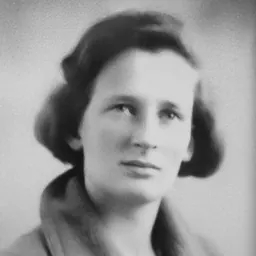
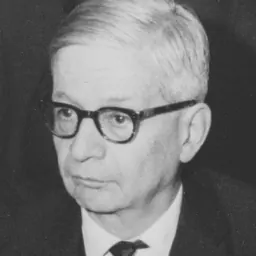
People in Lorna Arnold's life
Named in this biography and alive at the same time




Related people
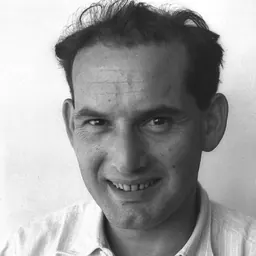
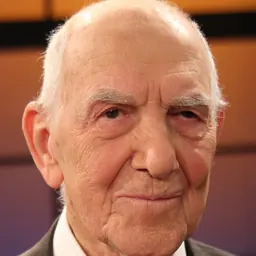
Same field, nearest in time
Contemporaries
People whose lives overlapped Lorna Arnold's




Frequently asked questions
Who was Lorna Arnold?
British military historian
When was Lorna Arnold born?
Lorna Arnold was born on 6 December 1915 in London.
When did Lorna Arnold die?
Lorna Arnold died on 25 March 2014 in Cumnor.
What was Lorna Arnold's occupation?
Lorna Arnold was a diplomat.
What was Lorna Arnold known for?
Lorna Arnold was known for Nuclear weapons and the United Kingdom.
What nationality was Lorna Arnold?
Lorna Arnold was British.
Sources & further reading
Cite this page
APA: Biography.guide. (2026). Lorna Arnold. https://biography.guide/lorna-arnold/
MLA: "Lorna Arnold." Biography.guide, https://biography.guide/lorna-arnold/.
Chicago: "Lorna Arnold." Biography.guide. https://biography.guide/lorna-arnold/.
Data last updated: 2026-09-20 · Spot an error? Report a correction.
Page generated 2026-09-27 05:09 UTC