
About Margaret Gowing
Lived 1921 – 1998 (aged 77). Margaret Gowing was a British historian, archivist and economist, known for Nuclear weapons and the United Kingdom.
Margaret Mary Gowing , (26 April 1921 – 7 November 1998) was an English historian. She was involved with the production of several volumes of the officially sponsored History of the Second World War, but was better known for her books, commissioned by the United Kingdom Atomic Energy Authority, covering the early history of Britain's nuclear weapons programmes: Britain and Atomic Energy 1939–1945, published in 1964, and the two-volume Independence and Deterrence: Britain and Atomic Energy 1945–52, published in 1974.
Through her work in the Cabinet Office from 1945 to 1959, she knew personally many of the people involved. As historian archivist at the UK Atomic Energy Authority from 1959 to 1966 she had access to the official papers and files of the British nuclear weapons programmes. She was the first occupant of a chair in the history of science at the University of Oxford, which she held from 1972 until her retirement in 1986. As co-founder with physicist Nicholas Kurti of the Contemporary Scientific Archives Centre in Oxford, she helped ensure the preservation of contemporary scientific manuscripts.
Early life Margaret Elliott was born on 26 April 1921 in Kensington, London, the youngest of three children of Ronald Elliott, a motor engineer, and his wife, Mabel Donaldson, a school teacher. She attended Portobello Elementary School in North Kensington, and won a London County Council scholarship to Christ's Hospital in 1932.
Elliott completed her School Certificate in 1936, earning distinctions in Latin, English and French and a pass in German. There she became involved with the Official History of the Second World War, as assistant to Keith Hancock who was overall editor of the United Kingdom Civil Series of books within the Official History. As an official historian of the History of the Second World War: United Kingdom Civil Series, Gowing had access to unpublished official papers and files. She came to know personally many of the politicians and senior civil servants involved. She did not expect to get the chair, but Peierls, Sir Frederick Dainton and Hugh Trevor-Roper were on the selection panel, and in the end offered the chair in the history of science to Gowing, a woman who did not have a degree in history or science. Her appointment, Roy MacLeod wrote, "struck a conspicuous blow for modern, as against medieval and early modern, science, and for a reading of history that favoured social, economic and political perspectives, as against the examination of scientific practice."
The two-volume opus, Independence and Deterrence: Britain and Atomic Energy 1945–52, finally appeared in 1974. and was made a Commander of the Order of the British Empire (CBE) in 1981. She received honorary doctorates in literature from the University of Leeds in 1976, the University of Leicester in 1982, and Manchester in 1985, When she was elected a Fellow of the Royal Society in 1988 under the provisions of Statute 12 of its Charter, which allowed for the election of non-scientists who had made distinguished contributions to science, she became only the third person to become a Fellow of both the British Academy and the Royal Society, after Sir Karl Popper and Joseph Needham.
Published works
History of the Second World War: United Kingdom Civil Series
British War Economy (with W.K. Hancock; 1952). London: Her Majesty's Stationery Office/Longman's, Green and Co. Civil Industry and Trade (with Eric L. Hargreaves; 1952). London: Her Majesty's Stationery Office/Longman's, Green & Co.
British nuclear weapons programmes Britain and Atomic Energy, 1939–1945 (1964) London: Macmillan Publishing. Independence and Deterrence: Britain and Atomic Energy, 1945–52. Volume 1: Policy Making (assisted by Lorna Arnold). (1974). London: Macmillan Publishing. Independence and Deterrence: Britain and Atomic Energy, 1945–52. Volume 2: Policy Execution (assisted by Lorna Arnold). (1974). London: Macmillan Publishing.
Don’t just read it —
keep it.
Full-length biographies made to live with: read them, listen on the way to work, watch them tonight.
- E-book
- Audio
- Video
Instant download · yours to keep · every purchase keeps this site free
Important facts
People in Margaret Gowing's life
Named in this biography and alive at the same time

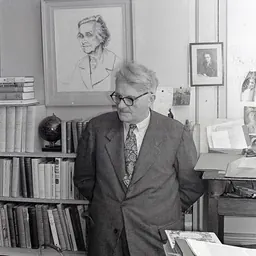



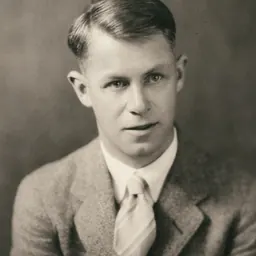
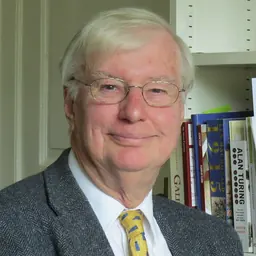

Related people
Same field, nearest in time
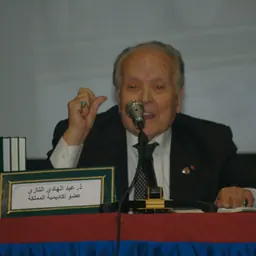


Contemporaries
People whose lives overlapped Margaret Gowing's




Frequently asked questions
Who was Margaret Gowing?
English historian
When was Margaret Gowing born?
Margaret Gowing was born on 26 April 1921 in North Kensington.
When did Margaret Gowing die?
Margaret Gowing died on 7 November 1998 in Kingston upon Thames.
What was Margaret Gowing's occupation?
Margaret Gowing was a historian, archivist and economist.
What was Margaret Gowing known for?
Margaret Gowing was known for Nuclear weapons and the United Kingdom.
What nationality was Margaret Gowing?
Margaret Gowing was British.
Sources & further reading
Cite this page
APA: Biography.guide. (2026). Margaret Gowing. https://biography.guide/margaret-gowing/
MLA: "Margaret Gowing." Biography.guide, https://biography.guide/margaret-gowing/.
Chicago: "Margaret Gowing." Biography.guide. https://biography.guide/margaret-gowing/.
Data last updated: 2026-09-26 · Spot an error? Report a correction.
Page generated 2026-09-27 05:13 UTC