
About Lorenzo Tañada
Lived 1898 – 1992 (aged 93). Lorenzo Tañada was a Filipino politician and association football player.
Lorenzo Martinez "Ka Tanny" Tañada Sr. (, August 10, 1898 – May 28, 1992) was a Filipino statesman, lawyer, human and civil rights defender, and national athlete. He is often referred to as the "Grand Old Man of Philippine Politics."
He served as Solicitor General for two terms. Following the 1947 election, where he received the highest number of votes among Senate candidates, he served four consecutive terms from 1947 until 1971, for a total of 24 straight years in the senate. He opposed the martial law administration under Ferdinand Marcos, participating and leading public demonstrations. He also advocated for the removal of US military bases in the Philippines through the Anti-Bases Coalition (ABC).
Tañada served as the campaign manager of the Lakas ng Bayan (Laban) candidates that ran against Marcos's Kilusang Bagong Lipunan in the 1978 parliamentary election. After the assassination of former Sen. Ninoy Aquino, he was the chairman of the Justice for Aquino, Justice for All (JAJA) movement that sought to oust Marcos. Senator Tañada was also a co-founder of the Free Legal Assistance Group (FLAG) with Joker Arroyo and José W. Diokno. FLAG is the largest group of human rights lawyers nationwide. They spearheaded the nationalist cause in the 1970s and 1980s as an agreement in the 1960s with Larry Henares and others.
He was also the founding chairman of a merged party called Bayan in 1985, and he founded the Nuclear-Free Philippines Coalition or NFPC, which successfully prevented the opening of the Bataan Nuclear Power Plant under the Marcos administration.
In his youth, he was also a national football team goalkeeper
He is the father of former Philippine Senator Wigberto Tañada and the grandfather of former Deputy Speaker Erin Tañada.
Early life
Tañada was born in Gumaca, Quezon on August 10, 1898, the son of Vicente Tañada, who served as the last gobernadorcillo of Gumaca town in Quezon under the Spanish colonial government, and Anastacia Martinez-Tañada. His actions in life were governed by the philosophy ingrained in him by his mother. The phrase "fear of God is the start of wisdom" guided him in all his social dealings.
The same week, US conquered Spain's navy and captured the Philippines as its colony. As an elementary student in Gumaca, he joined a protest against his school's American principal. The protest was prompted by the principal's order for school children to stay during weekends to build a playground, which prevented them from going home to their parents. Tañada said he was the smallest child and remembered when the principal was shocked to see he was one of the complainants. This was considered to be his very first rally.
In 1915, Tañada moved to the new De La Salle College, Manila, now called De La Salle University or DLSU, a school run by the Christian Brothers and graduated at the top of the class in 1918. He claimed it was the first time he saw his mother very emotional as she pinned the special medal on Tañada's breast during the ceremony.
As a law student at the University of the Philippines (U.P.), Tañada, completed his Reserve Officers' Training Corps (ROTC) prior to the academic Philippine educational system and obtained the rank of major, and was a lead actor in plays. He was also a national football team goalkeeper tasked with the monumental collaboration cases against many prominent figures, where he earned the respect and admiration of many of his peers and countrymen.
Tañada was first elected to the Philippine senate in 1947 where he topped the elections, placing 1st among senatorial candidates, the first of his 4 successful senatorial elections.
Tañada was the chief prosecutor against Japanese collaborators. Due to his political reputation, Tañada became a Filipino praised by all sectors of Philippine society, a person honored by both the Communist Party of the Philippines and the Reform the Armed Forces Movement, and a man who was acknowledged as a man of principles even by those whom Tañada himself once charged as "collaborators".
Tañada was also a longtime opponent of the U.S. role in the Philippines. He was the organizer of the Anti-Bases Coalition (ABC) together with lawyer and former senator José W. Diokno and also led other groups that rallied public opposition to the presence of American troops in the Philippines.
Tañada is often called the "grand old man of Philippine politics", due to his reputation as one of the Philippine's foremost nationalists. He was a familiar fixture during the Martial law era of Ferdinand Marcos, leading rallies and demonstrations. Due to his esteem among national democrats, Tañada chaired some national democrats coalitions in his later years to oppose Marcos in the streets.
After Marcos' opponent, Ninoy Aquino, was assassinated, JAJA was formed with co-leader Diokno, who is called the father of human rights advocacy, which made JAJA the first united front built to stop Marcos. Tañada was elected the chair of the alliance. However, JAJA could not unite the different competing groups and ideologies, and eventually former members left to form different alliances, with the largest being Butz Aquino's Kongreso ng Mamamayang Pilipino (Congress of the Filipino People) or "KOMPIL", of which Tañada served as one of the chief delegates. In 1985, he became the founding chairperson of Bagong Alyansang Makabayan (Bayan). Eventually, Marcos was removed from power and exiled in 1986. Anti-Bases Coalition Rally with José W. Diokno, J. B. L. Reyes and Joker Arroyo in 1983 During Corazon Aquino's presidency, he was a staunch anti-U.S. Bases activist and an anti-nuclear power plant advocate. Tañada was issued a stamp on the centennial of his birth in 1998 under the category of Great Filipinos.
In his hometown of Gumaca, Quezon, August 10 is celebrated every year as Lorenzo M. Tañada Day, a special non-working holiday, with historical-themed festivities held usually near the marker of his birth and at the site of his bust at the Gumaca National High School outdoor area. A road 300 m long was named L. Tañada Street and is located near the presidential residence called the White House; the residential-cum-commercial road starts at Mimosa Dr. near the Filinvest Mimosa Leisure Estate, and is intersected right in the middle by Cardinal Santos Avenue until it reaches C.P. Garcia while directly facing Clark Development Corporation in Clark Freeport Zone, Pampanga.
He was a 1988 The Outstanding Filipino (TOFIL) awardee for Freedom Advocacy. His son Wigberto Tañada also received a TOFIL award in 1999 for Government and Public Service.
Tañada's name is inscribed on the Bantayog ng mga Bayani Wall of Remembrance, which recognizes heroes who fought against martial law in the Philippines under Ferdinand E. Marcos.
There have been movements and calls, as well as bills have been filed in both senate and house of representatives in the 16th Philippine Congress, to rename Commonwealth avenue to Sen. Lorenzo Tañada avenue, to honor his legacy of Filipino nationalism and independence. Other calls have been made to rename Marcos Highway to Lorenzo Tañada Ave.; along with Shaw Blvd. to Jovito Salonga Blvd.; Taft Ave. to José W. Diokno Ave.; and Imelda Ave. to Sen. Geronima Pengson Ave. De La Salle University put up a special museum called the Lorenzo M. Tañada Memorabilia Room as a permanent part of the campus. Visits require early appointments. They have also instituted the Lorenzo M. Tañada CHIMES Award for faculty. The De La Salle University Tañada-Diokno School of Law was named in his and "Ka Pepe" Diokno's honor on Diokno's centennial on February 26, 2022.
On 21 September 2021, he was honoured as Lasallian heroes against Martial Law along with Jose W. Diokno and Bishop Felix Paz Perez of Cavite. "Sen. Lorenzo Tañada Sr. – national heartthrob" by Argyll Geducos, Mario Casayuran, and Hannah Torregoza published August 5, 2018, and "A Tañada Dynasty or Legacy?" published by Action for Economic Reforms in March 2013.
Election history
Don’t just read it —
keep it.
Full-length biographies made to live with: read them, listen on the way to work, watch them tonight.
- E-book
- Audio
- Video
Instant download · yours to keep · every purchase keeps this site free
Important facts
Family & relationships
People in Lorenzo Tañada's life
Named in this biography and alive at the same time

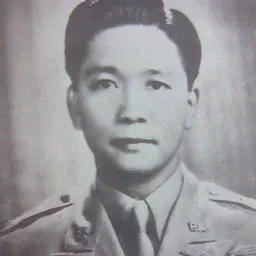
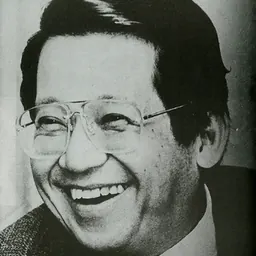


Related people
Same field, nearest in time






Contemporaries
People whose lives overlapped Lorenzo Tañada's



Frequently asked questions
Who was Lorenzo Tañada?
Filipino politician (1898–1992)
When was Lorenzo Tañada born?
Lorenzo Tañada was born on 10 August 1898 in Captaincy General of the Philippines, Gumaca, Quezon, Quezon.
When did Lorenzo Tañada die?
Lorenzo Tañada died on 28 May 1992 in Manila.
What was Lorenzo Tañada's occupation?
Lorenzo Tañada was a politician and association football player.
What nationality was Lorenzo Tañada?
Lorenzo Tañada was Filipino.
Sources & further reading
Cite this page
APA: Biography.guide. (2026). Lorenzo Tañada. https://biography.guide/lorenzo-tanada/
MLA: "Lorenzo Tañada." Biography.guide, https://biography.guide/lorenzo-tanada/.
Chicago: "Lorenzo Tañada." Biography.guide. https://biography.guide/lorenzo-tanada/.
Data last updated: 2026-09-26 · Spot an error? Report a correction.
Page generated 2026-09-27 05:16 UTC