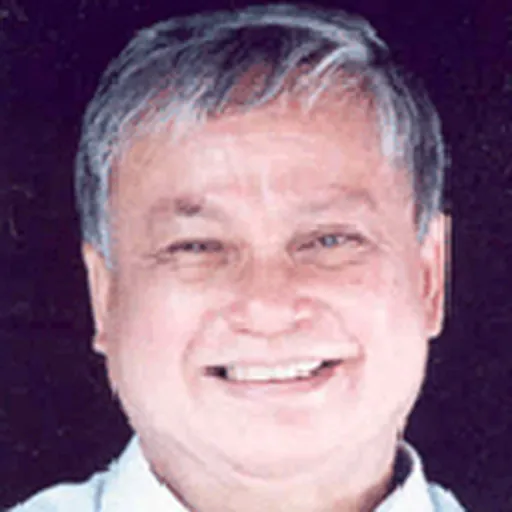
About Joker Arroyo
Lived 1927 – 2015 (aged 88). Joker Arroyo was a Filipino politician and lawyer.
Ceferino "Joker" Paz Arroyo Jr. as he only had few staff members without bodyguards and did not use his pork barrel funds.
Early life
Joker Arroyo was born on January 5, 1927, in Naga, Camarines Sur, to Ceferino Barrameda Arroyo, Sr. (1884–1949) and Eusebia Bance Paz (1898–1949). His parents were married on April 23, 1919, in Naga, Camarines Sur. He has seven siblings, including Zeferino "Tong", Jack (a former vice governor of Camarines Sur), and Nonito, from Baao, Camarines Sur. His name "Joker," as well as his siblings', was derived from his father's fondness for card playing.
Education Arroyo completed his elementary education at the Naga Central School I in Naga, Camarines Sur and secondary education at the Camarines Sur National High School also in Naga City. He obtained his Associate of Arts in Public Law at the Ateneo de Manila University (pre-law). In 1952, his Bachelor of Laws from the UP College of Law at the University of the Philippines Diliman. He is a member of the Upsilon Sigma Phi fraternity, batch 1948.
Career
As a lawyer Anti-Bases Coalition Rally with José W. Diokno, Lorenzo Tañada Sr., and J. B. L. Reyes in 1983 Arroyo started his professional career as lawyer in 1953. Most of his clients belonged to the middle class and low income families.
On September 23, 1972, President Ferdinand Marcos declared Proclamation No. 1081, placing the entire Philippines under Martial Law. Arroyo was the very first lawyer to challenge the act before the Supreme Court and questioned its legality under the 1935 Philippine Constitution.
Arroyo and other lawyers joined in questioning other Marcos' acts before the Supreme Court: 1) the ratification of the Marcos-dictated 1973 Constitution; 2) Amendment Six that empowered President Marcos to exercise lawmaking powers alongside the Batasang Pambansa; 3) the power of military tribunals to try civilians. These protestations did not stop Marcos' consolidation of power at the time, but showed that not all leading Filipinos were fully supportive of him.
Arroyo participated in the trials of political detainees such as Senator Benigno Aquino Jr., ABS-CBN Executive Eugenio Lopez Jr., business executive Sergio Osmeña III, Communist Party of the Philippines founder Jose Maria Sison, Senators Jovito Salonga and Eva Estrada-Kalaw, lawyers Aquilino Pimentel Jr., Renato Tañada, Eduardo Olaguer and many others.
Arroyo actively participated in street demonstrations. He was gassed, injured and hospitalized during protest rallies and incarcerated in a military stockade. He was one of the founders of the civic group Movement for the Advancement of the Brotherhood, Integrity, Nationalism and Independence (MABINI) and the Free Legal Assistance Group (FLAG).
When Corazon Aquino decided to challenge Ferdinand Marcos in the 1986 Snap Presidential Election, Arroyo served as counsel for Aquino during the snap election. During the first EDSA Revolution, he served as one Aquino's key advisers.
Political career
As Executive Secretary Arroyo was appointed as the Presidential Executive Assistant, later reverted as Executive Secretary, and he was one of the first appointees of Corazon Aquino after she was inaugurated at the Club Filipino in San Juan, Metro Manila. Arroyo served as Aquino's alter ego in her issuance of Executive Orders (formerly Presidential Decrees). These include the creation of the Family Code, the Presidential Commission on Good Government, creation of the 1986 Freedom Constitution, and the removal of local government officials loyal to Marcos and appointment of Officers-In-Charge. One Aquino decision, the release of Communist leader Jose Maria Sison, sparked the September 1987 coup attempt initiated by rebel military leaders. Due to intense pressure from the Philippine Congress in the following months, Aquino accepted Arroyo's resignation.
Aside from being Executive Secretary, he became chair of the Philippine National Bank and executive director for the Philippines at the Asian Development Bank from 1986 to 1990.
Arroyo has received various awards and commendations for his significant contributions to the law profession and public service. Among these are the Philippine Bar Association's Most Distinguished Award for Justice as a "man beholden to no one except to his country" and a Senate Resolution No. 100 enacted in the 8th Congress commending him for his invaluable services to the Filipino people.
As congressman Arroyo ran independent for the position of congressman in the lone district of Makati in 1992. He was in caucus with the PDP–Laban, having been named to the local ticket of incumbent Mayor Jejomar Binay. However, his first election was annulled by the House of Representatives Electoral Tribunal (HRET) on January 25, 1995, as a result of an electoral protest filed by his closest rival Augusto Syjuco Jr., citing irregularities in the vote count at most precincts. Arroyo challenged the HRET ruling and filed a counter-protest questioning Syjuco's residency, which was eventually dismissed. The ruling was later reversed on July 14, 1995, two weeks after his first term ended.
Arroyo passed several national bills and some local bills like the cityhood of Makati, including the reapportionment of Makati into two districts. Following the cityhood and reapportionment of Makati in 1995, Arroyo ran for the first district in the 1995 elections and won. Due to the disqualification of second district representative-elect Butz Aquino over lack of residency, Arroyo was the only representative from Makati during the 10th Congress. He ran for re-election in 1998 under the Laban ng Makabayang Masang Pilipino coalition and won. He also ran for House Speaker during the opening of the 11th Congress in July 1998, but lost to Las Piñas Representative Manny Villar. He became a popular figure in the House of Representatives with a 100% attendance record for nine years from the time he was elected up to the end of his last term.
In November 2000, Arroyo was one of the last congressmen to sign the endorsement for the impeachment of President Joseph Estrada. He was voted the Lead Prosecutor for the impeachment trial in December 2000. He fought for the opening of the second bank envelope and its presentation was a critical evidence for the prosecution of Estrada. The Senate voted down his request and this led to the second EDSA Revolution. His role in the impeachment trial earned him one of preferred choices in the Social Weather Stations and Pulse Asia survey for a Senate race. The new government, led by President Gloria Macapagal Arroyo, convinced Congressman Arroyo to run for the Senate. He was named to the People Power Coalition's senatorial slate, as well as being a member of the Lakas–NUCD–UMDP party. Arroyo received a huge number of votes from the electorate, placing 5th with more than 11 million votes.
As Senator Arroyo chaired the Senate Blue Ribbon Committee, the Senate Justice and Human Rights Committee, and the Senate Public Services Committee during the 13th Congress. He claimed to have never traveled abroad on government money and his Statement of Assets and Liabilities remained almost unchanged from the time he entered public service in 1986. He was re-elected to his second and final term in 2007 under the administration TEAM Unity coalition, placing 8th with more than 11 million votes.
Arroyo had accused President Benigno Aquino III of consolidating power and behaving like a dictator when, in 2011, the president led a successful effort to impeach Supreme Court Chief Justice Renato Corona. Arroyo was one of the three senators who voted to acquit. The Aquino administration called the impeachment and conviction a significant victory in its anticorruption efforts.
Arroyo retired from public service at the end of his Senate term on June 30, 2013.
Post-Senate Arroyo, alongside Rene Saguisag, served as counsel for Makati Mayor Junjun Binay during the Senate Blue Ribbon Committee investigation into alleged anomalies involving the Binay family in 2015. He had asked the Senate to end the hearing, which was then ongoing since August 2014, because it "has lasted too long already" and to revisit their rules. He criticized the investigation for violating due process over the detention of officials including Binay.
Death Arroyo died on October 5, 2015, in San Francisco, California, after an unsuccessful heart surgery. He was 88. His remains were silently brought to the Philippines for burial.
Personal life
Joker Arroyo was married twice. His first wife was Gregg Shoes entrepreneur Odelia Gregorio. Their eldest daughter is Ma. Antonia Odelia "Maoi" Gregorio Arroyo, CEO of Hybridigm Consulting, the first biotechnology commercialization firm in the Philippines. Maoi was hailed by Entrepreneur Magazine as one of the top 35 entrepreneurs under 35 in the Philippines. His second daughter, Ma. Zef Francisca "Baba" Arroyo, is an entrepreneur, artist, and pastry chef. His second wife was successful lawyer Felicitas S. Aquino, a member of the 1986 Constitutional Commission. Their daughter is Joker's namesake and a champion equestrian, whose career highlights include a team gold medal for the Philippines at the 2005 Southeast Asian Games, among many other medal performances with the Philippine team. The younger Joker graduated from the British School Manila in 2006, and Yale University in 2010.
Although they have the same surname, Joker Arroyo is not related to former President Gloria Macapagal Arroyo nor her husband Jose Miguel Arroyo.
Arroyo resided in Camarines Sur, where his family owned an ancestral house in Baao—though he identified himself as a Nagueño as he was born in Naga, Camarines Sur—and in Dasmariñas Village, Makati.
Legacy In 2018, the Human Rights Victims' Claims Board (HRVCB) formally recognized Arroyo and 126 other individuals as a motu proprio victim of human rights violations committed under the Marcos Sr. dictatorship.
Electoral history +Electoral history of Joker ArroyoYearOfficePartyVotes receivedResultTotal %.Swing 1992 Representative (Makati–at-large) Independent 97,055 46.66 1st 1995 Representative (Makati–1st) 68,092 72.67 1st 1998 LAMMP 91,269 70.94 1st -1.73 2001 Senator Lakas 11,262,402 38.21 5th 2007 KAMPI 11,803,107 40.01 8th +1.80
Don’t just read it —
keep it.
Full-length biographies made to live with: read them, listen on the way to work, watch them tonight.
- E-book
- Audio
- Video
Instant download · yours to keep · every purchase keeps this site free
Important facts
People in Joker Arroyo's life
Named in this biography and alive at the same time



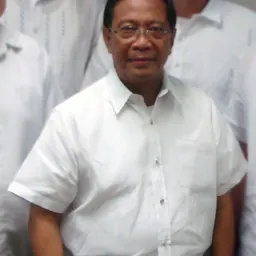
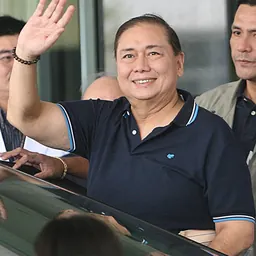
Related people
Same field, nearest in time





Contemporaries
People whose lives overlapped Joker Arroyo's
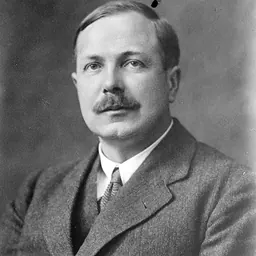
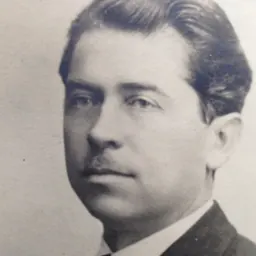

Frequently asked questions
Who was Joker Arroyo?
Filipino politician (1927-2015)
When was Joker Arroyo born?
Joker Arroyo was born on 5 January 1927 in Insular Government of the Philippine Islands, Naga, Camarines Sur.
When did Joker Arroyo die?
Joker Arroyo died on 5 October 2015 in San Francisco.
What was Joker Arroyo's occupation?
Joker Arroyo was a politician and lawyer.
What nationality was Joker Arroyo?
Joker Arroyo was Filipino.
Sources & further reading
Cite this page
APA: Biography.guide. (2026). Joker Arroyo. https://biography.guide/joker-arroyo-politician/
MLA: "Joker Arroyo." Biography.guide, https://biography.guide/joker-arroyo-politician/.
Chicago: "Joker Arroyo." Biography.guide. https://biography.guide/joker-arroyo-politician/.
Data last updated: 2026-09-22 · Spot an error? Report a correction.
Portrait: Wikimedia Commons · author & licence
Page generated 2026-09-27 05:04 UTC