
Lorenzo Gamboa
Filipino-American man who was excluded from Australia under the White Australia policy, despite having an Australian wife and children
About Lorenzo Gamboa
Lived 1918 – 2012 (aged 93). Lorenzo Gamboa was a Filipino and American soldier.
Lorenzo Abrogar Gamboa (11 November 1918 – 25 September 2012) was a Filipino-American man who was excluded from Australia under the White Australia policy, despite having an Australian wife and children. His treatment sparked an international incident with the Philippines.
Gamboa enlisted in the United States Army in 1941, and was evacuated to Australia the following year after the Japanese invasion of the Philippines. He married an Australian woman, Joyce Cain, and fathered two children, both born while he was serving overseas. He was discharged from the U.S. Army in 1945 and joined his family in Australia, but was refused permission to settle permanently and forced to leave the country. Gamboa became a naturalised U.S. citizen in 1946 and rejoined the army. He applied to re-enter Australia in 1948, but was refused even a visitor's visa. Immigration Minister Arthur Calwell stated that allowing Gamboa into the country would promote miscegenation, and granting an exception because of his U.S. citizenship would force the government to allow in racially undesirable groups such as African-Americans.
In 1949, following Gamboa's chance encounter with journalist Denis Warner, the Australian media began to criticise Calwell's handling of the issue and pressed for Gamboa to be allowed to reunite with his family. The "Gamboa case" sparked outrage in the Philippines. President Elpidio Quirino said that Filipinos had been "deeply humiliated" by the Australian government's actions, and the Philippine House of Representatives passed a bill that would have banned Australians from the country. After a change of government at the 1949 federal election, the new immigration minister Harold Holt overturned Calwell's decision and allowed Gamboa to rejoin his family; he settled permanently in Australia in 1952. The incident had a lasting impact on Australia–Philippines relations.
Early life Gamboa was born on 11 November 1918 in Mangaldan, Pangasinan. He left school at the age of 16 to work in a coal mine, while also studying electrical engineering at night school. After the passage of the National Defense Act of 1935, he had to complete compulsory military training every year. Gamboa was a talented boxer, and in 1940 won a boxing competition that had a scholarship to National University as its prize. He did not meet the educational requirements for the scholarship, and so began attending night classes to complete his secondary education. His entrance to university was interrupted by the outbreak of the Pacific War.
In late 1941, Gamboa enlisted in the United States Army. He was immediately caught up in the Battle of the Philippines, narrowly escaping a Japanese bombing raid before being hospitalised with a hernia a few weeks later. He left the country on 31 December aboard the hospital ship Mactan, again narrowly escaping a bombing attack while his ship was in the harbour. He was sent to Australia via Celebes, arriving in Darwin on 13 January 1942. He was subsequently moved on to Melbourne and housed in a military camp at Royal Park, while working as a guard at the Port of Melbourne.
Gamboa rejoined the U.S. Army in July 1942. He was posted to Port Moresby, New Guinea, a few months later, and served as an orderly for General Douglas MacArthur. He was then attached to MacArthur's headquarters in Brisbane. In 1944, he returned to the Philippines with the army, and was stationed in Leyte for a period. He visited his mother in March 1945, who did not recognise him; he had been listed as missing in action and was presumed dead. His continued presence was discovered by the Department of Immigration in early 1946, after he attempted to collect a ration book, and he was subsequently given three months to leave the country. He believed that allowing compassionate exceptions to the White Australia policy would lead to a slippery slope in which thousands of other non-white immigrants would be allowed entry. The same reasoning was behind the passage of the War-time Refugees Removal Act 1949, which allowed the government to deport non-whites who had entered Australia as refugees during the war.
The government was not only accused of cruelty towards the Gamboas, but also of endangering the White Australia policy through an overly heavy-handed approach that was likely to antagonise Asian countries. Opposition Leader Robert Menzies attacked the immigration department's "singularly unpleasant process of victimisation", but reaffirmed the basic principles of the White Australia policy. In March 1949, two Filipino golfers arrived in Australia to play in a tournament in Sydney. Harold Holt, the opposition spokesman for immigration, accused the government of hypocrisy, observing in parliament that "it is incredible that Filipino golfers are on a golfing tour of Australia while Minister for Immigration Mr. Calwell is keeping out one of their own countrymen who wants to discuss the future with his wife". He accused Calwell of adopting a "pig-headed and inhuman stand". In the ensuing debate, Cipriano Primicias called Australians "the biggest hypocrites in the world", and said that the Philippines should invade Australia to preserve its honour. Atienza's bill was passed by the House of Representatives on 27 April. The Senate added an amendment exempting Australian wives of Filipino citizens, but a sudden adjournment prevented a final vote on the bill. It had not been revived by the time Calwell's decision was overturned, and subsequently lapsed.
Australian officials attempted to downplay the significance of the Gamboa case. Calwell claimed it had aroused "very little real interest" in the Philippines, while Waller dismissed it as a "trivial case". However, the Gamboa case remained a problem for bilateral relations for a number of decades. One Australian diplomat found that "all Filipinos from Manila to the most distant hinterlands knew of Gamboa and the White Australia Policy; in some cases these two items constituted their only knowledge of Australia". In 1957, Ambassador Mick Shann sent a communique to the Department of External Affairs recording his dismay at the number of times the Gamboa case had been raised with him, and emphasised the need to counteract the impressions given. Ambassadors Bill Cutts and Francis Stuart expressed similar sentiments in the 1960s.
Later life Gamboa visited the Philippines in 1971 for the first time in 20 years, along with his wife, daughter, and son-in-law. In June 1973, Immigration Minister Al Grassby announced that he would allow Gamboa to become an Australian citizen. Gamboa rejected the offer, as it would have required him to renounce his U.S. citizenship, and said that government officials had approached him to take up citizenship on a number of previous occasions.
In 1977, Gamboa and his wife retired to the Gold Coast, Queensland, building a home at Coombabah. Their two children predeceased them, but as of 2002 they had four grandchildren and nine great-grandchildren. In 2001, the Filipino Communities Council of Australia awarded Gamboa the title of "Filipino-Australian of the Millennium". He died in September 2012, aged 93.
Don’t just read it —
keep it.
Full-length biographies made to live with: read them, listen on the way to work, watch them tonight.
- E-book
- Audio
- Video
Instant download · yours to keep · every purchase keeps this site free
Important facts
People in Lorenzo Gamboa's life
Named in this biography and alive at the same time
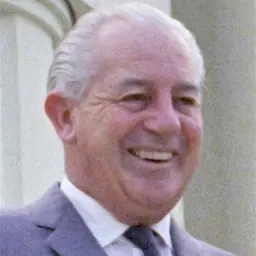




Related people
Same field, nearest in time




Contemporaries
People whose lives overlapped Lorenzo Gamboa's



Frequently asked questions
Who was Lorenzo Gamboa?
Filipino-American man who was excluded from Australia under the White Australia policy, despite having an Australian wife and children (1918-2012)
When was Lorenzo Gamboa born?
Lorenzo Gamboa was born on 11 November 1918 in Mangaldan.
When did Lorenzo Gamboa die?
Lorenzo Gamboa died on 25 September 2012 in Gold Coast.
What was Lorenzo Gamboa's occupation?
Lorenzo Gamboa was a soldier.
What nationality was Lorenzo Gamboa?
Lorenzo Gamboa was Filipino and American.
Sources & further reading
Cite this page
APA: Biography.guide. (2026). Lorenzo Gamboa. https://biography.guide/lorenzo-gamboa/
MLA: "Lorenzo Gamboa." Biography.guide, https://biography.guide/lorenzo-gamboa/.
Chicago: "Lorenzo Gamboa." Biography.guide. https://biography.guide/lorenzo-gamboa/.
Data last updated: 2026-09-20 · Spot an error? Report a correction.
Page generated 2026-09-27 05:18 UTC