
About Lloyd Mathews
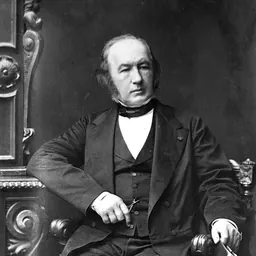
Lived 1850 – 1901 (aged 51). Lloyd Mathews was a British politician and naval officer.
Sir Lloyd William Mathews, (7 March 1850 – 11 October 1901) was a Royal Navy officer, politician and abolitionist. Mathews joined the Royal Navy as a cadet at the age of 13 and progressed through the ranks to lieutenant. He was involved with the Third Anglo-Ashanti War of 1873–4, afterwards being stationed in East Africa for the suppression of the slave trade. In 1877 he was seconded from the navy to Sultan Barghash of Zanzibar in order to form a European-style army; he would remain in the employment of the government of Zanzibar for the rest of his life. His army quickly reached 6,300 men and was used in several expeditions to suppress the slave trade and rebellions against the Zanzibar government.
Mathews retired from the Royal Navy in 1881 and was appointed Brigadier-General of Zanzibar. There followed more expeditions to the African mainland, including a failed attempt to stop German expansion in East Africa. In October 1891 Mathews was appointed First Minister to the Zanzibar government, a position in which he was "irremovable by the sultan". During this time Mathews was a keen abolitionist and promoted this cause to the Sultans he worked with. This resulted in the prohibiting of the slave trade in Zanzibar's dominions in 1890 and the abolition of slavery in 1897. Mathews was appointed the British Consul-General for East Africa in 1891 but declined to take up the position, remaining in Zanzibar instead. Mathews and his troops also played a key role in the ending of the Anglo-Zanzibar War of 1896 which erupted out of an attempt to bypass the requirement that new Sultans must be vetted by the British consul. During his time as first minister Mathews continued to be involved with the military and was part of two large campaigns, one to Witu and another to Mwele.
Mathews was decorated by several governments, receiving appointments as a Companion of the Order of St Michael and St George, Companion of the Order of the Bath and as a Knight Commander of the Order of St Michael and St George from the British government and membership in the Prussian Order of the Crown. Zanzibar also rewarded him and he was a member of the Grand Order of Hamondieh and a first class member of the Order of the Brilliant Star of Zanzibar. Mathews died of malaria in Zanzibar on 11 October 1901.
Early life and career Mathews was born at Funchal on Madeira on 7 March 1850. His father, Captain William Matthews, was Welsh and his mother, Jane Wallas Penfold, was the daughter of William Penfold and Sarah Gilbert. Her sister, Augusta Jane Robley (née Penfold), was the author of a book about the flora and fauna of Madeira, which is now in the Natural History Museum. His sister, Estella, Countess Cave of Richmond, was an author and the first Division Commissioner of Kingston Girl Guides. Mathews became a cadet of the Royal Navy in 1863 and was appointed a midshipman on 23 September 1866.
From 1868, he was stationed in the Mediterranean but his first active service was during the Third Anglo-Ashanti War of 1873–4 where he qualified for the campaign medal. He was promoted to lieutenant on 31 March 1874. On 27 August 1875 Mathews was posted to , a depot ship and the Royal Navy headquarters for East Africa, to assist in the suppression of the slave trade in the area. The army had traditionally been composed entirely of Arabs and Persians but Mathews opened up recruitment to the African majority on the island and had 300 recruits in training by the end of the year.
In addition, Mathews employed some unorthodox recruitment methods such as purchasing slaves from their masters, using inmates from the prison and recruiting from Africans rescued from the slavers. In June 1877, at the instigation of John Kirk, the explorer and friend of the Sultan, the British government sent a shipment of 500 modern rifles and ammunition as a gift with which to arm the troops. Mathews' expedition was initially intended to reach Unyanyembe but his men refused to march inland and, when made to do so, deserted in large numbers. The expedition ended instead at Mamboya where a 60-man garrison was established.
In 1881, Mathews' old vessel, , was captained by Charles J Brownrigg.
This vessel and her crew made several patrols aimed at hindering the slave trade using smaller steam boats for the actual pursuits and captures. On 3 December 1881 they caught up with a slave dhow captained by Hindi bin Hattam. This attempt ultimately failed when five German warships steamed into Zanzibar Town harbour and threatened the Sultan into signing away the territories which would later form German East Africa. Finding around 8,000 people gathered against the German administrators Mathews was forced to return with his men to Zanzibar. His position was so strong that one missionary on the island is quoted as saying that his powers defied "analytical examination" and that Mathews really could say "L'état est moi" (I am the state). Mathews was also known as the "Strong man of Zanzibar". The principal departments of government were mostly run by Britons or British Indians and Mathews' approval was required before they could be removed from office.
Mathews was rewarded by the Zanzibar government for his role with his appointment as a first class member of the Order of the Brilliant Star of Zanzibar, which he was granted licence by Queen Victoria to accept and wear on 17 May 1886. Mathews used his position to suppress slavery in the country and in 1889 convinced the Sultan to issue a decree purchasing the freedom of all slaves who had taken refuge in his dominions and, from 1890, the prohibiting the slave trade.
On 1 February 1891, Mathews was appointed Her Majesty's Commissioner and Consul-General to the British Sphere of Influence in East Africa. He never took up the post and instead chose to remain in Zanzibar.
Mathews was rewarded for his service in Zanzibar by the British government which appointed him a Companion of the Order of St Michael and St George in 1880 and a Companion of the Order of the Bath on 24 May 1889.
Despite becoming renowned in East Africa as a man who ran a fair administration and was strict with criminals, unhappiness with effective British rule and his halting of the slave trade led some Arabs to petition the Sultan for his removal in 1892. In 1893, Mathews purchased the island of Changuu for the government. He intended it to be used as a prison but it never housed prisoners and was instead used to quarantine yellow fever cases before its present use as a conservation area for giant tortoises. Mathews opposed this succession and, with British agreement, called up 900 soldiers in an attempt to prevent it.
This situation eventually led to the Anglo-Zanzibar War and Mathews, with the support of Admiral Harry Rawson and five vessels of the Royal Navy, bombarded the palace and secured the end of Khalid's administration.
Military expeditions
Mwele In addition to the smaller-scale expeditions described earlier, Mathews embarked on two much larger expeditions to the African mainland during his tenure as first minister, the first at Mwele. The initial rebellion in the area had been led by Mbaruk bin Rashid at Gazi, which Mathews had put down with 1,200 men in 1882. However, in 1895 Mbaruk's nephew, Mbaruk bin Rashid, refused to acknowledge the appointment of a new leader at Takaungu. Nine warships and three transports carrying 800 sailors and marines, 150 Imperial British East Africa Company (IBEA) Indian police, 200 Zanzibari and 50 Sudanese troops were sent, defeating the Sultan and establishing a British protectorate. Changuu Island, which Mathews bought for a prison, now has a restaurant named in his honour and also a church. Mathews House, at the Western end of Zanzibar Town, is also named for him.
Don’t just read it —
keep it.
Full-length biographies made to live with: read them, listen on the way to work, watch them tonight.
- E-book
- Audio
- Video
Instant download · yours to keep · every purchase keeps this site free
Important facts
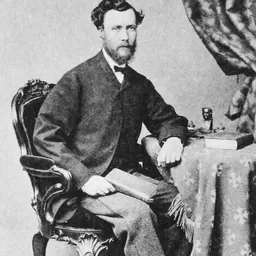
People in Lloyd Mathews's life
Named in this biography and alive at the same time




Related people
Same field, nearest in time





Contemporaries
People whose lives overlapped Lloyd Mathews's




Frequently asked questions
Who was Lloyd Mathews?
Royal Navy officer (1850-1901)
When was Lloyd Mathews born?
Lloyd Mathews was born on 7 March 1850 in Funchal.
When did Lloyd Mathews die?
Lloyd Mathews died on 11 October 1901 in Zanzibar Islands.
What was Lloyd Mathews's occupation?
Lloyd Mathews was a politician and naval officer.
What nationality was Lloyd Mathews?
Lloyd Mathews was British.
Sources & further reading
Cite this page
APA: Biography.guide. (2026). Lloyd Mathews. https://biography.guide/lloyd-mathews/
MLA: "Lloyd Mathews." Biography.guide, https://biography.guide/lloyd-mathews/.
Chicago: "Lloyd Mathews." Biography.guide. https://biography.guide/lloyd-mathews/.
Data last updated: 2026-09-22 · Spot an error? Report a correction.
Page generated 2026-09-27 04:58 UTC