
About Harry Rawson
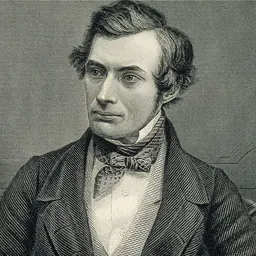
Lived 1843 – 1910 (aged 66). Harry Rawson was a British naval officer and politician.
Admiral Sir Harry Holdsworth Rawson, (5 November 1843 – 3 November 1910) was a Royal Navy officer. He is chiefly remembered for overseeing the Benin Expedition of 1897, a British punitive expedition against the Kingdom of Benin (in modern-day Nigeria). Rawson's force looted and burned the palace, exiled the Oba, and plundered a large number of the Benin Bronzes and other royal treasures. Rawson was appointed Governor of New South Wales, serving from 27 May 1902 to 27 May 1909.
Early life Harry Rawson was born at Walton-on-Hill, Lancashire, on 5 November 1843, the son of Christopher Rawson, of a British landed gentry family of The Haugh End and Mill House. He was educated at Eastman's Royal Naval Academy The couple had five children.
He was a long-standing Freemason, and served as Grand Master of the United Grand Lodge of New South Wales and the Australian Capital Territory.
Military service
Rawson joined the Royal Navy in 1857 and took part in the capture of the Taku Forts in 1860 during the Second Opium War. Promoted to captain in 1877, he was given command of . During July and August of that year, he oversaw actions including the burning of Gongoro and the storming of Mweli. In December 1895 to January 1896, he supported the Fourth Anglo-Asanti War, which led to the removal of Prempeh I of Asanteman. He was also responsible for organizing the Benin Punitive Expedition, participating in the looting. At the time, the Benin Expedition which was regarded in British circles largely as a stroke of disciplined and coordinated planning: In twenty-nine days a force of 1,200 men, coming from three places between 3000 and 4500 m. from the Benin river, was landed, organized, equipped and provided with transport. Five days later the city of Benin was taken, and in twelve days more the men were re-embarked, and the ships coaled and ready for any further service.
Rawson was also the commanding officer of the British forces in the Anglo-Zanzibar War, the shortest war in history, which lasted for 38 minutes on 27 August 1896. He kissed hands upon his appointment in an audience with King Edward VII on 24 March, and left for Australia soon thereafter, arriving at Sydney on 26 May 1902 to take up the position the following day. He proved so popular that his term was extended. Her condition deteriorated and in June 1905 Harry Rawson travelled to England to be with her. In the belief she was recovering, the four of them set sail for Australia in December 1905, but Lady Rawson died on board the ship "Ormuz" in the Red Sea on 3 December 1905 and was buried at sea. From 1903 to 1909, his aide-de-camp was Leslie Orme Wilson, later to be Governor of Queensland.
Rawson died, two days before his 67th birthday, on 3 November 1910 in London after an operation for appendicitis; he was survived by two sons and a daughter.
Honours
Eponyms The four male colleges of the University of Sydney now compete for the Rawson Cup. This Intercollegiate Cup was donated in 1906 by Sir Harry Rawson when he was Governor of New South Wales. The colleges that compete for the cup are St John's College, St Andrew's College, Wesley College and St Paul's College.
Rawson House, one of the two boarding houses at Cranbrook School, Sydney, is named after Sir Harry Rawson. The House was Sir Harry's former residence when he was Governor of New South Wales.
Rawson Hall, Norfolk Island – community hall in The Burnt Pine Shopping Centre. Rawsonville, a farming locality 25 km west of Dubbo is also named in his honour after a visit there in 1903 with the founding of the Anglican Brotherhood of the Good Shepherd.
The Rawson Cup was donated by the Governor for competition between clubs in the Sydney British Football Association premiership. Its first winner was Pyrmont Rangers in 1909.
Don’t just read it —
keep it.
Full-length biographies made to live with: read them, listen on the way to work, watch them tonight.
- E-book
- Audio
- Video
Instant download · yours to keep · every purchase keeps this site free
Important facts
People in Harry Rawson's life
Named in this biography and alive at the same time

Related people
Same field, nearest in time


Contemporaries
People whose lives overlapped Harry Rawson's
Frequently asked questions
Who was Harry Rawson?
Admiral and governor (1843-1910)
When was Harry Rawson born?
Harry Rawson was born on 5 November 1843 in Liverpool.
When did Harry Rawson die?
Harry Rawson died on 3 November 1910 in London.
What was Harry Rawson's occupation?
Harry Rawson was a naval officer and politician.
What nationality was Harry Rawson?
Harry Rawson was British.
Sources & further reading
Cite this page
APA: Biography.guide. (2026). Harry Rawson. https://biography.guide/harry-rawson/
MLA: "Harry Rawson." Biography.guide, https://biography.guide/harry-rawson/.
Chicago: "Harry Rawson." Biography.guide. https://biography.guide/harry-rawson/.
Data last updated: 2026-09-20 · Spot an error? Report a correction.
Page generated 2026-09-27 05:19 UTC