
About Lewis Reeve Gibbes
Lived 1810 – 1894 (aged 84). Lewis Reeve Gibbes was an American botanist, naturalist, carcinologist and meteorological observer.
Lewis Reeve Gibbes (August 14, 1810–November 21, 1894) was an American professor of mathematics, chemistry, physics, and astronomy at the College of Charleston. He is remembered for his Catalogue of the Phoenogamous Plants of Columbia, S.C., and Its Vicinity as well as his "Synoptical Table of the Chemical Elements," worked out between 1870 and 1874 and published in 1875.
Gibbes was born in Charleston on August 14, 1810 to Ladson Gibbes and Maria Henrietta Drayton Gibbes, the eldest of their eight children. After attending grammar school in Charleston and Philadelphia, he attended pre-college at the Pendleton Academy and, following his graduation in 1827, enrolled in South Carolina College, which had been founded by the state in 1801 and which would later evolve into the University of South Carolina. In 1830, he briefly taught classics and served as principal at Pendleton Academy, and later during this same year, he enrolled in the Medical College of South Carolina back in Charleston. The next year, in 1831, he returned to Columbia and began teaching mathematics at the College of South Carolina.
It was during this time that Gibbes began his important studies on phoenogamous plants (see terminology of plant reproductive morphology), which would lead to his publication several years later of his catalog listing approximately 775 species of plants ). His early research in this geographical region has continued to influence later generations of botanists, and today, a small collection is still housed at the Gibbes herbarium at the Charleston Museum.
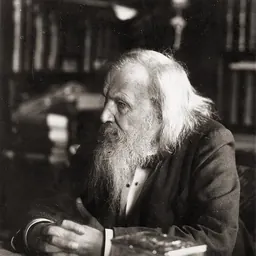
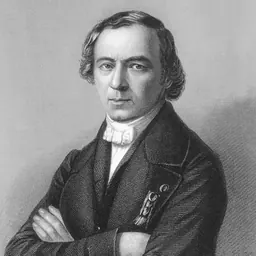
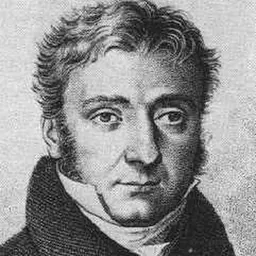
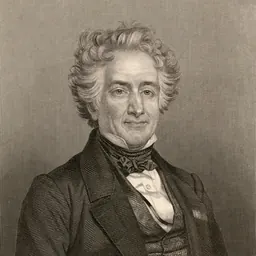
In 1836, Gibbes submitted a prize-winning thesis in French to the medical faculty and was awarded his degree. He then travelled to Paris and undertook a course of studies in chemistry that would influence his later significant research. He attended the lectures of Joseph Louis Gay-Lussac and Michel Eugène Chevreul at the Jardin des Plantes, as well as those of Jean-Baptiste Dumas and Claude Pouillet at the Sorbonne, and also those of Pierre Louis Dulong at the École Polytechnique.
He became professor of mathematics and history at the College of Charleston in 1838, while also continuing his work collecting biological specimen. During these years, Gibbes described two new species of salamander, the Salamandra melanosticta (1844) and the Menobranchus punctatus (1850). Because of his expertise, fellow naturalist John Bachman is known to have requested Gibbes' help for devising Latinized names during the drafting of his Quadrupeds of North America (1845-1848). When Louis Agassiz worked with Gibbes on the classification of American crabs, he would compliment him with the statement that "of the larger ones [Crustacea] there is nothing to be found after Professor Gibbes has gone over the ground."
Following the American Civil War, he was able to return to teaching, although financial difficulties prevented him from keeping abreast of the publications and research of Dmitri Mendeleev and Julius Lothar Meyer. Independent, therefore, of these European chemists, did Gibbes assemble his "Synoptical Table" during the years 1870-1874, in which he attempted to format in a unified chart as many as possible of the several different types of relationships found among the elements.
Gibbes' personal papers numbering over 5,000 items can be found at the Library of Congress in Washington, DC.
Don’t just read it —
keep it.
Full-length biographies made to live with: read them, listen on the way to work, watch them tonight.
- E-book
- Audio
- Video
Instant download · yours to keep · every purchase keeps this site free
Important facts
People in Lewis Reeve Gibbes's life
Named in this biography and alive at the same time




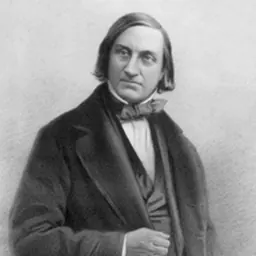
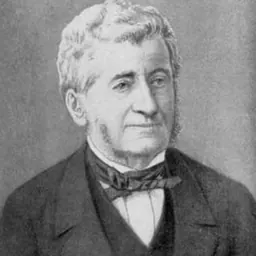
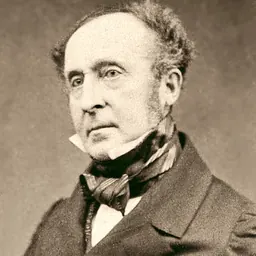
Related people
Same field, nearest in time


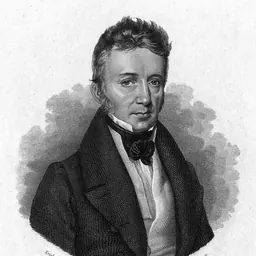
Contemporaries
People whose lives overlapped Lewis Reeve Gibbes's




Frequently asked questions
Who was Lewis Reeve Gibbes?
American botanist (1810-1894)
When was Lewis Reeve Gibbes born?
Lewis Reeve Gibbes was born on 14 August 1810 in Charleston.
When did Lewis Reeve Gibbes die?
Lewis Reeve Gibbes died on 21 November 1894.
What was Lewis Reeve Gibbes's occupation?
Lewis Reeve Gibbes was a botanist, naturalist, carcinologist and meteorological observer.
What nationality was Lewis Reeve Gibbes?
Lewis Reeve Gibbes was American.
Sources & further reading
· Wikipedia: Lewis Reeve Gibbes
Cite this page
APA: Biography.guide. (2026). Lewis Reeve Gibbes. https://biography.guide/lewis-reeve-gibbes/
MLA: "Lewis Reeve Gibbes." Biography.guide, https://biography.guide/lewis-reeve-gibbes/.
Chicago: "Lewis Reeve Gibbes." Biography.guide. https://biography.guide/lewis-reeve-gibbes/.
Data last updated: 2026-09-20 · Spot an error? Report a correction.
Page generated 2026-09-27 05:22 UTC