
About Leslie Spier
Lived 1893 – 1961 (aged 67). Leslie Spier was an American anthropologist.
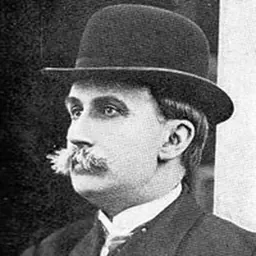
Leslie Spier (December 13, 1893 – December 3, 1961) was an American anthropologist best known for his ethnographic studies of American Indians. He spent a great deal of his professional life as a teacher; he retired in 1955 and died in 1961.
Spier created a path for the study of cultural change, taking the time to conduct in-depth studies of group contact. His studies focused on changes throughout various cultures over time; he saw great importance in empirical research and made his reports as detailed as possible. Spier’s early years were spent studying the many diverse areas of anthropology ranging from archaeology to physical anthropology. His main interests were studying human relations and analyzing cultural processes among Native American groups. As a teacher, Spier was greatly admired by his students because he was extremely successful in passing along his methodological techniques for gathering exact data. Spier is remembered best for his explanatory studies and widespread fieldwork of cultural groups. Spier continued his research using his personal methodology right to his death in 1961.
Background Leslie Spier was born in New York City, New York, on December 13, 1893. He was one of four children born to Simon P. Spier and Bertha Adler Spier. In 1920, Spier married Erna Gunther; Gunther was a fellow anthropology student at Columbia University. After graduating and receiving their degrees, Spier earned his Ph.D. while Gunther received her Masters, the newly married couple moved to the University of Washington. The couple had two children, Robert and Christopher.
During his childhood and teenage years, he received his education through the New York public school system. As an undergraduate, he attended the College of the City of New York, graduating in 1915 with a Bachelor of Science degree in engineering. Despite earning a degree in engineering, he had developed a strong interest in anthropology and was accepted into graduate school at Columbia University; he graduated with a doctorate in anthropology in 1920. In 1945, while at the University of New Mexico, Spier founded the Southwestern Journal of Anthropology; by this time, the university was employing six faculty members in the anthropology department.
Research Early in his career, Spier was involved in many research projects in the Northeast United States including in his home state of New York, and in New Jersey and Delaware. In the time period between 1916 and 1935, Spier dedicated at least part of every year to field research. He was a research assistant at Yale University in 1932 and 1933 and at the University of California from 1960 to 1961. In 1918, during his time working with the New Jersey Archaeological and Geological study, he published one of his most important works in archaeology—The Trenton Argillite Culture. From the collected data on the "argillite culture," Spier determined that this culture did not exist. He combined his knowledge of statistical analysis with the archaeological deposits, concluding that the artifacts were present due to natural geological changes in the area.
Another well known archaeological publication by Spier concerns the Zuni; in his research with Zuni groups, Spier demonstrated his use of seriation to chronologically order site deposits. In conjunction with Kidder’s seriation, Kroeber’s ranking and concurrent variation, and Nelson’s stratigraphy, Spier was helping develop fundamental methods in archaeological theory that are used to this day. Through use of these procedures, Spier was able to determine that the Zuni culture was a continuation of the earliest cultures of the same area.
Ethnology Spier’s main anthropological interest was ethnographic studies, especially of American Indians. His favorite ethnological courses to teach were those concentrated on the Southwest, the Great Basin, the Plains, and California. Spier’s previous anthropological experience made him well-suited for ethnographic studies; he completely immersed himself in the culture he was studying, acquiring the language, learning cultural customs, and bringing a new awareness to an otherwise unknown group of people. He conducted many ethnographic studies among Native American populations; for Spier, it was crucial to gain knowledge and evidence about these cultures before they became extinct. From the 1910s to the 1930s, he studied Zuni, Havasupai, Kiowa, Wichita, Wishram, Klamath, and numerous other groups. Spier’s personal interest in gathering firsthand knowledge of American Indian cultures shaped his place in the ethnographic world. His interest in Native American cultures led him all across the United States, but a majority of his research is based in the western areas of the country from California to the Great Basin, and everywhere in between. Spier studied extensively on the complex ceremonial sun dance performed by the Plains Indians. He looked closely into the lifestyles of the native cultures, taking detailed inventory of housing, clothing, economy, etc., and created a detailed account of how the cultural system worked and prospered. Spier’s ethnographic studies went far beyond descriptions; he frequently compared the cultural systems over a surrounding area in order to gain a deeper understanding of the people he was studying.
Awards and honors In 1919, Columbia University awarded Spier the Cutting Travelling Fellowship; in 1923, Spier was awarded a National Research Council Fellowship. Spier was presented with the Townsend Harris Medal in 1946 and the Viking Fund Medal and Award in 1960. Throughout his career, Spier was affiliated with many professional and honorary societies. He was president of the American Anthropological Association in 1943, American Anthropologist editor from 1934 to 1938, and vice-president of the American Association for the Advancement of Science in 1943 and 1946. He first became a member of the National Academy of Sciences in 1946; in the same year, he became part of the American Philosophical Society. In 1960, he became an Honorary Fellow of the Royal Anthropological Institute of Great Britain and Ireland. He was also recognized as a member of the Andean Institute, the Society for American Folklore, and Sigma Xi.
Selected works Spier, Leslie. An Outline for a Chronology of Zuni Ruins. New York City: The Trustees of Columbia University, 1917. Spier, Leslie. The Trenton Argillite Culture. New York City: The Trustees of Columbia University, 1918. Spier, Leslie. Ruins in the White Mountains, Arizona. New York City: The Trustees of Columbia University, 1919. Spier, Leslie. Notes on the Kiowa Sun Dance. New York City: The Trustees of Columbia University, 1921. Spier, Leslie. The Sun Dance of the Plains Indians: Its Development and Diffusion. New York City: The Trustees of Columbia University, 1921. Spier, Leslie. The Distribution of Kinship Systems in North America''''. Seattle: University of Washington Press, 1925. Spier, Leslie. The Ghost Dance of 1870 Among the Klamath of Oregon. Seattle: University of Washington Press, 1927 Spier, Leslie. Havasupai Ethnography. New York City: The Trustees of Columbia University, 1928. Spier, Leslie. Growth of Japanese Children Born in America and in Japan. Seattle: University of Washington Press, 1929. Spier, Leslie and Sapir, Edward. Wishram Ethnography. Seattle: University of Washington Press, 1930. Spier, Leslie. Plains Indian Parfleche Designs. Seattle: University of Washington Press, 1931. Spier, Leslie. Yuman Tribes of the Gila River. Chicago: University of Chicago Press, 1933. Spier, Leslie. Cultural Relations of the Gila River and Lower Colorado Tribes. Yale University: Yale University Press, Department of the Social Sciences, 1936. Spier, Leslie, Riley, Carroll L., Taylor, Walter W. eds. American Historical Anthropology: Essays in Honor of Leslie Spier''. Carbondale: Southern Illinois University Press, 1967.
Don’t just read it —
keep it.
Full-length biographies made to live with: read them, listen on the way to work, watch them tonight.
- E-book
- Audio
- Video
Instant download · yours to keep · every purchase keeps this site free
Important facts
People in Leslie Spier's life
Named in this biography and alive at the same time

Related people
Same field, nearest in time


Contemporaries
People whose lives overlapped Leslie Spier's


Frequently asked questions
Who was Leslie Spier?
American anthropologist (1893-1961)
When was Leslie Spier born?
Leslie Spier was born on 13 December 1893 in New York City.
When did Leslie Spier die?
Leslie Spier died on 3 December 1961.
What was Leslie Spier's occupation?
Leslie Spier was an anthropologist.
What nationality was Leslie Spier?
Leslie Spier was American.
Sources & further reading
Cite this page
APA: Biography.guide. (2026). Leslie Spier. https://biography.guide/leslie-spier/
MLA: "Leslie Spier." Biography.guide, https://biography.guide/leslie-spier/.
Chicago: "Leslie Spier." Biography.guide. https://biography.guide/leslie-spier/.
Data last updated: 2026-09-20 · Spot an error? Report a correction.
Page generated 2026-09-27 05:08 UTC