
About Leslie Lamport
Born 1941. Leslie Lamport is an American mathematician, computer scientist, programmer, engineer and writer, known for Byzantine fault, Hash chain and LaTeX.
Leslie Barry Lamport
Lamport was the winner of the 2013 Turing Award for imposing clear, well-defined coherence on the seemingly chaotic behavior of distributed computing systems, in which several autonomous computers communicate with each other by passing messages. He devised important algorithms and developed formal modeling and verification protocols that improve the quality of real distributed systems. These contributions have resulted in improved correctness, performance, and reliability of computer systems.
Early life and education Lamport was born into a Jewish family in Brooklyn, New York, the son of Benjamin and Hannah Lamport (née Lasser). His father was an immigrant from Volkovisk in the Russian Empire (now Vawkavysk, Belarus) and his mother was an immigrant from the Austro-Hungarian Empire, now southeastern Poland.
A graduate of Bronx High School of Science, Lamport received a B.S. in mathematics from the Massachusetts Institute of Technology in 1960, followed by M.A. (1963) and Ph.D. (1972) degrees in mathematics from Brandeis University. His dissertation, The analytic Cauchy problem with singular data, is about singularities in analytic partial differential equations.
Career and research Lamport worked as a computer scientist at Massachusetts Computer Associates from 1970 to 1977, Stanford Research Institute (SRI International) from 1977 to 1985, and Digital Equipment Corporation and Compaq from 1985 to 2001. In 2001 he joined Microsoft Research in California,
Distributed systems Lamport's research contributions have laid the foundations of the theory of distributed systems. Among his most notable papers are "Time, Clocks, and the Ordering of Events in a Distributed System", "How to Make a Multiprocessor Computer That Correctly Executes Multiprocess Programs", which defined the notion of sequential consistency, "The Byzantine Generals' Problem", "Distributed Snapshots: Determining Global States of a Distributed System" and "The Part-Time Parliament". These papers relate to such concepts as logical clocks (and the happened-before relationship) and Byzantine failures. They are among the most cited papers in the field of computer science, and describe algorithms to solve many fundamental problems in distributed systems, including: the Paxos algorithm for consensus, the bakery algorithm for mutual exclusion of multiple threads in a computer system that require the same resources at the same time, the Chandy–Lamport algorithm for the determination of consistent global states (snapshot), and the Lamport signature, one of the prototypes of the digital signature.
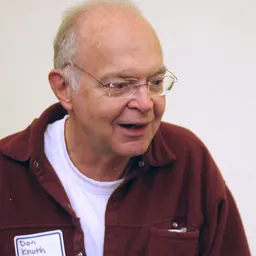
LaTeX When Donald Knuth began issuing the early releases of TeX in the early 1980s, Lamport — due to his personal need of writing a book — also began working on a set of macros based on it, hoping that it would later become its standard macro package. This set of macros would later become known as LaTeX, for which Lamport would subsequently be approached in 1983 by Peter Gordon, an Addison-Wesley editor, who proposed that Lamport turn its user manual into a book.
In September 1984, Lamport released version 2.06a of the LaTeX macros, and in August 1985, LaTeX 2.09 — the last version of Lamport's LaTeX — would be released as well. Meanwhile, Addison-Wesley released Lamport's first LaTeX user manual, LaTeX: A Document Preparation System, in 1986, which purportedly sold "more than a few hundred thousands" copies, and on August 21, 1989, at a TeX User Group meeting at Stanford, Lamport would agree to turn over the maintenance and development of LaTeX to Frank Mittelbach, who, along with Chris Rowley and Rainer Schöpf, would form the LaTeX3 team, subsequently releasing LaTeX 2e, the current version of LaTeX, in 1994.
Temporal logic Lamport is also known for his work on temporal logic, where he introduced the temporal logic of actions (TLA). Among his more recent contributions is TLA+, a language for specifying and reasoning about concurrent and reactive systems, which he describes in the book Specifying Systems: The TLA+ Language and Tools for Hardware and Software Engineers. He defines TLA+ as a "quixotic attempt to overcome engineers' antipathy towards mathematics".
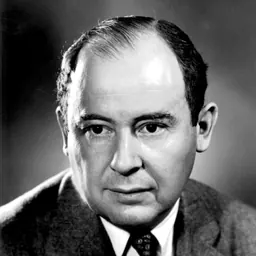
Awards and honors Lamport received the 2013 Turing Award for "fundamental contributions to the theory and practice of distributed and concurrent systems, notably the invention of concepts such as causality and logical clocks, safety and liveness, replicated state machines, and sequential consistency", which can be used in synchronizing the systems. He was elected a member of the National Academy of Engineering in 1991 for contributions to the theoretical foundations of concurrent and fault-tolerant computing. He was elected to Fellow of Association for Computing Machinery for fundamental contributions to the theory and practice of distributed and concurrent systems in 2014. He also received five honorary doctorates from European universities: University of Rennes and Christian Albrechts University of Kiel in 2003, École Polytechnique Fédérale de Lausanne (EPFL) in 2004, University of Lugano in 2006, and Nancy-Université in 2007. In 2005, the paper "Reaching Agreement in the Presence of Faults" received the Dijkstra Prize. In honor of Lamport's sixtieth birthday, a lecture series was organized at the 20th Symposium on Principles of Distributed Computing (PODC 2001). In 2008, he received the IEEE John von Neumann Medal. In 2011, he was elected to the National Academy of Sciences.
In 2020, the Solana blockchain platform named its smallest unit of currency the lamport''' in honor of Lamport. The lamport is a fractional native token with the value of 0.000000001 sol (one billionth of a sol).
Don’t just read it —
keep it.
Full-length biographies made to live with: read them, listen on the way to work, watch them tonight.
- E-book
- Audio
- Video
Instant download · yours to keep · every purchase keeps this site free
Important facts
more
Sequential consistency, TLA+, Temporal logic of actionsPeople in Leslie Lamport's life
Named in this biography and alive at the same time



Related people
Same field, nearest in time


Contemporaries
People whose lives overlapped Leslie Lamport's



Frequently asked questions
Who is Leslie Lamport?
American computer scientist
When was Leslie Lamport born?
Leslie Lamport was born on 7 February 1941 in New York City.
What is Leslie Lamport's occupation?
Leslie Lamport is a mathematician, computer scientist, programmer, engineer and writer.
What is Leslie Lamport known for?
Leslie Lamport is known for Byzantine fault, Hash chain, LaTeX, Lamport signature, Lamport's bakery algorithm and Paxos algorithm.
What nationality is Leslie Lamport?
Leslie Lamport is American.
Sources & further reading
Cite this page
APA: Biography.guide. (2026). Leslie Lamport. https://biography.guide/leslie-lamport/
MLA: "Leslie Lamport." Biography.guide, https://biography.guide/leslie-lamport/.
Chicago: "Leslie Lamport." Biography.guide. https://biography.guide/leslie-lamport/.
Data last updated: 2026-09-20 · Spot an error? Report a correction.
Page generated 2026-09-27 05:25 UTC