
About Leonetta Cecchi Pieraccini
Lived 1882 – 1977 (aged 94). Leonetta Cecchi Pieraccini was an Italian painter.
Leonetta Cecchi Pieraccini (; ; 31 October 1882 – 23 September 1977) was an Italian painter, originally from Tuscany. Like many artists of the period, she is known principally for portraiture, employing watercolours or oils. Her actual output was more diverse, however. She produced a number of landscapes and monotypes. She was also a diligent diarist, and during the later part of her life published several books, which were autobiographical in character. Her work resonated with art lovers and commentators during the first and middle parts of the twentieth century, through which she lived, surviving to a good age. By the time she died, to the regret of admirers, her work was beginning to fall out of favour, however.
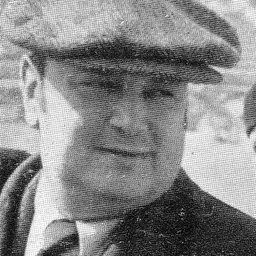
Biography Provenance and early years Leonetta Pieraccini was born into a family of landowners in Poggibonsi, at a time when it was still a small country town, set in the Elsa Valley (Valdelsa) in the hilly countryside north of Siena. Ottaviano Pieraccini, her father, was a physician, prominent in the town as a socialist and an intellectual. She was among her father's younger children. Her mother, born Argene Zani (1848-1926), was her father's third wife. Some indication of the spirit of the household in which she grew up can be inferred from the fact that all her brothers grew up to become physicians and socialists. Her youngest brother, Gaetano Pieraccini, also came to prominence during the summer of 1944 as the first mayor of Florence following the fall of fascism and the liberation of the region.
Leonetta was nine when a court confiscated most of her father's assets in order to compensate shareholders who had lost money by investing in a local bank that he had founded. Losses resulted from a fraud perpetrated by Ottaviano Pieraccini's business partner. Ottaviano Pieraccini spent the years 1891–1894 as a prisoner, in part in his own home under house arrest and in part as an inmate at the Siena city jail.
After that the family relocated to Florence, where they lived in the same apartment block as Giovanni Fattori, although she really only got to know him after 1902, as one of his students at the academy. She was still living with her family when they moved again, this time leaving Tuscany completely and settling at Colmurano, a small medieval hill town located a short distance inland from Ancona, in Marche. Her elder half-brother, Guido Pieraccini (1873-1953), lived at Colmurano and was building his career as a physician. For Leonetta, there was an abundant opportunity to devote herself to painting. She produced portraits and landscapes in the area.
Art student She returned to Tuscany in 1902, aged 20, and enrolled at the Academy of Fine Arts in Florence, where she was taught painting by Giovanni Fattori and "decoration" by Augusto Bruchi. Fattori was a leading exponent of the innovative and influential (at that time) Macchiaioli movement in painting. Student contemporaries who became friends included Fillide Levasti, Tommaso Cascella Armando Spadini and his future wife, the beautiful Pasqualina Cervone. It was also during this period that Leonetta Pieraccini first came across the man who later became her husband, Emilio Cecchi. Both were enthusiastic letter writers: thick files of their correspondence survive in accessible archives, to the delight of art history students and scholars of that period. That same year Ottaviano Pieraccini, her father, suffered a cerebral haemorrhage which left him immobilised.
Networking During the early years of the Cecchis' marriage, Emilio Cecchi was working intensively on a commission he had accepted from Olindo Malagodi to produce a History of Nineteenth Century English literature for La Tribuna: the volume was published in 1915. The Cecchis' apartment quickly became a popular meeting point for a generation of Rome's artists and intellectuals. Frequent visitors identified by Leonetta herself in her later writings include Armando and Pasqualina Spadini (who had also made the move to Rome), Antonio Baldini, Alfredo Gargiulo, Giuseppe Antonio Borgese, Fausto Torrefranca, Giovanni Amendola, Sibilla Aleramo, Vincenzo Cardarelli, Goffredo Bellonci and Cesare Pascarella, as well as Olga Resnevič and her physician husband, Angelo Signorelli (1878–1952). It seems also to have been at around the same time that Leonetta began to keep a diary, which she would faithfully maintain for the rest of her life, and which would provide material for books which she would publish half a lifetime later. Again, her work was met with favourable critical reviews. Later that year, Emilio Cecchi was offered and accepted a journalism assignment by the "Italian foreign action Bureau" which meant a lengthy stay in England for him, while Leonetta remained in Florence with the children, of whom there were by this time three. During 1919, the couple were able to meet up together for a short stay in Paris. They returned to Florence soon afterwards and immediately set about moving back to Rome. On account of a desperate shortage of suitable housing in the capital, during 1920, they set up their family home, temporarily, at Ariccia, in the hills to the east of Rome, however. Before too much longer, they were able to move to within the city limits, acquiring an apartment along the Via Appia Nuova. Cecchi returned to working on La Tribuna and was also one of seven co-founders of the La Ronda, a monthly literary review magazine targeting Rome's intellectual élite: the first edition appeared in April 1919 and the last in December 1923.
First solo exhibitions. Critical reactions In February 1921 Leonetta Cecchi Pieraccini agreed to collaborate in her first solo exhibition. The location was the "Casa d'Arte Bragaglia" (gallery), opened three years earlier by Anton Giulio Bragaglia. Leonetta was encouraged to go ahead with the exhibition by her friend Armando Spadini, who also helped with the selection of pictures to be exhibited. The exhibition featuring approximately 50 oil paintings and watercolours was a critical success, receiving another enthusiastic review from Oppo in L'Idea Nazionale. The first solo exhibition of her own works which she arranged herself involved 42 of her paintings, displayed a few years later in 1928, at the "Art Room" attached to the literary magazine La Fiera Letteraria ("Literary fair") in Milan. ("Leonetta Cecchi Pieraccini présente des portraits dont le charme tient à des qualités de force et de précision.) Elle sait allier la fraîcheur des tons aux nécessités architecturales et à la vivacité de l’interprétation" Five of her works were included including two landscapes and two portraits of friends, the writers Antonio Baldini and Giuseppe Ungaretti.
1930s Through the 1930s her works again featured at major exhibitions, and Pieraccini's work continued to receive positive reviews. From the early part the decade sources pick out the seventeenth Venice Biennale in 1930, the II Sindacale del Lazio exhibition at around the same time, the first Rome Quadriennale in which her work featured as part of a characteristically very large exhibition in January 1931, the Baltimore Museum of Art, the Syracuse Museum of Fine Arts in 1931–32, and in 1933 the Fine Arts Exhibition organised by the "Sindacato nazionale fascista" (loosely, "national fascist union") in Florence. "Vecchie agendine, 1911-1929" (1960: loosely, "Old diaries ..."''') is a similarly autobiographical work, revisiting much of the same ground, but which now, in the words of one commentator, includes "all the private reflections [absent from the] earlier book". "Agendina di guerra, 1939-1944" (1964: "War diary ..."'') follows much the same pattern, with the difference that it deals with the war years.
In 1911, if not earlier, Leonetta Cecchi Pieraccini became a serious diarist. Much about their character and quality can be inferred from the three volumes that she wrote on them. She continued to add to her diary till 1971, by which time she was a few months short of her ninetieth birthday, by which point she had filled approximately forty notebooks and adapted desk diaries, with a formidable body of information, insights and anecdotes. The diaries have survived and are currently held as part of the Bonsanto Contemporary Archive at the Gabinetto Vieusseux (library) in Florence. There is, in addition, a typescript of the entire set, transcribed by the diarist's younger daughter held in Rome by the Archivio Leonetta Cecchi Pieraccini. Some time later, in 2015, the earlier notebook diaries, covering the years between 1911 and 1929, were published posthumously and in full by Sellerio Editore, a well-respected publishing house based in Sicily. The publication was overseen by Masolino D’Amico, the diarist's great-granddaughter, and embellished with an introduction by Masolino D’Amico, her grandson.
Personal tragedy Although Leonetta Cecchi Pieraccini was blessed with a long, active life, she suffered the double tragedy of being predeceased by two of her four children. Mario, her eldest son, was born dead in 1912. Then, in 1959, her elder daughter fell gravely ill. Seven years later, on 16 July 1966, Giuditta 'Ditta' Cecchi Natinguerra died at the conclusion of a long and brutal illness.
Later years In November 1972, Dario Cecchi, an artistic polymath who is also a painter, arranged what was intended as his mother's final exhibition, which was held in the Galleria Aldina in Rome. The purpose was to mark Leonetta's ninetieth birthday, although in the event the exhibition opened some weeks after the anniversary in question. Leonetta herself participated with "lively commitment" in the staging of it.
Leonetta Cecchi Pieraccini died in Rome on 23 September 1977. In 1999, a further exhibition was organised by Pier Paolo Pancotto in Poggibonsi to celebrate her memory.
Don’t just read it —
keep it.
Full-length biographies made to live with: read them, listen on the way to work, watch them tonight.
- E-book
- Audio
- Video
Instant download · yours to keep · every purchase keeps this site free
Important facts
Family & relationships
People in Leonetta Cecchi Pieraccini's life
Named in this biography and alive at the same time



Related people
Same field, nearest in time


Contemporaries
People whose lives overlapped Leonetta Cecchi Pieraccini's




Frequently asked questions
Who was Leonetta Cecchi Pieraccini?
Italian painter and writer (1882–1977)
When was Leonetta Cecchi Pieraccini born?
Leonetta Cecchi Pieraccini was born on 31 October 1882 in Poggibonsi.
When did Leonetta Cecchi Pieraccini die?
Leonetta Cecchi Pieraccini died on 23 September 1977 in Rome.
What was Leonetta Cecchi Pieraccini's occupation?
Leonetta Cecchi Pieraccini was a painter.
What nationality was Leonetta Cecchi Pieraccini?
Leonetta Cecchi Pieraccini was Italian.
Sources & further reading
· Wikipedia: Leonetta Cecchi Pieraccini
· DBpedia: Leonetta Cecchi Pieraccini
Cite this page
APA: Biography.guide. (2026). Leonetta Cecchi Pieraccini. https://biography.guide/leonetta-cecchi-pieraccini/
MLA: "Leonetta Cecchi Pieraccini." Biography.guide, https://biography.guide/leonetta-cecchi-pieraccini/.
Chicago: "Leonetta Cecchi Pieraccini." Biography.guide. https://biography.guide/leonetta-cecchi-pieraccini/.
Data last updated: 2026-09-27 · Spot an error? Report a correction.
Page generated 2026-09-27 05:17 UTC