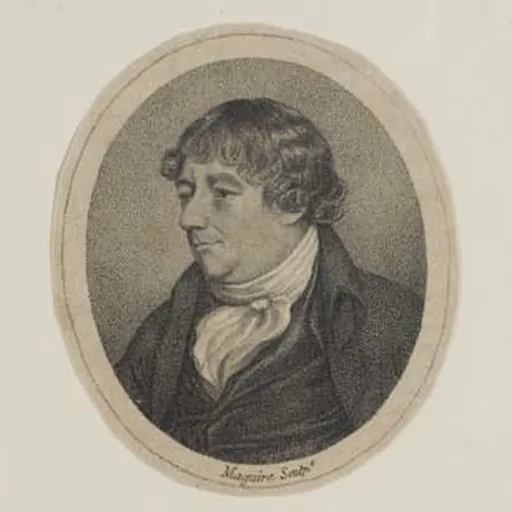
About Leonard McNally
Lived 1752 – 1820 (aged 67–68). Leonard McNally was a barrister and spy.
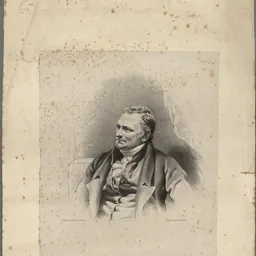
Leonard McNally or MacNally (27 September 1752 – 13 February 1820) was an Irish barrister, playwright, lyricist, founding member of the United Irishmen and spy for the British Government within Irish republican circles.
He was a successful lawyer in late 18th and early 19th century Dublin, and wrote a law book that was crucial in the development of the "beyond reasonable doubt" standard in criminal trials. However, during his time, he was best known for his popular comic operas and plays, together with his most enduring work, the romantic song "The Lass of Richmond Hill". He is now mainly remembered as a very important informer for the British government within the Irish revolutionary society, the United Irishmen and played a major role in the defeat of the Irish Rebellion of 1798. In return for payments from the government, McNally would betray his United Irishmen colleagues to the authorities and then, as defence counsel at their trial, secretly collaborate with the prosecution to secure a conviction. His notable republican clients included Napper Tandy, Wolfe Tone, Robert Emmet and Lord Edward FitzGerald.
Early life McNally was born in Dublin in 1752, the son of a merchant and wine importer. He was raised by his mother with the support of his uncle. McNally was born into a Roman Catholic family, but at some point in the 1760s he converted to the Church of Ireland.
However, in 1774 he went to London to study law at the Middle Temple but returned to Dublin to be called to the Irish bar in 1776. He practised for a short time in London, and, while there, supplemented his income by writing plays and editing The Public Ledger. The text played a crucial role in defining and publicising the beyond reasonable doubt standard for criminal trials. In 1792, he represented Napper Tandy, a radical member of the Irish Parliament, in a legal dispute over parliamentary privilege. a clandestine society which soon developed into a revolutionary Irish republican organisation. He ranked high in its leadership and acted as the organisation's chief lawyer, representing many United Irishmen in court. This included defending Wolfe Tone and Robert Emmet, the leaders of the 1798 and 1803 rebellions respectively, at their trials for treason. In 1793, McNally was wounded in a duel with Sir Jonah Barrington, who had insulted the United Irishmen. McNally was paid an annual pension in respect of his work as an informer of £300 a year, from 1794 until his death in 1820. McNally was considered to be one of the most damaging informers. During the trial of Emmet, McNally provided details of the defence's strategy to the crown and conducted his client's case in a way that would assist the prosecution.
Playwright and lyricist Vauxhall Gardens, where McNally's song, The Lass of Richmond Hill, was first performed in 1789. McNally was a successful dramatist and wrote a number of well-constructed but derivative comedies, as well as comic operas. His first dramatic work was The Ruling Passion, a comic opera written in 1771, One of his songs, Sweet Lass of Richmond Hill, became very well-known and popular following its first public performance at Vauxhall Gardens in London in 1789. It was said to be a favourite of George III and popularised the romantic metaphor "a rose without a thorn", a phrase which McNally had used in the song.
Personal life and family Nothing is known of McNally's first wife Mary O'Brien, other than that she died in 1786. In London in 1787, McNally eloped with Frances I'Anson, as her father William I'Anson a solicitor, disapproved of McNally. Frances, and her family's estate, Hill House in Richmond, Yorkshire, was the subject of a song with lyrics by McNally and composed by James Hook, Sweet Lass of Richmond Hill.
Don’t just read it —
keep it.
Full-length biographies made to live with: read them, listen on the way to work, watch them tonight.
- E-book
- Audio
- Video
Instant download · yours to keep · every purchase keeps this site free
Important facts
People in Leonard McNally's life
Named in this biography and alive at the same time



Related people
Same field, nearest in time



Contemporaries
People whose lives overlapped Leonard McNally's





Frequently asked questions
Who was Leonard McNally?
Irish writer and spy
When was Leonard McNally born?
Leonard McNally was born in 1752 in Dublin.
When did Leonard McNally die?
Leonard McNally died on 8 June 1820 in Dublin.
What was Leonard McNally's occupation?
Leonard McNally was a barrister and spy.
Sources & further reading
Cite this page
APA: Biography.guide. (2026). Leonard McNally. https://biography.guide/leonard-mcnally/
MLA: "Leonard McNally." Biography.guide, https://biography.guide/leonard-mcnally/.
Chicago: "Leonard McNally." Biography.guide. https://biography.guide/leonard-mcnally/.
Data last updated: 2026-09-21 · Spot an error? Report a correction.
Portrait: Wikimedia Commons · author & licence
Page generated 2026-09-27 04:59 UTC