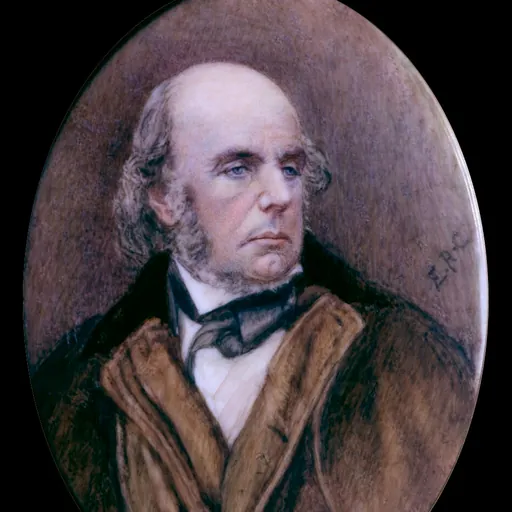
About Edward FitzGerald
Lived 1809 – 1883 (aged 74). Edward FitzGerald was a British translator, poet, writer, artist, draftsperson and lawyer.
Edward FitzGerald or Fitzgerald (31 March 180914 June 1883) was an English poet and writer. His most famous poem is the first and best-known English translation of The Rubaiyat of Omar Khayyam, which has kept its reputation and popularity since the 1860s.
Life Edward FitzGerald was born into an Irish family as Edward Purcell at Bredfield House in Bredfield, some two miles north of Woodbridge, Suffolk, England, in 1809. In 1818, his Irish father, John Purcell, assumed the name and arms of his wife's family, the FitzGeralds of County Waterford. His elder brother John used the surname Purcell-Fitzgerald from 1858.
The change of family name occurred shortly after FitzGerald's mother inherited a second fortune. She had previously inherited over half a million pounds from an aunt, but in 1818, her father died and left her considerably more than that. The FitzGeralds were one of the wealthiest families in England. Edward FitzGerald later commented that all of his relatives were mad; further, that he was insane as well, but was at least aware of the fact.
In 1816, the family moved to France, and lived in St Germain as well as Paris, but in 1818, after the death of his maternal grandfather, the family had to return to England. In 1821, Edward was sent to King Edward VI School, Bury St Edmunds. In 1826, he went on to Trinity College, Cambridge. He became acquainted with William Makepeace Thackeray and William Hepworth Thompson. In 1830, FitzGerald left for Paris, but in 1831 was living in a farmhouse on the battlefield of Naseby. despite having known each other for many years and collaborated on a book about her father's works in 1849.
Early literary work In 1853, FitzGerald issued Six Dramas of Calderon, freely translated. However, it was discovered in 1861 by Rossetti and soon after by Swinburne and Lord Houghton. The Rubaiyat slowly became famous, but it was not until 1868 that FitzGerald was encouraged to print a second, greatly revised edition of it. He had produced in 1865 a version of the Agamemnon, and two more plays from Calderón. In 1880–1881, he privately issued translations of the two Oedipus tragedies. His last publication was Readings in Crabbe, 1882. He left in manuscript a version of Attar of Nishapur's Mantic-Uttair.
Personal life FitzGerald was unobtrusive in person, but during the 1890s, his individuality gradually gained a broad influence in English belles-lettres. George Gissing found them interesting enough to read the three-volume collection twice, in 1890 and 1896.
FitzGerald's emotional life was complex. He was close to many friends, among them William Kenworthy Browne, who was 16 when they met, and who died in a horse-riding accident in 1859. His loss was very difficult for FitzGerald. Later, FitzGerald became close to a fisherman named Joseph Fletcher, with whom he had bought a herring boat. With Professor Daniel Karlin writing in his introduction to the 2009 edition of Rubáiyát of Omar Khayyám that "His [FitzGerald] homoerotic feelings (...) were probably unclear to him, at least in the form conveyed by our word 'gay'", it is unclear whether FitzGerald himself ever identified himself as a homosexual or acknowledged himself to be one.
FitzGerald grew disenchanted with Christianity and eventually ceased to attend church. This drew the attention of the local pastor, who stopped by. FitzGerald reportedly told him that his decision to absent himself was the fruit of long and hard meditation. When the pastor protested, FitzGerald showed him the door and said, "Sir, you might have conceived that a man does not come to my years of life without thinking much of these things. I believe I may say that I have reflected [on] them fully as much as yourself. You need not repeat this visit." Posh is also often present in Fitzgerald's letters. Documentary data about the Fitzgerald–Posh partnership are available at the Port of Lowestoft Research Society. Posh died at Mutford Union workhouse, near Lowestoft, on 7 September 1915, at the age of 76.
Fitzgerald was termed "almost vegetarian", as he ate meat only in other people's houses. His biographer Thomas Wright noted that "though never a strict vegetarian, his diet was mainly bread and fruit." Several years before his death, FitzGerald said of his diet, "Tea, pure and simple, with bread-and-butter, is the only meal I do care to join in."
From 1861 onwards, FitzGerald's greatest interest had been in the sea. In June 1863 he bought a yacht, "The Scandal", and in 1867 he became part-owner of a herring lugger, the Meum and Tuum ("mine and thine"). For some years up to 1871, he spent his summers "knocking about somewhere outside of Lowestoft." He was in his own words "an idle fellow, but one whose friendships were more like loves." In 1885 his fame was enhanced by Tennyson's dedication of his Tiresias to FitzGerald's memory, in some reminiscent verses to "Old Fitz."
Rubáiyát of Omar Khayyam Beginning in 1859, FitzGerald authorized four editions (1859, 1868, 1872 and 1879) and there was a fifth posthumous edition (1889) of his translation of the Rubáiyát of Omar Khayyám . Three (the first, second, and fifth) differ significantly; the second and third are almost identical, as are the fourth and fifth. The first and fifth are reprinted almost equally often, and equally often anthologized.
Stanza XI above, from the fifth edition, differs from the corresponding stanza in the first edition, wherein it reads: "Here with a Loaf of Bread beneath the bough/A Flask of Wine, a Book of Verse – and Thou". Other differences are discernible. Stanza XLIX is better known in its incarnation in the first edition (1859):
The fifth edition (1889) of stanza LXIX, with different numbering, is less familiar: "But helpless Pieces of the Game He plays/Upon this Chequer-board of Nights and Days;/Hither and thither moves, and checks, and slays,/And one by one back in the Closet lays."
FitzGerald's translation of the Rubáiyát is notable for being a work to which allusions are both frequent and ubiquitous. It remains popular, but enjoyed its greatest popularity for a century following its publication, wherein it formed part of the wider English literary canon. Saki's pseudonym makes reference to it. The popular 1925 song A Cup of Coffee, A Sandwich, and You, by Billy Rose and Al Dubin, echoes the first of the stanzas quoted above.
Parodies FitzGerald's translations were popular in the century of their publication, also with humorists for the purpose of parody. The Rubáiyát of Ohow Dryyam by J. L. Duff utilises the original to create a satire commenting on Prohibition. Rubaiyat of a Persian Kitten by Oliver Herford, published in 1904, is the illustrated story of a kitten in parody of the original verses. The Rubaiyat of Omar Cayenne by Gelett Burgess (1866–1951) was a condemnation of the writing and publishing business. The Rubaiyat of Omar Khayyam, Jr. (1971) by Wallace Irwin purports to be a translation from "Mango-Bornese" chronicling the adventures of Omar Khayyam's son "Omar Junior" – unmentioned in the original – who has emigrated from Persia to Borneo. Astrophysicist Arthur Eddington wrote a parody about his famous 1919 experiment to test Albert Einstein's general theory of relativity by observing a solar eclipse. The new Rubaiyat: Omar Khayyam reincarnated by "Ame Perdue" (pen name of W. J. Carroll) was published in Melbourne in 1943. It revisits the plaints of the original text with references to modern science, technology and industry.
Don’t just read it —
keep it.
Full-length biographies made to live with: read them, listen on the way to work, watch them tonight.
- E-book
- Audio
- Video
Instant download · yours to keep · every purchase keeps this site free
Important facts
People in Edward FitzGerald's life
Named in this biography and alive at the same time





Related people
Same field, nearest in time

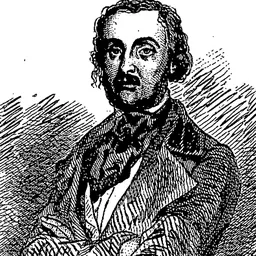
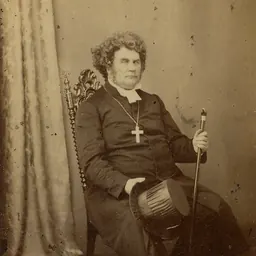
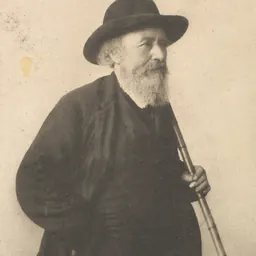
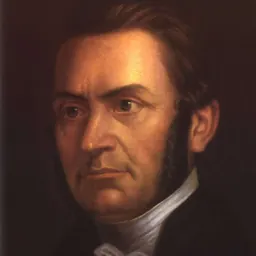
Contemporaries
People whose lives overlapped Edward FitzGerald's




Frequently asked questions
Who was Edward FitzGerald?
English poet and translator (1809–1883)
When was Edward FitzGerald born?
Edward FitzGerald was born on 31 March 1809 in Woodbridge, Bredfield House.
When did Edward FitzGerald die?
Edward FitzGerald died on 14 June 1883 in Lowestoft.
What was Edward FitzGerald's occupation?
Edward FitzGerald was a translator, poet, writer, artist, draftsperson and lawyer.
What nationality was Edward FitzGerald?
Edward FitzGerald was British.
Sources & further reading
· Wikipedia: Edward FitzGerald
· DBpedia: Edward FitzGerald (poet)
Cite this page
APA: Biography.guide. (2026). Edward FitzGerald. https://biography.guide/edward-fitzgerald-translator/
MLA: "Edward FitzGerald." Biography.guide, https://biography.guide/edward-fitzgerald-translator/.
Chicago: "Edward FitzGerald." Biography.guide. https://biography.guide/edward-fitzgerald-translator/.
Data last updated: 2026-09-22 · Spot an error? Report a correction.
Portrait: Wikimedia Commons · author & licence
Page generated 2026-09-27 05:02 UTC