
About Leo Jung
Lived 1892 – 1987 (aged 95). Leo Jung was a rabbi.
Rabbi Leo Jung (Hebrew: Eliyahu; June 20, 1892 – December 19, 1987) was one of the major architects of American Orthodox Judaism. He was the indirect progenitor of the religious day school system common throughout North American Jewish communities, He was also a major fundraiser and activist for many Jewish causes worldwide, in the periods before, during and after the Holocaust.
Background and education Leo Jung was born on June 20, 1892, in Uherský Brod, Moravia, Austria-Hungary. His father, Meir Tzvi Jung held rabbinic post in Mannheim then was elected rabbi of Uherský Brod in 1890. The elder Jung believed in the Torah im Derekh Eretz (Torah combined with worldly activity) philosophy of Samson Raphael Hirsch. Later he moved to London. Jung's father founded schools in Uherský Brod, Kraków and London, where both religious and secular learning took place. In London, Meir Tzvi was a leader in Agudat Yisrael, and the Sinai Movement. The Sinai Movement was a movement in which young men would meet for the purpose of studying Talmud and socializing. At his death in June 1921, Meir Tzvi was the Chief Minister of the Federation of Synagogues in England, an appointment he had held since 1912.
In 1916, Jung became the director general of the Sinai League of which his father was founder and president. Meir Tzvi founded the journal, "The Sinaist", based on the Torah im derekh eretz philosophy. Jung became the editor of this bi-monthly journal, which he claimed expressed his father's philosophy, "study is great, for it leads to (right) action".
Jung, like his father, received a secular and Talmudic education. He attended Cambridge University and he received his doctorate from the University of London. In 1910 he attended the Yeshiva of Eperies and in 1911 he went to study in Galanta, Hungary. He also attended the Hildesheimer Rabbinical Seminary in Berlin. Jung claimed that he received three rabbinic ordinations, from Mordechai Zevi Schwartz, Abraham Isaac Kook and David Zvi Hoffmann of Berlin. He regarded his semikhah from Hoffman as, "his last and most cherished semikhah".
Early career Jung's first American pulpit was in Cleveland, where he arrived in January 1920. In Cleveland he was an, "utterly novel phenomenon, the first English speaking Orthodox rabbi, bearded and a Ph.D." He saw a weak adherence to a dying Orthodoxy there, which he tried to revive. It was there that he raised funds for the first of 15 new aesthetic and modern mikvaos in the United States, to replace unsightly and ill-maintained earlier ones.
In 1926, Jung, as head of the editorial board of the Jewish Forum, recommended that all Jewish organizations have Sabbath observance as a fundamental purpose. The Orthodox Union (then known as the Union of Orthodox Jewish Congregations of America, or UOJCA) instituted a Sabbath Committee, which included Jung. The committee's goal was to educate, to rally loyalty to the Sabbath, and facilitate employment opportunities for Sabbath observers.
Jung was vice president of the UOJCA, from 1926 to 1934. In 1926, Jung organized The Rabbinic Council of the UOJCA
As late as 1942, Jung was raising money and addressing audiences on the significance of Agudat Yisrael; however he quit his membership after the State of Israel was founded when Agudat Yisrael would not co-operate with the Israeli government, even on non-religious affairs.
Jung was sent to Palestine by the American Fund for Palestine Institutions, which supported eighty-six institutions from opera to Beth Jacob, from Habimah (the theatre) to Yeshiva Institutions. Jung also went as chair of the JDC Cultural Committee helping in supporting Yeshivas.
As chair of the religious board of JDC, he saw to it that religious needs were met for Jews in other lands. He went to North Africa in February 1955 to inspect JDC's educational and religious institutions in Tangiers, Morocco, Algiers and Tunis. He also came to the aid of Jews in Iran.
His Israel affiliation was with Poalei Agudat Yisrael, which was called "a fortress of religious Jewry" by some but fiercely opposed by the leading Haredi rabbis of the time. Jung worked for Kibbutz Chofetz Chaim and for its children's village.
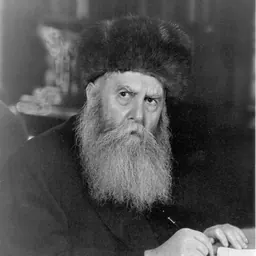
He was involved in the resettlement of Lubavitch to New York and specifically in helping Yosef Yitzchok Schneersohn.
In America, he fought for proper employment laws.
Later years In the 1950s his constant themes were reverence, righteousness and rachmanut, which he referred to as the three "R's" of kedushah (holiness).
Grandfather of Modern Orthodoxy As a follower of the path of German Neo-Orthodoxy, Jung was originally able to span the gamut from Haredi Judaism to the more traditional wing of Conservative Judaism. He was bearded and had a doctorate. But as the decades progressed, he found himself defending a specific middle-path. His followers became some of the fathers of Modern Orthodoxy.
He taught ethics and homiletics at Yeshiva University where he influenced the graduates to create an urbane, moral, and dignified Orthodoxy. His successor at the Jewish Center was Norman Lamm.
Personal life Jung married Irma Rothschild on February 28, 1922. They had four daughters: Erna Villa, Rosalie Rosenfeld, Julie Etra, and Marcella (Micki) Rosen. Erna Villa moved to Jerusalem, while Rosalie Rosenfeld lives in Alon Shevut. Leo Jung died in New York City on December 19, 1987.
Of the Jungs' four daughters, while Villa and Rosenfeld live in Israel, the other two remain in New York City. His grandchildren and great-grandchildren can be found under the family names Etra, Jick, Kassel, Nudelman, Rosen, Rosenfeld, Houminer, Villa, Yoeli and Rubinstein.
Don’t just read it —
keep it.
Full-length biographies made to live with: read them, listen on the way to work, watch them tonight.
- E-book
- Audio
- Video
Instant download · yours to keep · every purchase keeps this site free
Important facts
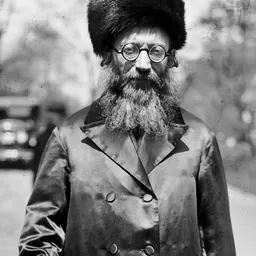
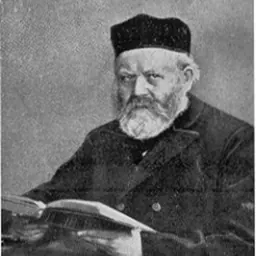
People in Leo Jung's life
Named in this biography and alive at the same time



Related people
Same field, nearest in time



Contemporaries
People whose lives overlapped Leo Jung's



Frequently asked questions
Who was Leo Jung?
American rabbi
When was Leo Jung born?
Leo Jung was born on 20 June 1892 in Uherský Brod.
When did Leo Jung die?
Leo Jung died on 19 December 1987 in New York City.
What was Leo Jung's occupation?
Leo Jung was a rabbi.
Sources & further reading
Cite this page
APA: Biography.guide. (2026). Leo Jung. https://biography.guide/leo-jung/
MLA: "Leo Jung." Biography.guide, https://biography.guide/leo-jung/.
Chicago: "Leo Jung." Biography.guide. https://biography.guide/leo-jung/.
Data last updated: 2026-09-20 · Spot an error? Report a correction.
Page generated 2026-09-27 05:18 UTC