
About Kuroki Tamemoto
Lived 1844 – 1923 (aged 78). Kuroki Tamemoto was a Japanese military personnel.
Count was a Japanese general in the Imperial Japanese Army. He was the head of the Japanese First Army during the Russo-Japanese War; and his forces enjoyed a series of successes during the Manchurian fighting at the Battle of Yalu River, the Battle of Liaoyang, the Battle of Shaho and the Battle of Mukden.
Early life Born as the son of a samurai in the Satsuma domain in southern Kyūshū in what is now Kagoshima Prefecture, Kuroki fought for the Shimazu clan against the Tokugawa shogunate forces in the Boshin War of the Meiji Restoration. He led a platoon of infantry of the 1st Battalion at the Battle of Toba–Fushimi and later at the Battle of Utsunomiya Castle and was appointed a lieutenant in February 1869.
Imperial Japanese Army In July 1871, Kuroki was commissioned a captain in the 1st Battalion, now part of the newly established Imperial Japanese Army. Advancements followed in rapid succession. He was appointed to the 1st Grenadier Battalion in August 1872 and promoted to major. In February 1875, aged only 31, he was appointed commander of the 12th Hiroshima Infantry Regiment and promoted to lieutenant-colonel.
During the Satsuma Rebellion of 1877, Kuroki commanded a regiment against his own clan. He was promoted to colonel in November 1878 and appointed commander of the 2nd Grenadiers. He was promoted to major-general in May 1885 and to lieutenant-general in November 1893. He commanded the IJA 6th Division in the First Sino-Japanese War (1894-1895), during which time he took part in the Battle of Weihaiwei.
Russo-Japanese War
Promoted to the rank of general in November 1903, Kuroki was appointed commander of the Japanese First Army upon the outbreak of the Russo-Japanese War the following year. After landing his forces at Chemulpo near Seoul in mid-February, Kuroki advanced north routing a smaller Russian force at the Battle of the Yalu River on 30 April-1 May 1904. Commanding the Japanese left flank at the Battle of Liaoyang, he repulsed a disorganized Russian attack from 25 August-3 September.
Sir Ian Hamilton (facing front) with Kuroki after the Japanese victory in the Battle of Shaho (1904). Western military attachés and war correspondents with the Japanese forces after the Battle of Shaho: 1. Robert Collins; 2. David Fraser; 3. Capt. Francois Dhani; 4. Capt. James Jardine; 5. Frederick McKenzie; 6. Edward Knight; 7. Charles Victor-Thomas; 8. Oscar Davis; 9. William Maxwell; 10. Robert MacHugh; 11. William Dinwiddie; 12. Frederick Palmer; 13. Capt. Berkeley Vincent; 14. John Bass; 15. Martin Donohoe; 16. Capt. ____; 17. Capt. Carl von Hoffman; 18. ____; 19. ____; 20. ____; 21. Gen. Sir Ian Hamilton; 22. ____; 23. ____; 24. ____; 25. ____. During the Battle of Shaho, Kuroki's forces again successfully defended against the Russian offensive under General Aleksei Nikolaevich Kuropatkin from 5 October-17 October and later commanded the Japanese right flank at the Battle of Mukden from 21 February-10 March 1905.
During the war, Kuroki was obliged to devote attention to a large coterie of Western observers. Press coverage of the war was affected by restrictions on the movement of reporters and strict censorship. In all military conflicts which followed, close attention to more managed reporting was considered essential.
The military attaché of the British Indian Army to the Japanese First Army, General Sir Ian Hamilton, would directly apply lessons learned in Kuroki's retinue. In the 1915 Gallipoli Campaign he appointed Captain William Maxwell, a British journalist who had reported on the Russo-Japanese War for the London Daily Mail to be Chief Field Censor. These experiences also provided a model that the U.S. military attaché, Captain John J. Pershing would adopt a decade later in Europe when he persuaded American journalist Frederick Palmer to take on the task of press accreditation for the American Expeditionary Force in France in World War I. Palmer, like Pershing, had experienced the Russo-Japanese War through the restrictions Kuroki had imposed.
Later years Despite his success and previous military record, Kuroki was one of two senior field commanders denied promotion to Field Marshal, thought to be largely because of his Satsuma origins at a time when the government was dominated by Chōshū rivals, although this may have been due to the internal politics within the Japanese Imperial Army of the time.
Retiring from military service in 1909, he received the title of danshaku (baron) and later hakushaku (count) under the kazoku peerage system. From 1917 onwards he served as a until his death from pneumonia in 1923.
Honours Grand Cordon of the Order of the Rising Sun (30 May 1905) Hon. Knight Grand Cross of the Order of St. Michael and St. George (GCMG) (20 February 1906) Baron (1 April 1906) Order of the Golden Kite, 1st Class (1 April 1906) Grand Cordon of the Order of the Rising Sun with Paulownia Flowers (1 April 1906) Commander Grand Cross of the Order of the Sword (1906) Order of the Plum Blossom (28 December 1906) Count (1909)
Two towns in North America were named in his honor: Kuroki, Saskatchewan and Kuroki, North Dakota.
Don’t just read it —
keep it.
Full-length biographies made to live with: read them, listen on the way to work, watch them tonight.
- E-book
- Audio
- Video
Instant download · yours to keep · every purchase keeps this site free
Important facts
People in Kuroki Tamemoto's life
Named in this biography and alive at the same time





Related people
Same field, nearest in time
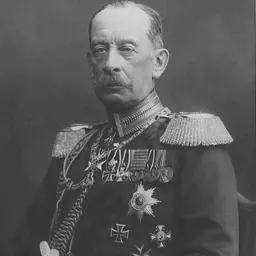


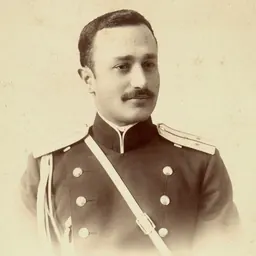
Contemporaries
People whose lives overlapped Kuroki Tamemoto's
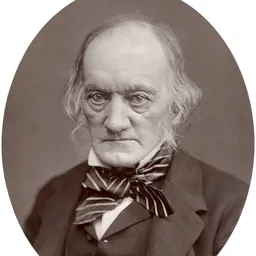
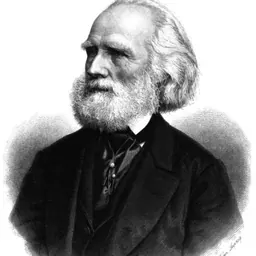

Frequently asked questions
Who was Kuroki Tamemoto?
Japanese general (1844-1923)
When was Kuroki Tamemoto born?
Kuroki Tamemoto was born on 3 May 1844 in Kajiya-chō.
When did Kuroki Tamemoto die?
Kuroki Tamemoto died on 3 February 1923 in Minami-Aoyama.
What was Kuroki Tamemoto's occupation?
Kuroki Tamemoto was a military personnel.
What nationality was Kuroki Tamemoto?
Kuroki Tamemoto was Japanese.
Sources & further reading
Cite this page
APA: Biography.guide. (2026). Kuroki Tamemoto. https://biography.guide/kuroki-tamemoto/
MLA: "Kuroki Tamemoto." Biography.guide, https://biography.guide/kuroki-tamemoto/.
Chicago: "Kuroki Tamemoto." Biography.guide. https://biography.guide/kuroki-tamemoto/.
Data last updated: 2026-09-20 · Spot an error? Report a correction.
Page generated 2026-09-27 05:32 UTC