
About Kodō Nomura
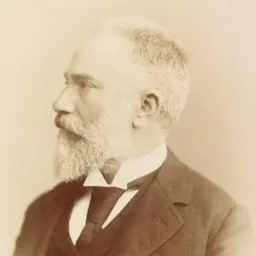
Lived 1882 – 1963 (aged 80). Kodō Nomura was a Japanese novelist, journalist, music critic, screenwriter and writer.
Osakazu Nomura (野村 長一, Nomura Osakazu; 15 October 1882 - 14 April 1963), known by his pen name , was a Japanese novelist and music critic during the Shōwa era. He also used the pen name Araebisu for his music criticism. He is known for his creation of the fictional detective Zenigata Heiji.
Early life Nomura was born in the rural district of Shiwa county, Iwate prefecture in northern Japan, the younger son of a farmer. As a youth, he loved to read, and one of his favorite works was the Chinese classic Outlaws of the Marsh. He was sent to boarding school in Morioka, where he met Kindaichi Kyosuke, later a noted linguist and Namura's lifelong friend. One year behind him in the same school was future poet Ishikawa Takuboku. He attended Tokyo Imperial University, but left to work as a journalist for the Hochi Shimbun, a newspaper based in Tokyo. He continued to work as a journalist for the paper until it merged with the Yomiuri Shimbun in 1942.
Literary career While working as a journalist, Nomura began to write popular fiction, notably historical novels, which appeared in serialized form in the literary journal Bungei Shunju. His most famous work was a series of detective stories set in the Edo period called Zenigata Heiji torimono hikae ("The Casebook of Detective Zenigata Heiji", 1931–1958). The first episode appeared in Bungei Shunju in 1931, and (with a hiatus during World War II, the story continued for 383 episodes over the next 26 years. The main characters in the story were modeled after Sir Arthur Conan Doyle's famous detective pair, Sherlock Holmes and Dr Watson. The popularity of the story led to a movie adaptation in the year the novel was first published. Between 1931 and 1967, a total of 30 movies and an extremely long-running and popular television series (1966–84), were made. The story won the Kikuchi Kan Prize in 1958.
Nomura wrote other novels, including another detective series, Ikeda Daisuke torimono hikae ("The Casebook of Ikeda Daisuke"), but none were as popular as Zenigata Heiji.
Nomura died of acute pneumonia in 1963. His personal fortune (over 100 million yen) was set into a scholarship fund for aspiring writers. He had previously (in 1956) donated his entire library to his home town of Shiwa in Iwate prefecture, where it now resides in a memorial museum erected in his honor.
Nomura's daughter was the novelist Matsuda Keiko (1916–1940).
Don’t just read it —
keep it.
Full-length biographies made to live with: read them, listen on the way to work, watch them tonight.
- E-book
- Audio
- Video
Instant download · yours to keep · every purchase keeps this site free
Important facts
People in Kodō Nomura's life
Named in this biography and alive at the same time


Related people
Same field, nearest in time




Contemporaries
People whose lives overlapped Kodō Nomura's

Frequently asked questions
Who was Kodō Nomura?
Japanese writer (1882-1963)
When was Kodō Nomura born?
Kodō Nomura was born on 15 October 1882 in Iwate Prefecture.
When did Kodō Nomura die?
Kodō Nomura died on 14 April 1963 in Tokyo.
What was Kodō Nomura's occupation?
Kodō Nomura was a novelist, journalist, music critic, screenwriter and writer.
What nationality was Kodō Nomura?
Kodō Nomura was Japanese.
Sources & further reading
Cite this page
APA: Biography.guide. (2026). Kodō Nomura. https://biography.guide/kodo-nomura/
MLA: "Kodō Nomura." Biography.guide, https://biography.guide/kodo-nomura/.
Chicago: "Kodō Nomura." Biography.guide. https://biography.guide/kodo-nomura/.
Data last updated: 2026-09-25 · Spot an error? Report a correction.
Page generated 2026-09-27 05:10 UTC