
About Khaled Mohieddin
Lived 1922 – 2018 (aged 95). Khaled Mohieddin was a politician, publisher, military officer and journalist.
Khaled Mohieddine (, ; August 17, 1922 – May 6, 2018) was an Egyptian military officer, revolutionary and politician. As a member of the Free Officers Movement, he participated in the toppling of King Farouk that began the Egyptian Revolution of 1952, and led to the establishment of the Republic of Egypt.
Mohieddine held important political and media roles throughout Gamal Abdel Nasser's presidency, although the two also had a number of fallings out. An outspoken individual, he was one of the few members of the revolutionary inner circle of Egypt able to disagree passionately with Nasser whilst still retaining Nasser's respect and admiration. His political influence diminished during the early part of Anwar Sadat's presidency until he cofounded a leftist political party, National Progressive Union Party (Tagammu), in 1976.
Under Mohieddine's leadership, Tagammu became a significant opposition force during Hosni Mubarak's rule.
Early life Mohieddine was born in Kafr Shukr (Qalyubia) Lower Egypt in 1922 to a well-off family that owned sizeable landholdings in the Nile Delta area. He graduated from the Egyptian Military Academy in 1940 and served as a cavalry officer. In 1943–44, he joined the Free Officers Movement, becoming one of the ten original members. His cousin, Zakaria, was also a member of this group.
In 1951, he received a bachelor's degree in commerce from the University of Cairo (then known as Fuad University). but, although he had ties with the Communist-oriented Democratic Movement for National Liberation, Mohieddine did not actually join the organization.
Political life under Nasser By the spring of 1952, the Free Officers devised an operational command to depose King Farouk, with Mohieddine responsible for the armored corps. On July 23, he commanded his armed units through Cairo and the coup was successfully undertaken. He and Nasser wrote the first proclamation of the "revolution" on Cairo Radio. Mohieddine attended the ceremonious departure of the king and, according to him, Farouk stated to the attending officers that he "thought of doing the same thing they were doing." Nasser, who was prime minister, responded to his move by dismissing all the officers loyal to him.
With Nasser officially assuming the presidency and the end of the Suez Crisis in 1956, Mohieddine returned to Egypt and took a leading role in the government, being put in charge of the evening Al Messa''' newspaper which he founded. He was also the publisher of the daily. A year later he served in the central committee of the National Union and was elected a member of the National Assembly. Mohieddine was soon arrested and remained incarcerated until the end of 1960. Around this time he also chaired the Aswan High Dam committee and was awarded the Lenin Peace Prize in 1970. Within the ASU, Kamal Rifaat and he soon took leadership of the leftist platform that later evolved into the National Progressive Union Party (also referred to as "Tagammu") in 1976. Mohieddine was one of its three delegates elected to the People's Assembly that same year. The next year he was charged with activities "against the state" but was not tried. Because he was a former RCC member, Mohieddine was spared when Sadat jailed other dissidents in 1981. He continued to practice politics and was considered a part of the "loyal opposition" to President Hosni Mubarak. Following the death of his cousin Zakaria Mohieddin in 2012, he was the last survivor of the Free Officers council that led the 1952 Revolution.
Selected works Memories of a Revolution: Egypt 1952. (1995). Cairo: American University in Cairo Press. For This We Oppose Mubarak''. (1987). Cairo.
Don’t just read it —
keep it.
Full-length biographies made to live with: read them, listen on the way to work, watch them tonight.
- E-book
- Audio
- Video
Instant download · yours to keep · every purchase keeps this site free
Important facts
People in Khaled Mohieddin's life
Named in this biography and alive at the same time
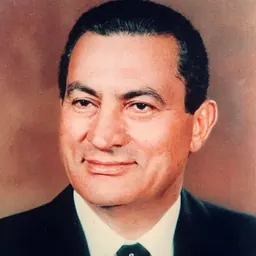

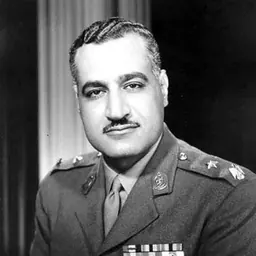


Related people
Same field, nearest in time




Contemporaries
People whose lives overlapped Khaled Mohieddin's

Frequently asked questions
Who was Khaled Mohieddin?
Egyptian politician (1922-2018)
When was Khaled Mohieddin born?
Khaled Mohieddin was born on 17 August 1922 in Tesfa - Kafr Shokr.
When did Khaled Mohieddin die?
Khaled Mohieddin died on 6 May 2018 in Cairo.
What was Khaled Mohieddin's occupation?
Khaled Mohieddin was a politician, publisher, military officer and journalist.
What nationality was Khaled Mohieddin?
Khaled Mohieddin's recorded nationality: Kingdom of Egypt, Republic of Egypt, United Arab Republic.
Sources & further reading
Cite this page
APA: Biography.guide. (2026). Khaled Mohieddin. https://biography.guide/khaled-mohieddin/
MLA: "Khaled Mohieddin." Biography.guide, https://biography.guide/khaled-mohieddin/.
Chicago: "Khaled Mohieddin." Biography.guide. https://biography.guide/khaled-mohieddin/.
Data last updated: 2026-09-20 · Spot an error? Report a correction.
Page generated 2026-09-27 05:34 UTC