
About Kesarbai Kerkar
Lived 1892 – 1977 (aged 85). Kesarbai Kerkar was an Indian singer.
Kesarbai Kerkar (13 July 1892 – 16 September 1976 (?) ) was an Indian classical vocalist of the Jaipur-Atrauli gharana. A protege of Ustad Alladiya Khan (1855–1946), the founder of the gharana, she went on to become one of the most noted khayal singers of the second half of the 20th century.
She was 67 when she was awarded the Sangeet Natak Akademi Award in 1953, followed by Padma Bhushan the third highest civilian award in India, in 1969. One of her recordings is included on the Voyager Golden Record.
Biography
Early life and training Born in the tiny village of Keri (also spelled "Querim"), in a family from Ponda taluka of North Goa, Goa (then a Portuguese colony), at the age of eight Kerkar moved to Kolhapur, where she studied for eight months with Abdul Karim Khan. Upon her return to Goa, she studied with the vocalist Ramkrishnabuwa Vaze (1871–1945), during his visits to Lamgaon.
Meanwhile, Mumbai (then Bombay) under British Raj, was fast developing as a business and trade centre of the country. Several musicians and singers from North India and Central India, facing declining patronage from princely states started migrating to the city. At the age of 16, she too moved to Mumbai with her mother and uncle. A wealthy local businessman Seth Vitthaldas Dwarkadas helped her study under with Barkat Ullah Khan, sitar player and court musician at Patiala State. He taught her intermittently for two years, during his visit to the city. However, when Khan, became court musician at Mysore State, she trained under Bhaskarbuwa Bakhale (1869-1922) and Ramkrishnabuwa Vaze for short periods.
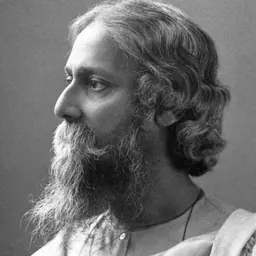
Career Kerkar eventually achieved wide renown, performing regularly for aristocratic audiences. She was very particular about the representation of her work and consequently made only a few 78 rpm recordings, for the His Master's Voice and Broadcast labels. In time, Kerkar became an accomplished Khayal singer of her generation, and seldom sang light classical music, often associated with female vocalists. Her success as a public singer, along with that of Mogubai Kurdikar (mother of Kishori Amonkar), Hirabai Barodekar and Gangubai Hangal, paved the way for the next generation of female vocalists, away from singing mehfils or private gatherings that women of previous generations had to settle for. This was followed by the decoration of Padma Bhushan by the government of India in 1969, and in the same year the government of the Indian state of Maharashtra conferred upon her the title of "Rajya Gayika." Indian Nobel laureate Rabindranath Tagore (1861–1941) is said to have been very fond of Kerkar's singing. Her honorific title "Surashri" (or "Surshri") literally means "one with a mastery over notes" (sur meaning "notes" in Indian classical music and shri which is an honorific title used in this context as lord or master), and was bestowed on her in 1948 by the Sangeet Pravin Sangitanuragi Sajjan Saman Samiti of Calcutta. She retired from public singing in 1963–64. and a music scholarship in her name is awarded annually to a University of Mumbai student by National Centre for the Performing Arts (NCPA) via Kesarbai Kerkar Scholarship Fund.
Kerkar has the further distinction of having one of her recordings, "Jaat Kahan Ho", duration 3:30 (an interpretation of raga Bhairavi) included on the Voyager Golden Record, a gold-plated copper disc containing music selections from around the world, which was sent into space aboard the Voyager 1 and 2 spacecraft in 1977. The recording was recommended for inclusion on the Voyager disc by the ethnomusicologist Robert E. Brown, who believed it to be the finest recorded example of Indian classical music.
Since 2000, several CDs of her archival recordings have been released, including one on the Golden Milestones series, which contains several of her most famous songs.
Recordings Classical Vocal CD (2008) from Sangeet Natak Akademi Golden Milestones (2003) Vintage 78 Rpm Recording on CD Living Music of the Past CD from Underscore Records site Baithak Series – Live concert Recordings A set of 4 CDs Published by Sangeet Kendra
Don’t just read it —
keep it.
Full-length biographies made to live with: read them, listen on the way to work, watch them tonight.
- E-book
- Audio
- Video
Instant download · yours to keep · every purchase keeps this site free
Important facts
People in Kesarbai Kerkar's life
Named in this biography and alive at the same time

Related people
Same field, nearest in time


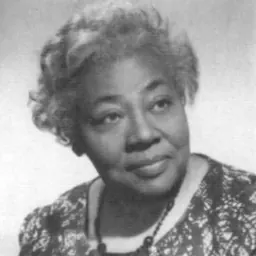

Contemporaries
People whose lives overlapped Kesarbai Kerkar's



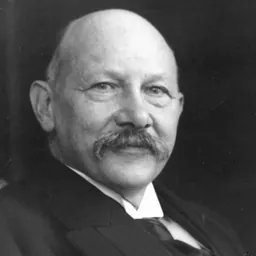
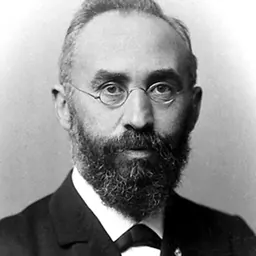
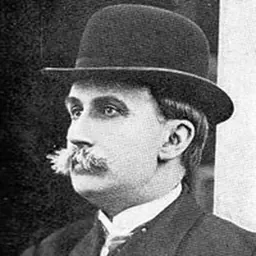
Frequently asked questions
Who was Kesarbai Kerkar?
Indian singer (1892–1977)
When was Kesarbai Kerkar born?
Kesarbai Kerkar was born on 13 July 1892 in Pernem taluk.
When did Kesarbai Kerkar die?
Kesarbai Kerkar died on 16 September 1977.
What was Kesarbai Kerkar's occupation?
Kesarbai Kerkar was a singer.
What nationality was Kesarbai Kerkar?
Kesarbai Kerkar was Indian.
Sources & further reading
Cite this page
APA: Biography.guide. (2026). Kesarbai Kerkar. https://biography.guide/kesarbai-kerkar/
MLA: "Kesarbai Kerkar." Biography.guide, https://biography.guide/kesarbai-kerkar/.
Chicago: "Kesarbai Kerkar." Biography.guide. https://biography.guide/kesarbai-kerkar/.
Data last updated: 2026-09-20 · Spot an error? Report a correction.
Page generated 2026-09-27 05:23 UTC