
About Kenelm Henry Digby
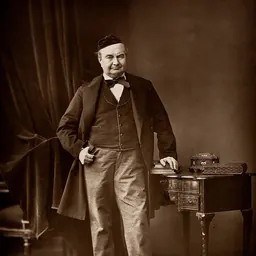
Lived 1800 – 1880. Kenelm Henry Digby was a writer and historian.
Kenelm Henry Digby (c. 1797–1880) was an Anglo-Irish writer, whose reputation rests chiefly on his earliest publication, The Broad-Stone of Honour, or Rules for the Gentlemen of England, which contains an exhaustive survey of medieval customs. The work was subsequently enlarged and issued (1828–29) in four volumes, entitled Godefridus, Tancredus, Morus and Orlandus.
Digby's exposure to Walter Scott's novel Ivanhoe as a youth encouraged him to romanticize the Middle Ages. Broad-Stone contributed to the Young England movement's feudalist ideology and influenced many of Digby's Cambridge contemporaries. The book inculcated in readers ideas of chivalry and staunch Catholicism and stressed the importance of the heart’s knowledge over intellectual learning, presenting historical figures as role models. Digby's revival of medieval principles helped young men of his day construct their idea of what being a "gentleman" means.
Life Born at Clonfert in County Galway, he was 15 when his father died in 1812. He moved to England to attend Petersham High School near London. From 1816 to 1819, he went to Trinity College, Cambridge, where some members of the university advocated reform and even republicanism; Digby, however, favoured a strong monarchy, the Church, and chivalry. At Cambridge, he read Alfred Tennyson and Arthur Hallam; his close friends there were George Darby, Julius Hare, William Whewell, and Adam Sedgwick. In summer, he travelled across Europe sketching old castles and writing.
Ehrenbreitstein Fortress, a massive medieval fortification in Germany, gave him the title The Broad-Stone of Honour. He published the book in a single volume in 1822, and the beliefs he explored while writing it seem to have contributed to his conversion to Catholicism in 1825. After that, he rewrote and expanded the one volume into four, published in 1828–29: Godfridus, containing a general introduction (named after Godfrey of Boulogne, a Crusade hero); Tancredus, discussing chivalry’s discipline and applauding Christianity (for Tancred, Prince of Galilee, another Crusade hero); Morus, bashing the Reformation as the death of chivalry and religion (after Sir Thomas More); and Orlandus, which detailed Digby's idea of chivalric behaviour (after Ariosto's Orlando Furioso).
From 1831 to 1841, Digby published Mores Catholici, or Ages of Faith, an eleven-volume "panegyric" on the medieval period. It was often referred to by Catholic writers, and sections of it were reprinted as late as 1942.
Don’t just read it —
keep it.
Full-length biographies made to live with: read them, listen on the way to work, watch them tonight.
- E-book
- Audio
- Video
Instant download · yours to keep · every purchase keeps this site free
Important facts
People in Kenelm Henry Digby's life
Named in this biography and alive at the same time


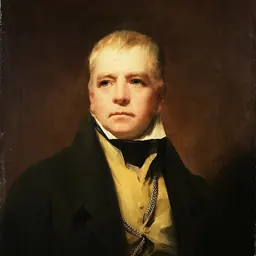
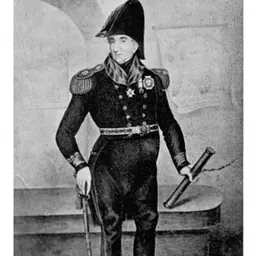
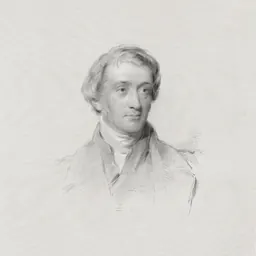

Related people
Same field, nearest in time
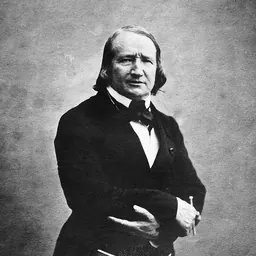



Contemporaries
People whose lives overlapped Kenelm Henry Digby's





Frequently asked questions
Who was Kenelm Henry Digby?
Anglo-Irish writer (1800–1880)
When was Kenelm Henry Digby born?
Kenelm Henry Digby was born in 1800.
When did Kenelm Henry Digby die?
Kenelm Henry Digby died on 22 March 1880 in Kensington.
What was Kenelm Henry Digby's occupation?
Kenelm Henry Digby was a writer and historian.
Sources & further reading
· Wikipedia: Kenelm Henry Digby
Cite this page
APA: Biography.guide. (2026). Kenelm Henry Digby. https://biography.guide/kenelm-henry-digby/
MLA: "Kenelm Henry Digby." Biography.guide, https://biography.guide/kenelm-henry-digby/.
Chicago: "Kenelm Henry Digby." Biography.guide. https://biography.guide/kenelm-henry-digby/.
Data last updated: 2026-09-20 · Spot an error? Report a correction.
Page generated 2026-09-27 05:06 UTC