
About Julius Hare
Lived 1795 – 1855 (aged 59). Julius Hare was a translator and writer.
Julius Charles Hare (13 September 1795 – 3 January 1855) was an English theological writer.
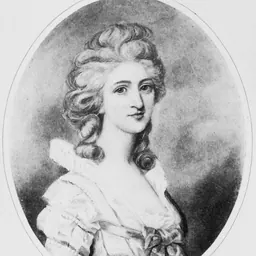
Early life He was born at Valdagno, near Vicenza, in Italy. His parents were Francis Hare-Naylor and the painter Georgiana Shipley, a daughter of Bishop Shipley. Augustus William Hare was his brother, and his great-grandfather, Francis Hare, was bishop of St Asaph.
He came to England with his parents in 1799, but in 1804/05 spent a winter with them at Weimar, Germany, where he met Goethe and Schiller, and took an interest in German literature which influenced his style and sentiments throughout his career. On the death of his mother in 1806, Julius was sent to Tonbridge School, where he remained until 1812, when he entered Trinity College, Cambridge. There he became fellow in 1818, and after another trip abroad he began to read law in London in the following year. From 1822 to 1832 he was assistant tutor at Trinity College.
Career Turning from law to divinity, Hare took holy orders in 1826; and, on the death of his uncle in 1832, he succeeded to the rich family living of Herstmonceux in Sussex, where he accumulated a library of some 12,000 volumes, especially rich in German literature. Before taking up residence in his parish at Herstmonceux rectory, he went abroad again, and in Rome he met Chevalier Bunsen, who afterwards dedicated to him part of his work, Hippolytus and his Age. In 1840 Hare was appointed archdeacon of Lewes, and in the same year preached a series of sermons at Cambridge (The Victory of Faith), followed in 1846 by a second, The Mission of the Comforter. The published versions did not achieve much popularity. In 1844, Hare married Esther, a sister of his friend Frederick Maurice.
Hare was a member of the Canterbury Association from March 1848. Hare assisted Connop Thirlwall, afterwards Bishop of St David's, in translating the first and second volumes of Niebuhr's History of Rome (1828 and 1832), and published a Vindication of Niebuhr's History in 1829. He wrote many similar works, among which is a Vindication of Luther against his recent English Assailants (1854). In 1848 he edited the Remains of John Sterling, who had formerly been his curate. Thomas Carlyle's Life of John Sterling (1851) was written out of dissatisfaction at the overemphasis on doctrinal questions in the biography of Sterling that Hare wrote for his 1848 volume, and, especially, at the obsession with theological matters by contemporary "Religious Newspapers, and Periodical Heresy-hunters" that discussed Hare's book. Memorials of a Quiet Life, published in 1872 by Augustus Hare, contain accounts of the Hare family.
Hare also translated a number of tales by Ludwig Tieck.
Don’t just read it —
keep it.
Full-length biographies made to live with: read them, listen on the way to work, watch them tonight.
- E-book
- Audio
- Video
Instant download · yours to keep · every purchase keeps this site free
Important facts
People in Julius Hare's life
Named in this biography and alive at the same time



Related people
Same field, nearest in time

Contemporaries
People whose lives overlapped Julius Hare's




Frequently asked questions
Who was Julius Hare?
British theologian (1795-1855)
When was Julius Hare born?
Julius Hare was born on 13 September 1795.
When did Julius Hare die?
Julius Hare died on 3 January 1855.
What was Julius Hare's occupation?
Julius Hare was a translator and writer.
Sources & further reading
· DBpedia: Julius Hare (theologian)
Cite this page
APA: Biography.guide. (2026). Julius Hare. https://biography.guide/julius-hare/
MLA: "Julius Hare." Biography.guide, https://biography.guide/julius-hare/.
Chicago: "Julius Hare." Biography.guide. https://biography.guide/julius-hare/.
Data last updated: 2026-09-26 · Spot an error? Report a correction.
Page generated 2026-09-27 05:14 UTC