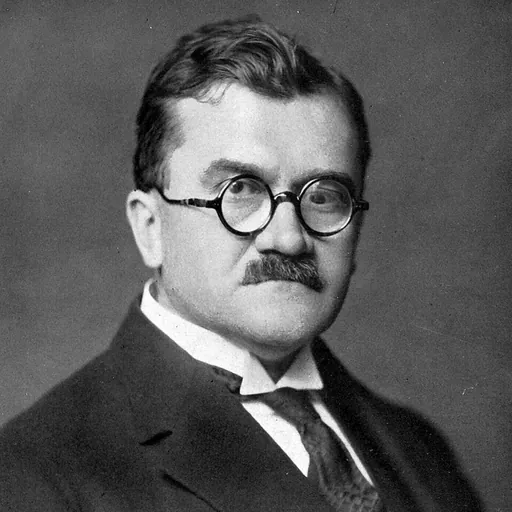
Karel Engliš
Czech politician, economist, professor, university educator and science writer
About Karel Engliš
Lived 1880 – 1961 (aged 80). Karel Engliš was a Czech and Austrian politician, economist, pedagogue, writer, university teacher and teacher.
Karel Engliš (17 August 188013 June 1961) was a Czech economist, political scientist, and founder of teleological economic theory.
Engliš was the first rector of Masaryk University in Brno from 1919 to 1920, and from 1947 to 1948 was rector of Charles University in Prague. Together with Alois Rašín, he was significantly involved in the Czechoslovak currency reform after World War I as Minister of Finance. From 1934 to 1938, he was Governor of the National Bank of Czechoslovakia.
Life Born in Hrabyně into a butcher family, Engliš studied in poverty. He graduated from the Czech grammar school in Opava and then continued his studies at the Faculty of Law of Charles-Ferdinand University in Prague, where he graduated in 1904. One of his teachers was economist Albín Bráf, who recognized his talent and recommended him for work at the Provincial Statistical Office. From there, he transferred to the Ministry of Trade in Vienna in 1908. In 1910 he habilitated to associate professor of economics at the Czech Technology in Brno. In 1911, he became an extraordinary professor, and a full professor in 1917. From 1913 to 1914, he was Dean of the Department of Cultural Engineering, and Dean of the Department of Chemical Engineering from 1917 to 1918.
In 1913–1918 he was a member of the Moravian Diet for the progressive party of Adolf Stránský. From 1918–1925 he was a member of the National Democratic Party (CND) and in 1920–1925 he was a member of the National Assembly, as well as chairman of the Moravian-Silesian Executive Committee of the CND. In 1915 he wrote contributions to Masaryk's Our Time. On 2 September 1925, he resigned from the CND, then participated in the establishment of the National Labor Party, which he refused to join.
Together with Alois Rašín, he played a significant role in the monetary reform of post-WWI Czechoslovakia, but was a strong opponent of Rašín's deflationary policy. Engliš served as Minister of Finance in six governments, from 1920–1931, and then in 1934–1939 as Governor of the National Bank of Czechoslovakia. He was responsible for stabilizing the currency, streamlining the state budget, building a modern tax system, overcoming post-war economic upheaval, and mitigating the effects of the Great Depression in the 1930s.
In 1919, he became a professor and the first rector of the newly founded Masaryk University in Brno, which he participated in founding together with František Weyr and Alois Jirásek. He was a professor of national economy at the university's Faculty of Law and, in 1921–1922 and 1925–1926, also its dean. He founded the teleological school of national economics, which deals with assessing the purposefulness of the behavior of all economic entities. Since its inception in 1929, he was also a member of the Czechoslovak Statistical Society. After the Munich Agreement on 1 October 1938, he succeeded in initiating the transport of the remains of Karel Hynek Mácha from Litoměřice, which was annexed by Germany.
From 1947 to 1948, he was Rector of Charles University. After the coup d'état in February 1948, he surrendered all his university positions and was forced to withdraw from public life. In August 1952, he had to move out of Prague due to administrative persecution, but he managed to obtain the authorities' consent to return to his hometown Hrabyně. In the last years of his life, he was the target of several restrictive measures in his personal life, his work was heavily criticized by communist propaganda, and his writings were banned and expelled from public libraries. He faced persistent scrutiny by the communist government consisting mainly of house searches, and his originally high pension was drastically reduced several times to the absolute minimum. Despite the difficult conditions, he devoted himself to his scientific work. He focused mainly on logic, national economy, polemics of the two previous fields, and writing memoirs. Most of his work remained in manuscripts, and even after 1989 only a few titles from the period were published. He died after years of hardship in modest circumstances with only the support of family and close friends. On 21 April 1907, their daughter Vlasta (1907–2001) was born and later married Brno architect František Plhoně. Engliš and Grögrová later had a daughter Věra (1908–1990) and a son Karel (1912–1991). The couple was legally divorced in 1919 and separated in 1921.
Theoretical work In addition to public activity, his theoretical work was also significant. He gradually became one of the most influential theorists of interwar Czechoslovakia. Unlike other economic theorists, he had the opportunity to verify his scientific conclusions in practice and possibly revise them. As a teacher, he influenced two generations of Czech economists and founded the so-called Brno School of Economics.
He began his scientific work before the First World War in the field of social policy. His work at university led him to the need for theoretical mastery of all economics and the development of the concept of economic knowledge. The concept is based on marginal utility theory, counter to the then-prevailing causal interpretation of economic issues. He was inspired by the method of economic cognition, so-called teleological theory, from the Vienna school of economics, of which he was a follower (similar to Rašín under the influence of Bráf). According to Engliš, economics is the science of order, where individuals and entire nations try to maintain and improve their lives. Organization in the economy is based on purposeful thinking. The peak of his theoretical work is the two-volume System of the national economy. In this extensive work (approximately 1,700 pages in total) he summarized his economic teachings. Engliš held that in any economic system, all subjects always try to improve their existence, so he rejected simple causality in the economy. He thought that in individualistic (capitalist) systems, everyone decides on the satisfaction of their own needs, but in solidaristic (socialist) systems it is a matter of caring for another, foreign subject, who cannot have such a good overview. In practice, he believed there are always mixed systems. Engliš himself did not support a controlled economy, and saw its justification only in temporary critical situations.
He was characterized by extensive debates with opponents, where he exhaustively analyzed all arguments and counter-arguments. As a lecturer, he enriched his speeches with deep practical excursions.
Legacy In 1990, the Karel Engliš Society was founded in Prague, and in 1994 the Karel Engliš Prize was established by Masaryk University in Brno, awarded annually to a prominent economist.
Every year, the Rector of Charles University awards the Prof. JUDr. Karel Engliš Prize as one of the types of Rector's Prizes for the best social science graduates.
The former Karel Engliš University in Brno bore his name, and streets in Smíchov, Prague and Opava are named after him.
In 2022, the Czech National Bank issued a commemorative banknote featuring a portrait of Engliš, with a nominal value of CZK 100.
Works
('Basics of economic thinking'). Brno: Barvič & Novotný, 1922. ('Selected chapters from the national economy'). Prague: State Publishing House, 1925. ('Financial science: an outline of the theory of public unions'). Prague: Fr. Borový, 1929. ('Teleology as a form of scientific knowledge'). Prague: F. Topič, 1930. ('Economics and philosophy'). Prague: Fr. Borový, 1931. ('In need of excess'). Prague: Fr. Borový, 1935. ('System of the national economy: The science of the order in which individuals and nations care for the maintenance and improvement of life'). 2 Volumes. Prague: Melantrich, 1938. ('National economy for the purposes of the highest levels of secondary schools'). Prague: Orbis, 1940. ('Economic systems'). Prague: Všehrd, 1946. ('Little logic: the science of the order of thought'). Prague: Melantrich, 1947. ('Eternal ideals of humanity'). Prague: Vyšehrad, 1992. (From Engliš's estate, completed on January 28, 1956.) ('Countess of my youth'). Opava: Matice slezská, 1999. . 2nd edition, Opava: Matice slezská, 2010. .
Don’t just read it —
keep it.
Full-length biographies made to live with: read them, listen on the way to work, watch them tonight.
- E-book
- Audio
- Video
Instant download · yours to keep · every purchase keeps this site free
Important facts
People in Karel Engliš's life
Named in this biography and alive at the same time

Related people
Same field, nearest in time




Contemporaries
People whose lives overlapped Karel Engliš's

Frequently asked questions
Who was Karel Engliš?
Czech politician, economist, professor, university educator and science writer (1880-1961)
When was Karel Engliš born?
Karel Engliš was born on 17 August 1880 in Hrabyně.
When did Karel Engliš die?
Karel Engliš died on 15 June 1961 in Hrabyně.
What was Karel Engliš's occupation?
Karel Engliš was a politician, economist, pedagogue, writer, university teacher and teacher.
What nationality was Karel Engliš?
Karel Engliš was Czech and Austrian.
Sources & further reading
Cite this page
APA: Biography.guide. (2026). Karel Engliš. https://biography.guide/karel-englis/
MLA: "Karel Engliš." Biography.guide, https://biography.guide/karel-englis/.
Chicago: "Karel Engliš." Biography.guide. https://biography.guide/karel-englis/.
Data last updated: 2026-09-23 · Spot an error? Report a correction.
Portrait: Wikimedia Commons · author & licence
Page generated 2026-09-27 05:08 UTC