
About Kanjū Katō
Lived 1892 – 1978 (aged 86). Kanjū Katō was a Japanese politician and union organizer.
Kanjū Katō (, 25 February 1892 – 27 September 1978), also known as Kanju Kato, was a Japanese politician and labour activist of the Shōwa period. He served seven terms as a member of the House of Representatives for the Japan Socialist Party and was the second Minister of Labor. He was also known by the pen names Hekisui and Sotsu.
A militant labour organizer active in the prewar period, he was nicknamed "Fireball Kanjū" (, Hi no tama Kanjū). His elder brother was Chōichi Katō, a member of the House of Representatives for the Constitutional Democratic Party (Rikken Minseitō) and the National Alliance (Kokumin Dōmei). His wife was the women’s rights activist and politician Shidzue Katō; the couple were known as the "mandarin duck Diet members" (, oshidori giin). Their son was Nobuyuki Katō and their daughter was Taki Katō.
Biography Katō was born on 25 February 1892 in Iwakura Village, Niwa District, Aichi Prefecture (present-day Iwakura, Aichi).
He attended Nihon Middle School (now Nihon Gakuen Junior and Senior High School) and later enrolled in the Faculty of Law at Nihon University but did not complete his studies.
He initially held nationalist views and participated in the Siberian Intervention in 1918. The experience of the horrors of war led him to turn toward anti-war and labour activism.
Returning to Japan in 1920, he helped lead the dispute at the government-operated Yawata Steel Works.
In 1928 he was elected chairman of the Kantō Metal Industry Workers’ Union.
In 1929 he joined the Labour-Farmer Party (Rōnōtō).
In 1934 he became chairman of the Japan Trade Union National Council (, Nihon Rōdō Kumiai Zenkoku Hyōgikai; commonly known as Zenpyō), also referred to in contemporary English sources as the National Council of Japanese Trade Unions.
In June 1935, while serving as chairman of the National Council of Japanese Trade Unions, Katō visited the United States (arriving in Manhattan). He was described contemporaneously as “doughty” and “ever fearless of the ‘patriotic’ assassins who have often tried to get him.” He was nearly barred from entry to the United States on the assumption that he was a Communist. In interviews he stated that Japanese workers had not benefited from the occupation of Manchukuo except for those in munitions factories; for others, “conditions have been very bad” because “the gulf between prices and wages in Japan has been considerably increased.” He noted growing peasant disapproval of Japan’s China policy following the agrarian crisis of 1931–32 and famine in northeastern Japan, with an increase in farmer uprisings. Declaring “I am not a Communist… I am a militant unionist,” he explained that “a left winger like myself in Japan is actually much further to the right than a left winger in America” and that he adhered to the left-wing group of workers’ unions “striving to overthrow Capitalism by means of the class struggle.” He cited organized workers numbering 380,000 out of a total working-class population of 5,770,000 and affirmed that “the proletariat of Japan is opposed to the Government’s activities in China.”
In the 1936 general election (19th House of Representatives election) he stood from the old Tokyo 5th district and was elected with the highest national vote total.
In 1937 he became chairman of the Japan Proletarian Party (Nihon Musantō) but was arrested in connection with the Popular Front Incident and imprisoned.
In 1944 he married Shidzue (formerly Baroness Ishimoto), a divorced women’s rights activist. Their activities promoting birth control were suppressed by the government from the wartime period through the defeat.
After the war, in 1945 he participated in the founding of the Japan Socialist Party and became its organizational bureau chief.
In the first postwar general election (22nd House of Representatives election, 1946) he was elected from Aichi 1st district; his wife Shidzue was also elected (with the highest national vote total), and the couple became known as the "mandarin duck Diet members". He served as Diet Strategy Committee chairman.
In 1948, under the Ashida Cabinet, he entered the cabinet as Minister of Labor alongside Masaru Nomizo as representatives of the party’s left wing; they were called the "realistic left". As Labor Minister he issued Cabinet Order No. 201 prohibiting the right to strike for public servants, placing him in a difficult position between his previous stance and cabinet responsibilities. The Ashida Cabinet fell over the Shōwa Denkō scandal. In December 1948, both he and his wife were summoned as witnesses before the House of Representatives Special Committee on Improper Property Transactions Investigation in connection with a textile scandal.
In the 1949 general election the Socialist Party suffered a nationwide defeat and Katō lost his seat.
While out of office, in 1951 he ran unsuccessfully for Governor of Tokyo. That October the party split amid left–right conflict; Katō joined the Rightist Socialist Party.
He returned to the Diet in the 1952 general election from Tokyo 2nd district. In Diet questioning he elicited a gaffe from Minister of International Trade and Industry Hayato Ikeda (“It is unavoidable even if small and medium enterprise owners go bankrupt and, driven to despair, commit suicide”), contributing to the passage of a no-confidence motion against Ikeda.
He did not stand in the 1969 general election and retired from politics.
In the 1970 spring honours he received the Order of the Sacred Treasure, 1st Class; together with his wife Shidzue, they were the first Socialist Party members to receive decorations after the postwar resumption of awards to living persons.
He died on 27 September 1978 at the age of 86. On the day of his death he was posthumously awarded Junior Third Rank. His grave is at Zuirin-ji Temple in Taitō, Tokyo.
Works Sole-authored
Contributions
Co-authored
Related books
Don’t just read it —
keep it.
Full-length biographies made to live with: read them, listen on the way to work, watch them tonight.
- E-book
- Audio
- Video
Instant download · yours to keep · every purchase keeps this site free
Important facts
People in Kanjū Katō's life
Named in this biography and alive at the same time
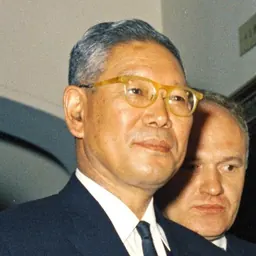

Related people
Same field, nearest in time






Contemporaries
People whose lives overlapped Kanjū Katō's
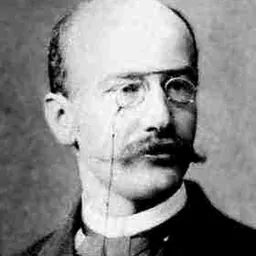
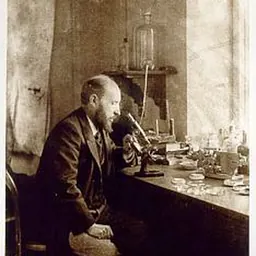

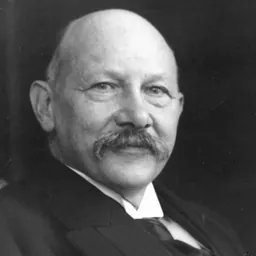
Frequently asked questions
Who was Kanjū Katō?
Japanese politician
When was Kanjū Katō born?
Kanjū Katō was born on 25 February 1892 in Niwa district.
When did Kanjū Katō die?
Kanjū Katō died on 27 September 1978.
What was Kanjū Katō's occupation?
Kanjū Katō was a politician and union organizer.
What nationality was Kanjū Katō?
Kanjū Katō was Japanese.
Sources & further reading
Cite this page
APA: Biography.guide. (2026). Kanjū Katō. https://biography.guide/kanju-kato/
MLA: "Kanjū Katō." Biography.guide, https://biography.guide/kanju-kato/.
Chicago: "Kanjū Katō." Biography.guide. https://biography.guide/kanju-kato/.
Data last updated: 2026-09-20 · Spot an error? Report a correction.
Page generated 2026-09-27 05:27 UTC