
Kang Young-hoon
South Korean politician who served as the second prime minister of the sixth South Korean republic
About Kang Young-hoon
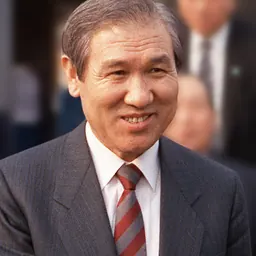
Lived 1922 – 2016 (aged 93). Kang Young-hoon was a South Korean politician, diplomat and civil servant.
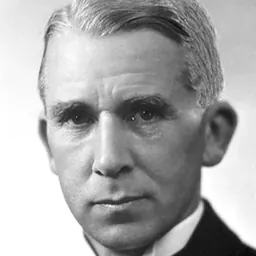
Kang Young-Hoon (, 30 May 1922 – 10 May 2016) was a South Korean diplomat and politician who served as the prime minister of South Korea from 1988 to 1990 under President Roh Tae-woo.
Beginning his career in the military, Kang entered politics through the diplomatic foreign ministry before being elected to the National Assembly in 1987. He was appointed prime minister a year later in President Roh Tae-woo's first cabinet reshuffle. His two-year tenure as prime minister was marked by his rapprochement towards North Korea, under Roh's Nordpolitik policy. After leaving government, Kang went on to become president of the South Korean National Red Cross from 1991 to 1997.
Early life and education Kang was born in Changsong County, Heianhoku Province when Korea was under Japanese rule in 1922. He joined the National Defense Forces, a precursor to the Republic of Korea Army, shortly after his graduation from the Kenkoku University towards the end of World War II. He served as a division commander during the Korean War and a military attaché in the Embassy of South Korea, Washington, D.C. in 1952 before becoming director of the Joint Chiefs of Staff at the Ministry of National Defense in 1954. He was detained in Seodaemun Prison for his role against the coup.
On his release from prison, Kang headed back to America, gaining a M.A. in international relations (1966) and a Ph.D. in political science (1973) from the University of Southern California. During his doctorate studies, he founded the Research Institute on Korean Affairs in Silver Spring, Maryland. During his tenure, political violence continued at universities throughout South Korea as groups labeled by the regime as "leftist radicals" advocated for the overthrow of the Government. After a rise in violence during the spring of 1989, Kang offered to follow opposition party demands to resign if he were held responsible for mishandling state affairs surrounding the violence.
Relations with North Korea After months of negotiations, Kang took part in historic talks with his North Korean counterpart, Prime Minister Yon Hyong-muk. The highest-level contact between the two Governments since 1945, the exchange of visits by respective prime ministers were aimed at reducing tension on the peninsula and an eventual reunification. The first meeting occurred on 5–6 September 1990 in Seoul, permitting both sides to directly address their concerns on issues regarding disarmament, United States troop withdrawal, the release of political prisoners, visitation rights, and reunification; the tone remained amiable.
The prime ministers met a second time on 17–18 October 1990, this time in Pyongyang, culminating in a meeting with Kim Il Sung. After initially maintaining the positive tone of the earlier meeting, tensions rose as both sides dropped their earlier civil tone and accused each other of bad faith. Both sides became suspicious that the other was using the talks to further its political agenda; Kang accused the North Koreans of "doing things that foment division and further put off peace" as well as using the talks to interfere with South Korean internal affairs while North Korean representatives criticized South Korea's suggestions to increase trade, cultural and humanitarian exchanges. Despite a lack of mutual agreement on substantive issues, the two sides agreed to another round of talks in Seoul from 11 to 14 December. The third meeting in December failed to come to a compromise over a proposed "declaration of non-aggression," which had been on the table since September; however both sides agreed yet again to continue talks the following February. Shortly after his replacement, he went on a diplomatic tour of the Middle East to canvass support for South Korea's membership to the United Nations. He went on to serve as president of the National Red Cross (1991–1997), an organization that played a major role in negotiations between South and North Korea, during a period where the north was suffering a dire famine. In 1995, he has created an honorary Knight Commander of the Order of the British Empire (KBE) by Queen Elizabeth II. Kang subsequently served as chairman of the Sejong Institute, and as chairman of the United Nations Environment Programme (UNEP), Korea Committee. Kang died on 10 May 2016 at the age of 93 of natural causes at the Seoul National University Hospital 20 days shortly before his 94th birthday. Kang was survived by his wife and three children.
Don’t just read it —
keep it.
Full-length biographies made to live with: read them, listen on the way to work, watch them tonight.
- E-book
- Audio
- Video
Instant download · yours to keep · every purchase keeps this site free
Important facts
People in Kang Young-hoon's life
Named in this biography and alive at the same time


Related people
Same field, nearest in time





Contemporaries
People whose lives overlapped Kang Young-hoon's

Frequently asked questions
Who was Kang Young-hoon?
South Korean politician who served as the second prime minister of the sixth South Korean republic (1922-2016)
When was Kang Young-hoon born?
Kang Young-hoon was born on 30 May 1922 in Seoul, Changsong County.
When did Kang Young-hoon die?
Kang Young-hoon died on 10 May 2016 in Seoul.
What was Kang Young-hoon's occupation?
Kang Young-hoon was a politician, diplomat and civil servant.
What nationality was Kang Young-hoon?
Kang Young-hoon was South Korean.
Sources & further reading
Cite this page
APA: Biography.guide. (2026). Kang Young-hoon. https://biography.guide/kang-young-hoon/
MLA: "Kang Young-hoon." Biography.guide, https://biography.guide/kang-young-hoon/.
Chicago: "Kang Young-hoon." Biography.guide. https://biography.guide/kang-young-hoon/.
Data last updated: 2026-09-20 · Spot an error? Report a correction.
Page generated 2026-09-27 04:58 UTC