
About Julius Waties Waring
Lived 1880 – 1968 (aged 87). Julius Waties Waring was an American lawyer and judge.
Julius Waties Waring (July 27, 1880 – January 11, 1968) was a United States district judge of the United States District Court for the Eastern District of South Carolina who played an important role in the early legal battles of the American Civil Rights Movement. His dissent in Briggs v. Elliott was foundational to Brown v. Board of Education.
Biography
Early life and education Judge Waring lived at 61 Meeting Street from 1915 until being driven out of Charleston. Waring was born in Charleston, South Carolina, to Edward Perry Waring and Anna Thomasine Waties. He graduated second in his class with an Artium Baccalaureus degree from the College of Charleston in 1900.
Career He was in private practice of law in Charleston from 1902 to 1942 and an Assistant United States Attorney in the Eastern District of South Carolina from 1914 to 1921.
Judicial philosophy and move to New York Waring had been initially supported by the establishment of Charleston. Speaking at a Harlem church, he proclaimed: "The cancer of segregation will never be cured by the sedative of gradualism." to the point where, in 1952, when he assumed senior status, and he later shouted racial epithets at Woodard. The jury found Shull not guilty on all charges.
The failure to convict Shull was perceived as a political failure on the part of the Truman administration, and Waring would later write of his disgust of the way the case was handled, commenting "I was shocked by the hypocrisy of my government...in submitting that disgraceful case..."
Further race-based cases In several other cases he ruled in favor of those who had challenged racist practices of the time:
In Duvall v. School Board, he ruled that equal pay must be guaranteed for otherwise equally qualified school teachers, regardless of their race. That ruling was made from the bench, so there is no written opinion. However, Judge Waring referred to his earlier decision when he decided a related case in 1947, Thompson v. Gibbes, 60 F. Supp. 872 (E.D.S.C. 1947). In his 1946 ruling he held that "a Negro resident of South Carolina was entitled to the same opportunity and facilities afforded to white residents for obtaining a legal education by and in the state" and gave the state of South Carolina three options: that the University of South Carolina admit the plaintiff John H. Wrighten, that the state open a black law school or that the white law school at USC be closed. His ruling was not novel, but merely in accordance with the United States Supreme Court's 1938 decision in Missouri ex rel. Gaines v. Canada. Rather than integrate the University of South Carolina or close it down, the South Carolina General Assembly authorized the establishment of a law school at South Carolina State - South Carolina State University School of Law. Judge Waring opened the all-white Democratic Primary in South Carolina to African Americans with his rulings in Elmore v. Rice and Brown v. Baskin.
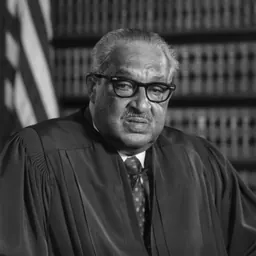
Briggs v. Elliott In 1951 Waring was one of three judges to hear Briggs v. Elliott, a test case on school desegregation. Thurgood Marshall represented the plaintiffs against the Clarendon County, South Carolina public schools which were described as separate but not at all equal. Though the plaintiffs lost the case before the three judge panel which voted 2–1 for the defendants, Waring's eloquent dissent, and his phrase, "Segregation is per se inequality" formed the legal foundation for the United States Supreme Court in the 1954 Brown v. Board of Education decision.
Later life and death Waring assumed senior status on February 15, 1952. He was buried in the Waring family plot at Magnolia Cemetery in Charleston.
Legacy Charlestonian high society ostracized Waring for his judicial opinions. Rocks were thrown through his windows and the Ku Klux Klan set a cross alight in front of his home. After his retirement, Waring slid into obscurity until his legacy was "reclaimed" in the 2010s.
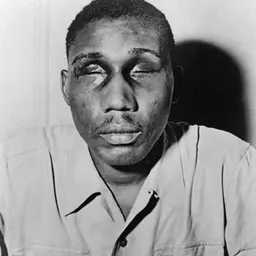
In 2019, Judge Richard Gergel wrote a book about the impact of the Isaac Woodard case on Waring and President Harry Truman. Waring was portrayed by Rich Fulcher in the second season of Comedy Central's Drunk History.
In 2021, the PBS series, American Experience, (season 33) first aired "The Blinding of Isaac Woodard" which focused on Judge Waring's role in that case.
Don’t just read it —
keep it.
Full-length biographies made to live with: read them, listen on the way to work, watch them tonight.
- E-book
- Audio
- Video
Instant download · yours to keep · every purchase keeps this site free
Important facts
People in Julius Waties Waring's life
Named in this biography and alive at the same time



Related people
Same field, nearest in time

Contemporaries
People whose lives overlapped Julius Waties Waring's




Frequently asked questions
Who was Julius Waties Waring?
United States federal judge
When was Julius Waties Waring born?
Julius Waties Waring was born on 27 July 1880 in Charleston.
When did Julius Waties Waring die?
Julius Waties Waring died on 11 January 1968 in New York City.
What was Julius Waties Waring's occupation?
Julius Waties Waring was a lawyer and judge.
What nationality was Julius Waties Waring?
Julius Waties Waring was American.
Sources & further reading
· Wikipedia: Julius Waties Waring
· DBpedia: Julius Waties Waring
Cite this page
APA: Biography.guide. (2026). Julius Waties Waring. https://biography.guide/julius-waties-waring/
MLA: "Julius Waties Waring." Biography.guide, https://biography.guide/julius-waties-waring/.
Chicago: "Julius Waties Waring." Biography.guide. https://biography.guide/julius-waties-waring/.
Data last updated: 2026-09-20 · Spot an error? Report a correction.
Page generated 2026-09-27 05:00 UTC