
Isaac Woodard
1919-1992 American soldier, blinded by South Carolina police in 1946 as a form of racial abuse
About Isaac Woodard
Lived 1919 – 1992 (aged 73). Isaac Woodard was an American military personnel, stevedore and soldier.
Isaac Woodard Jr. (March 18, 1919 – September 23, 1992) was an American soldier and victim of racial violence. An African-American World War II veteran, on February 12, 1946, hours after being honorably discharged from the United States Army, he was attacked while still in uniform by South Carolina police as he was taking a bus home. The attack and his injuries sparked national outrage and galvanized the civil rights movement in the United States.
The attack left Woodard completely and permanently blind. Due to South Carolina's reluctance to pursue the case, President Harry S. Truman ordered a federal investigation. The police chief, Lynwood Shull, was indicted and went to trial in federal court in South Carolina, where he was acquitted by an all-white jury.
Such miscarriages of justice by state governments influenced a move towards civil rights initiatives at the federal level. Truman subsequently established a national interracial commission, made a historic speech to the NAACP and the nation in June 1947 in which he described civil rights as a moral priority, submitted a civil rights bill to Congress in February 1948, and issued Executive Orders 9980 and 9981 on July 26, 1948, desegregating the armed forces and the federal government.
Early life and military service Woodard was born in Fairfield County, South Carolina, and grew up in Goldsboro, North Carolina. He attended local segregated schools, often underfunded for African Americans during the Jim Crow years.
On October 14, 1942, the 23-year-old Woodard enlisted in the United States Army at Fort Jackson in Columbia, South Carolina. He served in the Pacific theater in a labor battalion as a longshoreman and was promoted to sergeant. He earned a battle star for his Asiatic–Pacific Campaign Medal by unloading ships under enemy fire in New Guinea, and received the Good Conduct Medal as well as the American Campaign Medal and World War II Victory Medal awarded to all American service members who served during the war. He received an honorable discharge.
Attack and maiming On February 12, 1946, Woodard was on a Greyhound Lines bus traveling from Camp Gordon in Augusta, Georgia, where he had been discharged, en route to rejoin his family in North Carolina. When the bus reached a rest stop just outside Augusta, Woodard asked the bus driver if there was time for him to use a toilet. The driver grudgingly acceded to the request after an argument. Woodard returned to his seat from the rest stop without incident, and the bus departed. He also had partial amnesia as a result of his injuries. Woodard further testified that he was punched in the eyes by police several times on the way to the jail, and later repeatedly jabbed in his eyes with a billy club. Newspaper accounts indicate that Woodard's eyes had been "gouged out"; historical documents indicate that each globe was ruptured irreparably in the socket.
The following morning, the Batesburg police sent Woodard before the local judge, who found him guilty and fined him fifty dollars. The soldier requested medical assistance, but it took two more days for a doctor to be sent to him. Not knowing where he was and still experiencing amnesia, Woodard ended up in a hospital in Aiken, receiving substandard medical care. Three weeks after he was reported missing by his relatives, Woodard was discovered in the hospital. He was immediately rushed to an Army hospital in Spartanburg. Though his memory had begun to recover by that time, doctors found both eyes were damaged beyond repair.
National outcry
Although the case was not widely reported at first, it was soon extensively covered in major national newspapers. The National Association for the Advancement of Colored People (NAACP) worked to publicize Woodard's plight, and it also lobbied the state government of South Carolina to address the incident, which it dismissed.
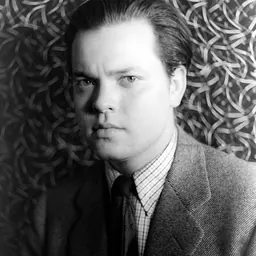
On his ABC radio show Orson Welles Commentaries, actor and filmmaker Orson Welles crusaded for the punishment of Shull and his accomplices. On the broadcast which was made on July 28, 1946, Welles read an affidavit which was sent to him by the NAACP and signed by Woodard. He criticized the lack of action by the South Carolina government as intolerable and shameful. Woodard was the focus of Welles's four subsequent broadcasts. "The NAACP felt that these broadcasts did more than anything else to prompt the Justice Department to act on the case," wrote the Museum of Broadcasting in a 1988 exhibit on Welles.
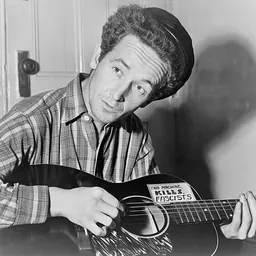
Musicians wrote songs about Woodard and the attack. A month after the beating, the calypso artist Lord Invader recorded an anti-racism song for his album Calypso at Midnight; it was entitled "God Made Us All", with the last line of the song directly referring to the incident. Later that year, folk artist Woody Guthrie recorded "The Blinding of Isaac Woodard," which he wrote for his album The Great Dust Storm. He said that he wrote the song "...so's you wouldn't be forgetting what happened to this famous Negro soldier less than three hours after he got his Honorable Discharge down in Atlanta...."
Federal government's response On September 19, 1946, seven months after the incident, NAACP Executive Secretary Walter Francis White met with President Harry S. Truman in the Oval Office to discuss the Woodard case. Gardner writes that when Truman "heard this story in the context of the state authorities of South Carolina doing nothing for seven months, he exploded."
The defense did not perform better. When the defense attorney began to shout racial epithets at Woodard, Waring stopped him immediately. During the trial, the defense attorney stated to the all-white jury (blacks were excluded from juries due to disfranchisement of blacks in the South) that "if you rule against Shull, then let this South Carolina secede again." After Woodard gave his account of the events, Shull firmly denied it. He claimed that Woodard had threatened him with a gun and that Shull had used his nightclub in self-defense. During this testimony, Shull admitted that he repeatedly struck Woodard in the eyes.
On November 5, after 30 minutes of deliberation (15, according to at least one news report), and Progressive Party presidential candidate Henry A. Wallace, but withdrew his support for the latter and backed Truman for reelection. He died aged 73 in the Veterans Administration hospital in the Bronx on September 23, 1992. He was buried with military honors at the Calverton National Cemetery (Section 15, Site 2180) in Calverton, New York.
Legacy
Influence on American politics In December 1946, after meeting with White and other leaders of the NAACP, and a month after the jury acquitted Shull, Truman established the President's Committee on Civil Rights by Executive Order 9808; a fifteen-member, interracial group, including the President of General Electric, Charles E. Wilson; academics such as John Sloan Dickey from Dartmouth College; and Sadie Tanner Alexander, a black attorney for the city of Philadelphia, as well as other activists. He asked them to report by the end of 1947.
Truman made a strong speech on civil rights on June 29, 1947, to the NAACP, the first American president to speak to their meeting, which was broadcast by radio from where they met on the steps of the Lincoln Memorial. The President said that civil rights were a moral priority, and it was his priority for the federal government. He had seen by Woodard's and other cases that the issue could not be left to state and local governments. He said:
It is my deep conviction that we have reached a turning point in our country's efforts to guarantee freedom and equality to all our citizens. Recent events in the United States and abroad have made us realize that it is more important today than ever before to ensure that all Americans enjoy these rights. When I say all Americans—I mean all Americans. Although Truman narrowly won, Gardner believes that his continued championing of civil rights as a federal priority cost him much support, especially in the Solid South. Woody Guthrie later recalled: "I sung 'The Blinding of Isaac Woodard' in the Lewisohn Stadium (in New York City) one night for more than 36,000 people, and I got the loudest applause I've ever got in my whole life."
Other events Woodard's "drunk and disorderly" conviction was vacated in 2018.
A group of veterans led by Don North, a retired Army major from Carrollton, Georgia, received permission to erect a historical marker in honor of Woodard in Batesburg-Leesville in South Carolina. In 2019 the marker was unveiled. this permanent historic plaque now stands on the corner of West Church Street and Fulmer Street in old Batesburg commemorating the civil rights incident at the site of the original police station.
Don’t just read it —
keep it.
Full-length biographies made to live with: read them, listen on the way to work, watch them tonight.
- E-book
- Audio
- Video
Instant download · yours to keep · every purchase keeps this site free
Important facts
People in Isaac Woodard's life
Named in this biography and alive at the same time




Related people
Same field, nearest in time



Contemporaries
People whose lives overlapped Isaac Woodard's



Frequently asked questions
Who was Isaac Woodard?
1919-1992 American soldier, blinded by South Carolina police in 1946 as a form of racial abuse
When was Isaac Woodard born?
Isaac Woodard was born on 18 March 1919 in Fairfield County.
When did Isaac Woodard die?
Isaac Woodard died on 23 September 1992 in The Bronx.
What was Isaac Woodard's occupation?
Isaac Woodard was a military personnel, stevedore and soldier.
What nationality was Isaac Woodard?
Isaac Woodard was American.
Sources & further reading
Cite this page
APA: Biography.guide. (2026). Isaac Woodard. https://biography.guide/isaac-woodard/
MLA: "Isaac Woodard." Biography.guide, https://biography.guide/isaac-woodard/.
Chicago: "Isaac Woodard." Biography.guide. https://biography.guide/isaac-woodard/.
Data last updated: 2026-09-24 · Spot an error? Report a correction.
Page generated 2026-09-27 05:03 UTC