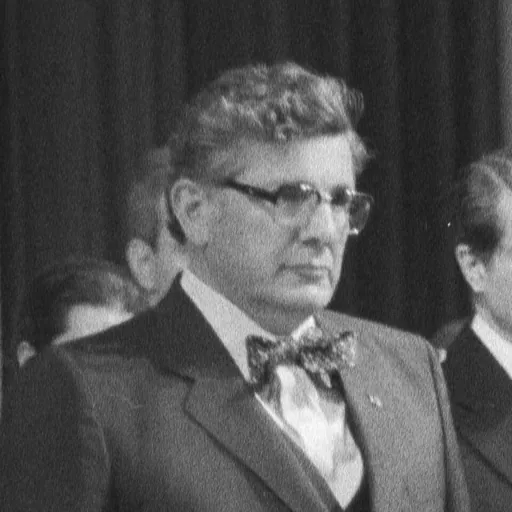
About Julio César Turbay
Lived 1916 – 2005 (aged 89). Julio César Turbay was a Colombian diplomat, lawyer, economist and politician.
Julio César Turbay Ayala (18 June 1916 – 13 September 2005) was a Colombian lawyer and politician who served as the 26th president of Colombia from 1978 to 1982. He also held the positions of Foreign Minister and Ambassador to the United States.
Early life Turbay was born in the wealthy neighborhood of "Voto Nacional", Bogotá, on June 18, 1916. His father, Antonio Amín Turbay, was a businessman who emigrated from Tannourine, Lebanon. His mother, Rosaura Ayala, was a peasant from the province of Cundinamarca. Turbay's father, a hard-working merchant, built up a fortune, which he completely lost during the Thousand Days War. Turbay Ayala completed his secondary studies in Bogotá, but never attended college, and instead became an autodidact, a fact that his political adversaries always poked fun at. He received a number of honorary degrees later in life.
Political career Turbay started his political career in the Liberal Party as a councilman in the (then) town of Usme in 1936. He would later be appointed as mayor of the city of Girardot (1937), and then councilman in the town of Engativá in 1938 along with fellow politicians Alfonso López Michelsen and Álvaro Gómez Hurtado. The next few years he spent as a member of the Assembly of Cundinamarca. In 1943 he was chosen for congress as a Chamber Representative. He was a leader of the opposition to conservative governments, and in 1953 became a member of the national directive of the liberal party. With the rise to power of the military Junta that ousted dictator Gustavo Rojas Pinilla, Turbay was appointed Minister of Mines and Petroleum. He was later appointed Minister of Foreign Affairs by president Alberto Lleras Camargo until 1961. He was known as a strong defender of the National Front, and was chosen as senator for four consecutive periods between 1962 and 1974. He also served briefly as interim president in 1967. He was also appointed as ambassador the UN (1967–1969), United Kingdom (1973–1974), and the United States (1975–1976).
The Security Statute gave the military an increased degree of freedom of action, especially in urban areas, to detain, interrogate and eventually judge suspected guerrillas or their collaborators before military tribunals. Human rights organizations, newspaper columnists, political personalities and opposition groups complained about an increase in the number of arbitrary detentions and acts of torture as a result.
Although the Security Statute allegedly benefited some of the counterinsurgency operations of the security forces, such as the capture of most of the M-19's command structure and many of the guerrilla group's urban cells, the measure became highly unpopular inside and outside Colombia, promoting some measure of public sympathy for the victims of the real or perceived military abuses whether they were guerrillas or not, and was phased out towards the end of the Turbay administration.
External relations In terms of foreign policy, the country moved to the right, showing itself to be an ally of the United States, first with President Jimmy Carter, and then with his successor, Ronald Reagan. Turbay aligned the country with Ronald Reagan's conservative policies, which caused him problems with neighbouring American nations.
Turbay also became involved with the UK, supporting the British cause during the Falklands War, a position that isolated the country from other Latin American nations. The controversy did not stop there, as under Turbay's administration, Colombia severed diplomatic relations with Cuba.
The incident soon spread throughout worldwide headlines, as ambassadors from the United States of America, Costa Rica, Mexico, Peru, Israel and Venezuela had been taken hostage, as well as Colombia's top representative to the Holy See.
Turbay, despite pressure from military and political sectors, avoided deciding to solve the crisis through the use of direct military force, and instead eventually agreed to let the M-19 rebels travel to Cuba. Allegedly, the rebels also received USD 1 million as payment, instead of the initial $50 million that they had originally demanded from the government.
That a mostly peaceful resolution to the crisis was found has been generally considered as a positive aspect of Turbay's administration, as seen by later and contemporary commentators and historians.
In particular, former M-19 members, including Rosemberg Pabón, the commander of the guerrilla group's operative unit at the time, later recognized and respected Turbay's handling of the situation.
Post-presidency
Turbay was a supporter of president Álvaro Uribe. He initially opposed the possibility of presidential reelection in Colombia, but later changed his views, contributing to founding a movement known as Patria Nueva ("New Homeland"), in order to help promote Uribe's 2006 reelection aspirations.
Support for a prisoner exchange with the FARC
Turbay was seen as being at odds with some of Uribe's policies, however, in particular due to Turbay's activism in favor of the implementation and negotiation of a prisoner exchange with the FARC guerrilla group. As part of this effort, Turbay participated in several meetings with the relatives of FARC hostages and signed several declarations of support, together with other former presidents such as Alfonso López Michelsen and Ernesto Samper Pizano.
On August 31, 2005, Turbay proposed that the government could exchange each jailed guerrilla for 10 "economic" hostages (those held for extortion purposes) and one "political" hostage (those held by the FARC in order to pressure the Colombian government to release its jailed members).
Personal life
Turbay married his niece, Nydia Quintero Turbay, on July 1, 1948. They had four children together: Julio César, Diana, Claudia, and María Victoria. However, their marriage was annulled by the Catholic Church. Her kidnapping is chronicled in News of a Kidnapping by the Nobel Prize-winning author Gabriel García Márquez (1996) and depicted in multiple onscreen productions.
His grandson, Miguel Uribe Turbay, was a senator.
A personal idiosyncrasy of Turbay's was his custom of wearing bow ties, a sartorial habit extremely uncommon in Colombia.
Death Turbay died on 13 September 2005, at the age of 89. He was honored by a state funeral personally led by President Álvaro Uribe and was buried at the Sacromonte Caves at Canton Norte, an army base in Bogotá.. He visited Lebanon with his family in 2003 as a final trip to the homeland of his family.
Controversy In recent times, it was revealed that Turbay was the most prominent name included in Jimmy Carter’s Colombia Blacklist, which comprised corrupt politicians and officers profiting from the drug trade.
Don’t just read it —
keep it.
Full-length biographies made to live with: read them, listen on the way to work, watch them tonight.
- E-book
- Audio
- Video
Instant download · yours to keep · every purchase keeps this site free
Important facts
Family & relationships
People in Julio César Turbay's life
Named in this biography and alive at the same time
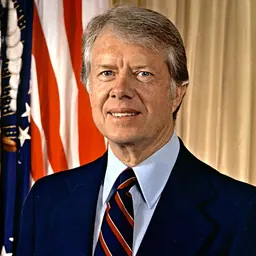

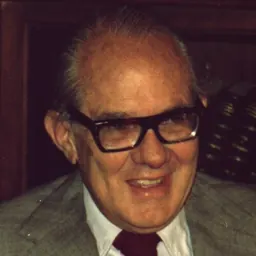

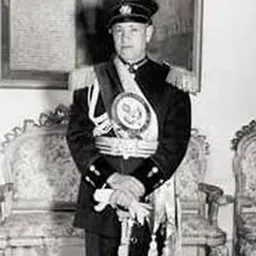

Related people
Same field, nearest in time
Contemporaries
People whose lives overlapped Julio César Turbay's



Frequently asked questions
Who was Julio César Turbay?
President of Colombia (1916-2005)
When was Julio César Turbay born?
Julio César Turbay was born on 18 June 1916 in Bogotá.
When did Julio César Turbay die?
Julio César Turbay died on 13 September 2005 in Bogotá.
What was Julio César Turbay's occupation?
Julio César Turbay was a diplomat, lawyer, economist and politician.
What nationality was Julio César Turbay?
Julio César Turbay was Colombian.
Sources & further reading
· Wikipedia: Julio César Turbay
· DBpedia: Julio César Turbay Ayala
Cite this page
APA: Biography.guide. (2026). Julio César Turbay. https://biography.guide/julio-cesar-turbay/
MLA: "Julio César Turbay." Biography.guide, https://biography.guide/julio-cesar-turbay/.
Chicago: "Julio César Turbay." Biography.guide. https://biography.guide/julio-cesar-turbay/.
Data last updated: 2026-09-23 · Spot an error? Report a correction.
Portrait: Wikimedia Commons · author & licence
Page generated 2026-09-27 05:07 UTC