
About Julian Trevelyan
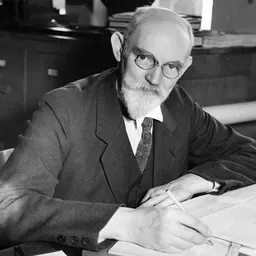
Lived 1910 – 1988 (aged 78). Julian Trevelyan was a British painter, engineer, poet, photographer, visual artist and graphic artist.
Julian Otto Trevelyan (20 February 1910 – 12 July 1988) was an English artist and poet.
Early life Trevelyan was the only child to survive to adulthood of Robert Calverley Trevelyan and his wife Elizabeth van der Hoeven. His grandfather was the liberal politician Sir George Trevelyan, 2nd Baronet, and his uncle the historian George Macaulay Trevelyan; he is the great-uncle of his namesake, Julian Trevelyan the pianist.
Julian Trevelyan was educated at Bedales School and Trinity College, Cambridge, where he read English Literature.
Artistic career
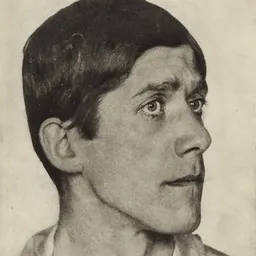
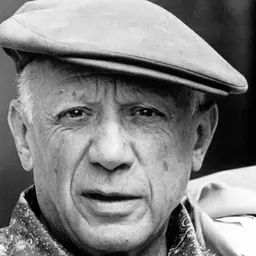
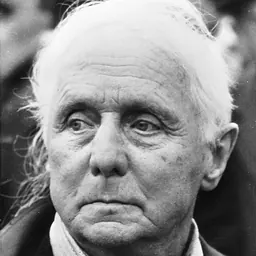
He moved to Paris to become an artist, enrolling at Atelier Dix-Sept, Stanley William Hayter's engraving school, where he learned etching. He worked alongside artists including Max Ernst, Oskar Kokoschka, Joan Miró and Pablo Picasso.
In 1935, Trevelyan bought Durham Wharf, beside the river Thames in Hammersmith, London. This became his home and studio for the rest of his life and was a source of artistic inspiration to him. He became a confirmed Surrealist and exhibited at the International Surrealist Exhibition, held at the New Burlington Galleries in London.
From 1950 to 1955, Trevelyan taught history of art and etching at the Chelsea School of Art.
From 1955 to 1963, Trevelyan worked at the Royal College of Art and became Head of the Etching Department. Because of his enthusiasm in his work and the desire to share it with others, Trevelyan became a highly influential teacher, with students including David Hockney, Ron Kitaj and Norman Ackroyd. He was an important leader of modern print techniques and today is regarded as a silent driving force behind the etching revolution of the 1960s.
In 1969, he produced the Thames Suite, a collection of 12 views of the Thames from its upper reaches in Oxford and Henley-on-Thames down to the tidal stretches of London and the Estuary.
Wartime camoufleur
Along with other artists such as Roland Penrose, during the Second World War, Trevelyan served as a Camouflage Officer. He was a member of the Royal Engineers from 1940 to 1943, serving in North Africa and Palestine.
Arriving in the "Western Desert" town of Tobruk, North Africa, Trevelyan realized that standard British army green and brown splotches were ineffective as desert camouflage. He and the other camoufleurs, working under Hugh Cott and Geoffrey Barkas, became expert at desert camouflage and deception. By 1942, they were able to deceive the German Afrika Korps, creating a dummy army which successfully tied down German forces, while real tanks were concealed or disguised as trucks and other equipment.
In 1998 a major Retrospective "Julian Trevelyan: The Imaginative Impulse" was held at the Royal College of Art which subsequently toured to Royal West of England Academy, Bristol; Laing Gallery Newcastle, and Mercer Art Gallery, Harrogate with accompanying catalogue published by Bohun. Catalogue Raisonne of Prints edited by Silvie Turner launched at Royal Academy.. 'Julian Trevelyan Retrospective of Etchings' at Bohun Gallery with opening of River & Rowing Museum mounting 'Julian Trevelyan: River Thames Etchings'.
To celebrate the centenary of his birth, an exhibition of his prints was held at Pallant House Gallery in Chichester from 10 May to 13 June 2010.
Bohun Gallery handles the artist's estate, and stages regular exhibitions of his paintings and etchings.
105 of his artworks are now held in the collection of the Tate Gallery.
Trevelyan recorded some of his experiences in his book Indigo Days, MacGibbon and Kee, London, 1957.
Bohun Gallery held a major retrospective of the artist's work "Julian Trevelyan: Picture Language" 23 April - 1 June 2013, which included previously unseen paintings and etchings. The exhibition launched the new monograph on Julian Trevelyan, written by his son Philip Trevelyan.
Don’t just read it —
keep it.
Full-length biographies made to live with: read them, listen on the way to work, watch them tonight.
- E-book
- Audio
- Video
Instant download · yours to keep · every purchase keeps this site free
Important facts
Family & relationships
People in Julian Trevelyan's life
Named in this biography and alive at the same time




Related people
Same field, nearest in time


Contemporaries
People whose lives overlapped Julian Trevelyan's




Frequently asked questions
Who was Julian Trevelyan?
British artist and poet (1910-1988)
When was Julian Trevelyan born?
Julian Trevelyan was born on 20 February 1910 in Dorking.
When did Julian Trevelyan die?
Julian Trevelyan died on 12 June 1988 in Hammersmith.
What was Julian Trevelyan's occupation?
Julian Trevelyan was a painter, engineer, poet, photographer, visual artist and graphic artist.
What nationality was Julian Trevelyan?
Julian Trevelyan was British.
Sources & further reading
Cite this page
APA: Biography.guide. (2026). Julian Trevelyan. https://biography.guide/julian-trevelyan-painter/
MLA: "Julian Trevelyan." Biography.guide, https://biography.guide/julian-trevelyan-painter/.
Chicago: "Julian Trevelyan." Biography.guide. https://biography.guide/julian-trevelyan-painter/.
Data last updated: 2026-09-20 · Spot an error? Report a correction.
Page generated 2026-09-27 05:26 UTC