
Josh Cody
All-American college football player, college basketball coach, college football coach, College Football Hall of Fame member, college athletic director
About Josh Cody
Lived 1892 – 1961 (aged 69). Josh Cody was an American basketball coach, athletics competitor and american football player.
Joshua Crittenden Cody (June 11, 1892 – June 17, 1961) was an American college athlete, head coach, and athletics director. "Josh" Cody was a native of Tennessee and an alumnus of Vanderbilt University, where he earned 13 letters playing several sports.
As a versatile tackle and blocker on the Vanderbilt Commodores football team, he was a three-time All-American. During his four years on the team, Cody helped Vanderbilt score 1,099 points, winning 23 of 35 games.
In 1969, Cody was named by the Football Writers Association of America to the 1869–1918 Early Era All-American Team. He was inducted as a player into the College Football Hall of Fame in 1970. Coach Charley Moran called Cody the greatest tackle ever to play in the South.
After graduation from Vanderbilt, Cody coached college football and basketball and served as the athletics director at various universities, including: Clemson University, the University of Florida and Temple University. He also was an assistant for head football coaches Dan McGugin and Ray Morrison at Vanderbilt.
Cody coached three different schools in the Southern Intercollegiate Athletic Association's (S.I.A.A.) basketball tournament. His Vanderbilt team won the tournament in 1927.
Early life and education
Josh Cody was born in Franklin, Tennessee, on June 11, 1892, the second of James Wadkins and Sarah Elizabeth (née Crittenden) Cody's three children. Cody's father was a house painter. The family lived in Alabama for a time and moved back to Tennessee. Cody was raised in Franklin and graduated high school from Battle Ground Academy prep school.
College career began at Bethel College Cody first played football for three seasons at the Russellville, Kentucky campus of Bethel College. In 1912 the Bethel football team suffered a 105–0 loss to Vanderbilt.
Vanderbilt University In 1914, at the age of 22, he enrolled at Vanderbilt University and was a member of the football, basketball, baseball, and track and field teams, earning a total of thirteen varsity letters. One source called Cody: "the interference-smashingest, goal-cage ingest, home-run knockingest, super-athlete in all Dixie."
Football Cody played for legendary coach Dan McGugin's football team as an offensive and defensive tackle (teams played one-platoon football in those days), but was versatile enough to play quarterback, running back, and kicker at times. Fuzzy Woodruff described Cody as "a great kicker and a tower of strength on offense."
He was a very large player at some , and . McGugin later selected him as one of the six best players he ever coached.
Cody was known as a sure tackler and a fierce blocker, who helped the Commodores score 1,099 points to 226 in thirty-five games (31.4 points per game).
Cody was selected to at least one All-Southern team every year he played, and for an All-time Vanderbilt team published in its 1934 yearbook. Charley Moran called Cody the greatest tackle ever to play in the South.
Journalist Ralph McGill, once a teammate of Cody's, said: He was a great big fellow and one of the most seriously dedicated fellows I've ever met. He was a farm boy and he didn't have any polish but he was very honest and sincere. He didn't have scholarship—we had none in those days— but he had a real job. He literally cleaned the gymnasium every day, cleaned up the locker rooms and the showers, and tended to the coal furnace after practice. He was a big man, squarely built, quiet, almost shy, and enormously decent. He practiced long hours to place kick and became the team's place kicker. He wasn't fast, but he was fast for a big man. He didn't like to wear pads. He got a hold of an old quilt and sewed it to the shoulders of the jersey and that was all the padding he wore. and finished with a 2–6 record, McGugin's first losing season, and only the second losing season in the school's twenty-five years of playing football.
In his second game, a 23–3 loss to Michigan in Ann Arbor, Cody converted a 45-yard (41.148 m) drop kick field goal. In his fifth game, a 20–7 loss to Virginia, Cody dropped back into the backfield and threw a touchdown pass to Irby "Rabbit" Curry, the team's regular quarterback.
1915 In 1915, Vanderbilt finished with a 9–1 record and a Southern Intercollegiate Athletic Association (SIAA) championship. Cody earned his second national honor – a third team, All-America selection from Walter Camp. The "point-a-minute" Commodores outscored their opponents by an incredible 514–38. Their only loss was a 35–10 setback to Virginia — a game in which Cody drop kicked a 20-yard field goal.
Cody personally took over the Auburn game after Vanderbilt was up 17–0. In one of the greatest exhibitions of punt covering, Cody smothered the receiver every time, recovering two fumbles, including one across the goal line for a touchdown. Then, in the last ten seconds of play, Cody dropped kicked a three-pointer from the 33-yard line. In the season's final game against rival Sewanee, tackles Cody and Tom Lipscomb blocked a punt leading to the game's second touchdown. Irby Curry later had an 80-yard touchdown with Cody clearing the path. The final score was 28–3.
1916–1918 alt=Head-and-shoulders photo of Lt. Josh Cody, white man in his mid-20s, shown in the World War I-era field uniform of the U.S. Army In 1916, Cody helped Vanderbilt to a 7–1–1 record, and was selected All-Southern, but was not recognized as an All-American. The season started with a question over his eligibility due to formerly playing at Bethel, but was resolved.
World War I He was elected captain of next year's team at season's end, but instead served in the U.S. Army during World War I as a lieutenant in 1917 and 1918.
1919 Cody then returned to Vanderbilt for his senior year in 1919. Cody again starred in the Auburn game, giving the SIAA champion its only loss on the year with a 15-yard fumble return and extra point to win 7–6. The Commodores finished 5–1–2, and Cody was named an All-American for the third time, as he again earned a third-team selection by Walter Camp; becoming the only Vanderbilt athlete to be named a three-time All-American. He spurned an offer from the Canton Bulldogs to play professional football.
Basketball Cody was a forward on the basketball teams coached by Ray Morrison. Tom Zerfoss and Cody were the starting forwards on the SIAA champion 1919–1920 team. As a senior, Cody won the Porter Cup as the school's best all-around athlete.
Coaching career Coaching philosophy While coaching at Mercer, Cody was quoted as telling the team "Of course I want you to win. My job depends on it. But rather than for you to commit one unsportsmanlike act, I'd prefer to lose every game we play."
In 1922 the Mercer Baptists football team was crippled, having many star players out with dengue fever. Former Georgia Tech running back Everett Strupper was an assistant coach. The basketball team was led by George Harmon and won the SIAA as runner-up to North Carolina in the 1922 SoCon men's basketball tournament.
Vanderbilt The 1927 SoCon tournament champion Vanderbilt basketball team. Cody is top right.
In 1923, he returned to Vanderbilt, where he became the head coach of the school's baseball and basketball teams. During that time, he also served as an assistant football coach to McGugin. Cody's first year as an assistant on the football team in 1923 saw the last conference title for Vanderbilt in the sport to date.
His 1926–27 basketball team finished 20–4—the best record in school history—and won the Southern Conference tournament championship. Cody had a variety of superstitions while coaching his basketball team, including not laundering jerseys during a winning streak until a game was lost, and starting contests with the same lineup.
Clemson University From 1927 to 1930, Cody was head coach of both the Clemson basketball and football teams, the last coach at Clemson to coach two revenue-producing sports. During his tenure, he compiled a 29–11–1 record as football coach, including a perfect 4–0 record against archrival South Carolina and a near-perfect 13–0–1 at home. He was 48–55 as basketball coach. In May 1929, when rumors were swirling that he might leave to coach a bigger-name program, the students, faculty, and staff took up a collection to buy him a brand new black Buick automobile.
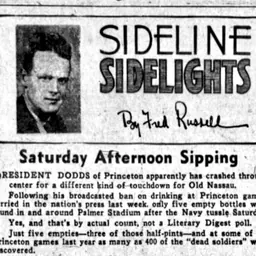
Fred Russell had a well-known story of Cody during a chicken-eating contest at Clemson with Herman Stegeman, the coach at Georgia. "Josh weighed about 260 then. He outstripped Stegeman by eleven chickens. He wasn't satisfied just to win. He just went on to a decisive victory." As Cody explained: "I got two chickens ahead of him early and just coasted."
Vanderbilt again In 1931, he returned to Vanderbilt as head coach of the basketball team and assistant football coach. In his second stint as Vanderbilt's basketball coach, Cody went 51–50. but Cody remained basketball coach through the 1935–1936 season. His Commodores basketball teams tallied 51–50 in five seasons.
Florida
Disappointed at being passed over for the Commodores' football head coaching job, Cody left Vanderbilt in 1936 and, with McGugin's help, where he succeeded Dutch Stanley and compiled a poor 17–24–2 record in the four seasons from 1936 to 1939. Florida's lone All-SEC selection during this period was Walter "Tiger" Mayberry in 1937. The 1937 team defeated the Georgia Bulldogs in the two teams' annual rivalry game for the first time in eight years. In 1938, Cody lost at home to Pop Warner's Temple 20–12 in the last game Warner ever coached.
Perhaps Cody's finest moment as the Gators' head coach was the 7–0 upset of coach Frank Leahy's then-undefeated, second-ranked Boston College Eagles at Fenway Park in his final season. Sophomore end Fergie Ferguson, namesake of the Fergie Ferguson Award, was the defensive star of the game for the Gators.
Temple In 1940, he left Florida and became the line coach under Ray Morrison at Temple. In 1942, he was appointed the head coach of the Temple basketball team. In 1944, he guided the Owls to their first NCAA tournament berth, reaching the Elite Eight. One of his clinics and games at Temple in 1947 drew several hundred players, coaches, and fans. He remained Temple's basketball coach until 1952—compiling a record of 124–103—and then became athletic director.
In 1955, after the sudden resignation of Albert Kawal, he served one year as Temple's head football coach, compiling an 0–8 record.
Retirement, death and burial Cody retired to his farm across the Delaware River in Moorestown, New Jersey which mostly produced grain. Asked why he purchased the property when he moved from Florida, Cody explained "I had decided I was moving for good. I bought that old farm and figured if Temple fired me I'd still manage to put food on the table". "I guess you can take the boy out of Tennessee but not Tennessee out of the boy".
He died of a heart attack while feeding dogs at his son's nearby home in Mount Laurel, New Jersey on June 17, 1961.
Accolades In 1929, Cody served as an officer and board member of the National Association of Basketball Coaches of the United States (NABC); its honorary president was basketball's inventor James Naismith. In 1969, in honor of the centennial of collegiate football, the Football Writers Association of America named two "College Football All-Time Teams" of eleven players — an "early" team consisting of players who played prior to 1920, and a "modern" team who played in 1920 and after. Cody was picked as one of two tackles for the pre-1920 squad. In 1970, Cody was inducted into the College Football Hall of Fame. In 1999, Cody was inducted into Tennessee Sports Hall of Fame.
Basketball
Don’t just read it —
keep it.
Full-length biographies made to live with: read them, listen on the way to work, watch them tonight.
- E-book
- Audio
- Video
Instant download · yours to keep · every purchase keeps this site free
Important facts
People in Josh Cody's life
Named in this biography and alive at the same time



Related people
Same field, nearest in time


Contemporaries
People whose lives overlapped Josh Cody's
Frequently asked questions
Who was Josh Cody?
All-American college football player, college basketball coach, college football coach, College Football Hall of Fame member, college athletic director
When was Josh Cody born?
Josh Cody was born on 11 June 1892 in Franklin.
When did Josh Cody die?
Josh Cody died on 17 June 1961 in Mount Laurel.
What was Josh Cody's occupation?
Josh Cody was a basketball coach, athletics competitor and american football player.
What nationality was Josh Cody?
Josh Cody was American.
Sources & further reading
Cite this page
APA: Biography.guide. (2026). Josh Cody. https://biography.guide/josh-cody/
MLA: "Josh Cody." Biography.guide, https://biography.guide/josh-cody/.
Chicago: "Josh Cody." Biography.guide. https://biography.guide/josh-cody/.
Data last updated: 2026-09-20 · Spot an error? Report a correction.
Page generated 2026-09-27 05:17 UTC