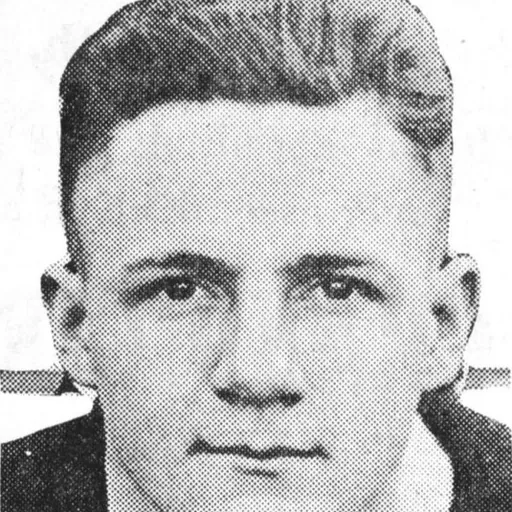
About Everett Strupper
Lived 1896 – 1950 (aged 53). Everett Strupper was an American head coach and american football player.
George Everett Strupper Jr. (July 26, 1896 – February 4, 1950), known variously as "Ev" or "Strup" or "Stroop" was an American football player. He played halfback for Georgia Tech from 1915 to 1917. Strupper overcame deafness resulting from a childhood illness and was selected as an All-American in 1917.
During Strupper's three years playing for Georgia Tech, the team compiled a record of 24–0–2 and outscored its opponents by a combined score of 1,135–61. In Georgia Tech's record-setting 222–0 win over Cumberland College in 1916, Strupper scored eight touchdowns. For many years, 1917 Georgia Tech was considered the greatest football team the South ever produced. Strupper starred as part of a renowned backfield including also Joe Guyon, Judy Harlan, and Al Hill. Strupper and teammate Walker Carpenter were the first players from the Deep South selected for an All-America first team.
Sportswriter Morgan Blake called Strupper "probably the greatest running half-back the South has known." Bernie McCarty writes "Strupper ranks among the greatest broken-field gallopers in Southern football history. And he caught and threw passes, returned kicks, blocked well, punted and played a bang-up defensive game." As of 1910, his father was employed as a manager at a cotton oil company. Stupper attended Riverside Military Academy in Gainesville, Georgia. He was the star of the school's football team in 1913; and is a member of the school's sports hall of fame.
Georgia Tech Strupper enrolled at the Georgia Institute of Technology (Georgia Tech) in Atlanta in 1914. During his freshman year, Strupper became a member of the Georgia Phi chapter of the Sigma Alpha Epsilon fraternity. He was a multi-sport athlete competing for Georgia Tech in basketball, football, and track and field. He then played halfback for Georgia Tech's varsity football teams under head coach John Heisman from 1915 to 1917. Strupper was deaf, and because of his deafness, he called the signals instead of the team's quarterback. His coach John Heisman later wrote that Strupper was "but 5 feet 7 inches in height, weighed only 148 pounds stripped."
Georgia Tech coach John Heisman later described Strupper as follows:"Everett Strupper was a small package of condensed lightning when you turned him loose in an open field with a ball you wanted delivered somewhere in the neighborhood of the enemy's goal line. He was small, but he was put together like a high-powered motor. His arms and legs did just what his mind told them to do, and, believe me, his mind worked faster than Ty Cobb's when he's running the bases. Dodging and twisting, stiff-arming and hipping, he'd run the gauntlet of men big enough, you'd think, to pick him up and spank him, and most of the time, too, he'd get away from them, try as hard as they would."
Heisman also said of Strupper "Were I compelled to risk my head on what one absolutely unaided gridster might accomplish, football under arm and facing eleven ferocious opponents, I would rather choose and chance this man on how he might come through the gauntlet than any ball carrier I have ever seen in action."
Heisman recalled that, when Strupper first arrived from Riverside Military Academy, Heisman could not imagine Strupper playing on the football team: "Too light for the line, I didn't see how he could play in the backfield, because he wouldn't be able to get the signals. He could have played quarterback fine, but his enunciation wasn't clear enough for him to call the plays."
1915 season In his sophomore year, Strupper proved to be an all-around athlete. As Heisman told it, Strupper "was a star baseball player, a crack at basketball and the best sprint man we had in the school." He was injured the next week against LSU, and blamed LSU's Phillip Cooper.
Tech closed what was then the greatest season in its history with a 7–0 defeat of the Auburn Plainsmen. To begin the second quarter, Strupper had two key plays, the last of which was the game-deciding touchdown. First he made 20 yards around with a pass from Froggie Morrison before being forced out of bounds. Next was the 19-yard touchdown. Strupper started around left end, then cut back into the center of the field, away from his blockers.
At the end of the 1915 season, Strupper received two selections from a composite All-Southern eleven selected by ten sports writers and coaches, including those from Memphis, Nashville, Atlanta, Birmingham, Chattanooga, and New Orleans.
1916 season
In 1916, Strupper had a 92-yard punt return for a touchdown on opening day against Mercer. The next week, Strupper led Georgia Tech in a 222–0 victory over Cumberland College, "the most lopsided game in football history." The score (compiled on 32 touchdowns and 30 extra points) broke the old record of a 153–0 set by the University of Michigan in 1912. Strupper scored eight touchdowns in the game, six rushing and two on punt returns. One historic account of the 1916 Cumberland game described Strupper as the "lord high executioner":"There were many executioners that crisp early-fall Saturday. Halfback G.E. Strupper scored from 20 yards out on Tech's first offensive play and went on to be lord high executioner with eight touchdowns and a conversion for a total of 49 points." A teammate later recalled the play as follows:"Strupper swapped positions with Alexander ... The team didn't want to make it too easy for Cantey, though. The other boys wouldn't block for him or help in any way. As soon as the ball was snapped, they ran away from the line and out of the play completely. Leaving poor Cantey to go it alone. Finally, on fourth down, a bruised and weary Alexander managed to get the ball across while his teammates howled with laughter." He ranked third in the nation in scoring, including 16 touchdowns.
1917 season Strupper also played on the 1917 team then considered the greatest the South ever produced, including one of the greatest backfields. According to the Times-Picayune, "Strupper, Guyon, Hill, and Harlan form a backfield with no superiors and few equals in football history". Tech gave Vanderbilt its worst loss in school history 83–0. "It was not until 1917 that a Southern team really avenged long-time torment at McGugin's hands. And it took one of history's top backfields–Joe Guyon, Ev Strupper, Al Hill, and Judy Harlan of Georgia Tech–to do it," writes Edwin Pope. The team also defeated the University of Pennsylvania, then one of the Eastern powers, 41–0. It was called by one writer "Strupper's finest hour." And in a 68–7 win over rival Auburn, Strupper had a 65-yard touchdown run that drew the following praise from the Atlanta Journal:"It was not the length of the run that featured it was the brilliance of it. After getting through the first line, Stroop was tackled squarely by two secondary men, and yet he squirmed and jerked loosed from them, only to face the safety man and another Tiger, coming at him from different angles. Without checking his speed Everett knifed the two men completely, running between them and dashing on to a touchdown." Strupper rushed for some 1,150 yards on a little over 100 carries.
Strupper has been recognized as a consensus first-team player on the 1917 College Football All-America Team, having received first-team honors from Frank Menke Syndicate, Paul Purman, and Dick Jemison of the Atlanta Constitution. Strupper and team captain Walker Carpenter were the first players from the Deep South selected for an All-America first team. Strupper was named as one of four backs on Georgia Tech's "All-Era" team for the Heisman era covering the years from 1904 to 1919.
Military football and coaching
On December 8, 1917, Strupper was elected by his teammates to be the captain of the 1918 Georgia Tech football team. However, Strupper enlisted in the U. S. Army on August 28, 1918, and was assigned to the First Replacement Regiment at Camp Gordon in Chamblee, Georgia. In October 1918, Strupper transferred to Camp Hancock and promoted to the rank of sergeant. He played football for Camp Gordon and Camp Hancock teams. In November 1918, Camp Gordon played a game in Strupper's home town of Columbus, Georgia, and the locals held "Strupper Day" in his honor. In a game for Camp Gordon on December 7, 1918, he had two runs of 80 yards and scored four touchdowns. At the end of the season, he was picked as a second-team halfback on Walter Camp's All-America service team.
The war ended in November 1918, and Strupper was discharged from the Army on December 20, 1918, as part of the post-war demobilization. In August 1919, Strupper accepted a job as the backfield coach for Oglethorpe University. He next led the Columbus High School football team. Strupper was an assistant coach under Josh Cody at Mercer in 1922.
Family and later years Strupper was married in approximately 1920 to his wife, Odelle. As of 1921, Strupper was living in Columbus, Georgia, working as a salesman for E. F. Gray. From at least 1925 to 1928, Strupper was living in Columbus with his wife, Odelle, and operating a tire business under the name Everett Strupper, Inc. The business sold Dunlop Tires and also provided vulcanizing, road service, washing, greasing and oil.
By 1930, Strupper and his wife, Odelle, had moved to Atlanta where he was employed as the sales manager for an automobile accessories business.
By 1934, he was working as a solicitor for the Massachusetts Mutual Life Insurance Company. He worked with former teammate, Pup Phillips, at Massachusetts Mutual.
Strupper later became a general agent for the Volunteer State Life Insurance Company, and by 1948, he became the president of the Piedmont Life Insurance Co. based in Atlanta.
Strupper died at his home in Atlanta's Georgian Terrace Hotel in February 1950 from thrombosis. He was also inducted into the Georgia Tech Athletics Hall of Fame in 1956 and the Georgia Sports Hall of Fame in 1974.
Don’t just read it —
keep it.
Full-length biographies made to live with: read them, listen on the way to work, watch them tonight.
- E-book
- Audio
- Video
Instant download · yours to keep · every purchase keeps this site free
Important facts
People in Everett Strupper's life
Named in this biography and alive at the same time




Related people
Same field, nearest in time

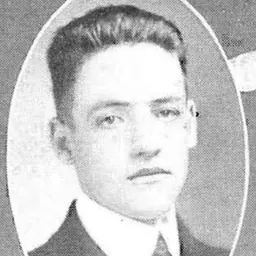


Contemporaries
People whose lives overlapped Everett Strupper's


Frequently asked questions
Who was Everett Strupper?
American football player (1896-1950)
When was Everett Strupper born?
Everett Strupper was born on 26 July 1896 in Columbus.
When did Everett Strupper die?
Everett Strupper died on 4 February 1950 in Atlanta.
What was Everett Strupper's occupation?
Everett Strupper was a head coach and american football player.
What nationality was Everett Strupper?
Everett Strupper was American.
Sources & further reading
Cite this page
APA: Biography.guide. (2026). Everett Strupper. https://biography.guide/everett-strupper/
MLA: "Everett Strupper." Biography.guide, https://biography.guide/everett-strupper/.
Chicago: "Everett Strupper." Biography.guide. https://biography.guide/everett-strupper/.
Data last updated: 2026-09-23 · Spot an error? Report a correction.
Portrait: Wikimedia Commons · author & licence
Page generated 2026-09-27 05:07 UTC