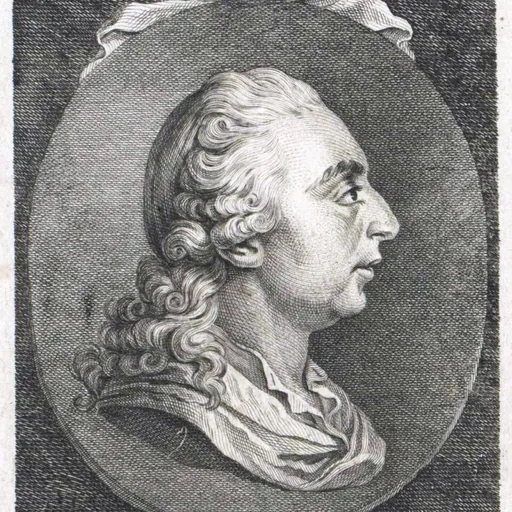
About Joseph von Sonnenfels
Lived 1732 – 1817 (aged 84–85). Joseph von Sonnenfels was an Austrian writer, professor, journalist, economist, military personnel and politician.
Joseph Freiherr von Sonnenfels (1732 – 25 April 1817) was an Austrian and German jurist and novelist. He was among the leaders of the Illuminati movement in Austria, and a close friend and patron of Mozart. He is also the dedicatee of Ludwig van Beethoven's Piano Sonata No. 15, Op. 28, which was published in 1801.
Life He was born in Nikolsburg/Mikulov, Moravia, a son of Perlin Lipmann (1705–1768), himself a son of the chief rabbi of Brandenburg. Perlin Lipmann and his children converted to Catholicism some time between 1735 and 1741. Joseph, who was baptized in his early youth, received his elementary education at the gymnasium of his native town Nikolsburg, and then studied philosophy at the University of Vienna. In 1749, he joined the Deutschmeister regiment as a private, advancing to the rank of corporal. On his discharge in 1754, he took a course in law at the University of Vienna and established himself as a counselor at law in the Austrian capital. From 1761 to 1763, he officiated as secretary of the Austrian Arcierengarde. In 1763, he was appointed professor of political science at the University of Vienna, twice acting as rector magnificus. In 1779, he received the title of Wirklicher Hofrath, and was in 1810 elected president of the Academy of Sciences, a position which he held until his death in Vienna.
From 1765 to 1767 and from 1769 to 1775 Sonnenfels was editor of the paper Der Mann ohne Vorurtheil, in which he defended the liberal tendencies in literature. He improved the Vienna stage especially through his critical work Briefe über die Wienerische Schaubühne, in which he attacked the harlequin of the Vienna theater, causing this figure to be eliminated from the personnel of the stage.
He was chiefly instrumental in bringing about the abolition of torture in Austria (1776), through calling attention to the case of Eva Faschaunerin.
Sonnenfels' attitude toward Lessing placed the former in a very unfavorable light, as it was due to his intrigues and jealousy that Lessing was not called to Vienna. Sonnenfels was severely condemned for his action in this affair. In 1817, Sonnenfels was elected a member of the American Philosophical Society in Philadelphia.
Sonnenfels was an influential party in the debate over which written standard should become dominant and his backing of Gottsched's position, thereby subverting the local "Gemeindeutsch" standard and Popowitsch's compromise standard alike. He is considered as a "Key stakeholders of the Austrian elite [... who was] impressed with the East Central German standard and Sonnenfels would influence with his “taste reform the literary developments in a role as ‘Austrian Gottsched’ ” in Vienna (De Boor & Newald, 1967, p. VI/1:403)."
Sonnenfels was also influential in the development of police studies; his ”Grundsätze der Polizey” (1763) defined police as responsible for maintaining state population and internal security and distinguished between public security and individual relations. Grundsätze der Polizey work served as a university manual and influenced police thinking across the Habsburg Empire.
Works
Specimen Juris Germanici de Remediis Juris, Juri Romano Incognitis, Vienna, 1757. Ankündigung einer Teutschen Gesellschaft in Wien, Vienna 1761.
Grundsätze der Polizei, Handlung und Finanzwissenschaft, Vienna 1765–67 (8th ed. 1819).
Briefe über die Wienerische Schaubühne, Vienna 1768 (reedited by Sauer, Vienna 1884). Von der Verwandlung der Domänen in Bauerngüter, Vienna 1773.
Abhandlung über die Aufhebung der Wuchergesetze, Vienna, 1791.
Ueber die Stimmenmehrheit bei Criminalurtheilen, Vienna, 1801.
His Gesammelte Werke appeared in 10 volumes (Vienna, 1783–87), and contained most of his belletristic works, poems, and dramas.
Don’t just read it —
keep it.
Full-length biographies made to live with: read them, listen on the way to work, watch them tonight.
- E-book
- Audio
- Video
Instant download · yours to keep · every purchase keeps this site free
Important facts
People in Joseph von Sonnenfels's life
Named in this biography and alive at the same time

Related people
Same field, nearest in time

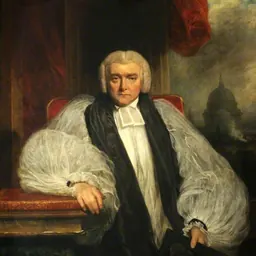


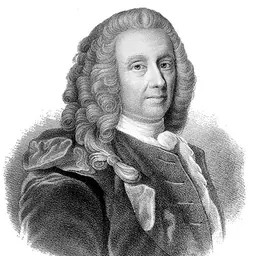
Contemporaries
People whose lives overlapped Joseph von Sonnenfels's






Frequently asked questions
Who was Joseph von Sonnenfels?
Austrian noble (1733-1817)
When was Joseph von Sonnenfels born?
Joseph von Sonnenfels was born in 1732 in Mikulov.
When did Joseph von Sonnenfels die?
Joseph von Sonnenfels died on 25 April 1817 in Vienna.
What was Joseph von Sonnenfels's occupation?
Joseph von Sonnenfels was a writer, professor, journalist, economist, military personnel and politician.
What nationality was Joseph von Sonnenfels?
Joseph von Sonnenfels was Austrian.
Sources & further reading
· Wikipedia: Joseph von Sonnenfels
· DBpedia: Joseph von Sonnenfels
Cite this page
APA: Biography.guide. (2026). Joseph von Sonnenfels. https://biography.guide/joseph-von-sonnenfels/
MLA: "Joseph von Sonnenfels." Biography.guide, https://biography.guide/joseph-von-sonnenfels/.
Chicago: "Joseph von Sonnenfels." Biography.guide. https://biography.guide/joseph-von-sonnenfels/.
Data last updated: 2026-09-23 · Spot an error? Report a correction.
Portrait: Wikimedia Commons · author & licence
Page generated 2026-09-27 05:06 UTC