
Joseph Reid Anderson
American civil engineer, industrialist, and soldier
About Joseph Reid Anderson
Lived 1813 – 1892 (aged 79). Joseph Reid Anderson was an American civil engineer and industrialist.
Joseph Reid Anderson (February 16, 1813 – September 7, 1892) was an American civil engineer, industrialist, politician and soldier. During the American Civil War he served as a Confederate general, and his Tredegar Iron Company was a major source of munitions and ordnance for the Confederate States Army. Starting with a small forge and rolling mill in the mid-1830s, It was a flourishing operation by 1843 when he leased it. He eventually bought the company outright in 1848 and forcefully and aggressively built Tredegar Iron Works into the South's largest and most significant iron works. When the Civil War broke out he entered the Army as a brigadier general in 1861. Shortly after he was wounded and then resigned from the Army returning to the iron works. It was the Confederacy's major (and for much of the war only) source of cannons and munitions, employing some 900 workers, most of whom were slaves. His plant was confiscated by the Union army at the end of the war, but returned to him in 1867 and he remained president until his death. Anderson was very active in local civic and political affairs.
Early and family life Joseph Reid Anderson was born at "Walnut Hill" near Fincastle, the county seat of Botetourt County, Virginia in 1813. The grandson of Scotch-Irish immigrants, he was the son of Colonel William Anderson (1764–1839) and Anne (née Thomas) Anderson. The elder Anderson had served in the American Revolutionary War, and was also a colonel of a Virginia regiment in the War of 1812. Joseph's father was a self-taught engineer and surveyor and was later responsible for the building of the turnpike that is now U.S. Route 220 and (for part of the way) U.S. Route 60 from Fincastle to Covington. Col. Anderson's son was to follow in similar work.
In 1832, Joseph was appointed to the United States Military Academy at West Point, New York, and graduated 4th in his class in 1836. He was assigned to the 3rd Artillery. He served initially alongside William F. Butler and Conway Robinson, and after A. Judson Crane resigned, alongside George N. Johnson. He was re-elected in 1853, but his fellow delegates became James A. Cowarding and Henry K. Ellyson. He failed to win election to the assembly of 1855-56, but did win election to the House of Delegates again in 1857, this time serving with Roscoe B. Heath and Richard O. Haskins.
Civil War When the Civil War came, the Tredegar Iron Company emerged as the industrial heart of the Confederate States of America. Using slave and free labor, Anderson supervised ordnance and munitions production through most of the war.
Anderson, a supporter of southern secession and states' rights, was commissioned a major of artillery in August 1861, and promoted to brigadier general in the Confederate Army on September 3. As a result, the Tredegar Iron Works is one of few Civil War era buildings in the warehouse district that survived the burning of Richmond.
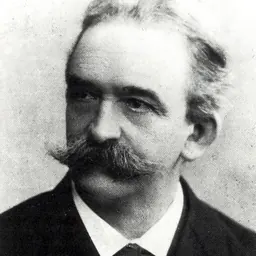
Postbellum activities Engraving of Anderson from an 1886 book on Richmond industries. During the Federal occupation of Richmond, the U.S. government had confiscated the Tredegar Iron Company's property, but Anderson regained control in 1867 and remained a prominent Virginia businessman as its president.
After his wife Sara died in 1881, Anderson remarried. His second wife was Mary Evans Pegram, making him a brother-in-law to Confederate General John Pegram and Colonel William Ransom Johnson Pegram, both of whom had been killed during the war.
Anderson died while on a vacation at the Isles of Shoals, New Hampshire. It was widely reported that 30,000 citizens came to his funeral when he was buried in Hollywood Cemetery in Richmond, Virginia.
Honors Today, Anderson's former Tredegar Iron Works facility overlooking the James River near downtown Richmond is the site of the main Visitor Center of the Richmond National Battlefield Park, as well as another museum.
Don’t just read it —
keep it.
Full-length biographies made to live with: read them, listen on the way to work, watch them tonight.
- E-book
- Audio
- Video
Instant download · yours to keep · every purchase keeps this site free
Important facts
People in Joseph Reid Anderson's life
Named in this biography and alive at the same time





Related people
Same field, nearest in time




Contemporaries
People whose lives overlapped Joseph Reid Anderson's




Frequently asked questions
Who was Joseph Reid Anderson?
American civil engineer, industrialist, and soldier (1813-1892)
When was Joseph Reid Anderson born?
Joseph Reid Anderson was born on 16 February 1813 in Fincastle.
When did Joseph Reid Anderson die?
Joseph Reid Anderson died on 7 September 1892 in Isles of Shoals.
What was Joseph Reid Anderson's occupation?
Joseph Reid Anderson was a civil engineer and industrialist.
What nationality was Joseph Reid Anderson?
Joseph Reid Anderson was American.
Sources & further reading
· Wikipedia: Joseph Reid Anderson
Cite this page
APA: Biography.guide. (2026). Joseph Reid Anderson. https://biography.guide/joseph-reid-anderson/
MLA: "Joseph Reid Anderson." Biography.guide, https://biography.guide/joseph-reid-anderson/.
Chicago: "Joseph Reid Anderson." Biography.guide. https://biography.guide/joseph-reid-anderson/.
Data last updated: 2026-09-20 · Spot an error? Report a correction.
Page generated 2026-09-27 05:25 UTC