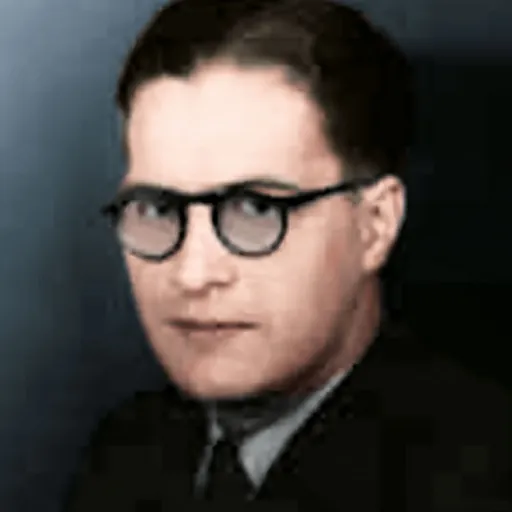
About Josef-Maria Jauch
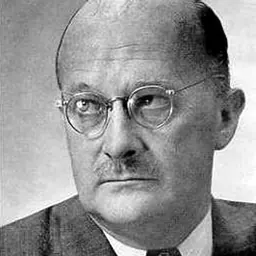
Lived 1914 – 1974 (aged 59). Josef-Maria Jauch was a Swiss physicist and university teacher, known for Jauch's theorem and Jauch-Piron theorem.
Josef Maria Jauch (September 20, 1914 in Lucerne – August 30, 1974 in Geneva) was a Swiss/American theoretical physicist, known for his work on quantum electrodynamics and on the foundations of quantum theory, and leader of the "Geneva School" of mathematical physics.
Biography
Early life Jauch was born on 20 September 1914 in Lucerne, Switzerland, the son of Josef Alois Jauch (a telegraph operator) and Emma Laura Rosa Jauch (née Conti). He had two older siblings: Adelheid Jauch and Emil Josef Karl Jauch. After his mother died in 1916, his father remarried, and a half-sister was born: Margrit Jauch (Fuchs). At the age of twelve he became fascinated with a fact he found stated in a popular astronomy book, that a body in a circular orbit with period , if brought to a stop, would fall into the central mass in time , which he showed could be derived from Kepler's law. for a dissertation entitled On Contact Transformations and Group Theory in Quantum Mechanical Problems, which in particular gave a prototype model for strong interactions using the representation theory of . After receiving his doctorate in 1940, Jauch returned to Zurich to take up a research assistantship offered to him by Pauli at the ETH. However, it was extremely difficult to carry out research in Switzerland during the war: as Heinrich Behnke wrote to Erich Hecke in a letter of 8 March 1940, "The Paulis would be very happy if you paid them a visit again [in Zurich]. However, it is probably immensely difficult to obtain permission for this. I had an official invitation, and nevertheless had fabulously many difficulties. ... on the day of departure, my nerves had had it." Soon after Jauch's arrival, the Paulis left Zurich for Princeton, where they stayed for the remainder of the war. Meanwhile, Jauch continued working alongside Pauli's students under Gregor Wentzel, working on pair theory until 1942. During these years, Jauch and his wife Tonia became acquainted with Carl Jung, and met regularly with him for dream analyses.
After arriving in the U.S., Jauch looked for a job and received an offer to join Pauli in Princeton as an assistant professor in 1942. There Pauli and Jauch studied the magnetic moment of the neutron, as well as the infrared divergence problem using Dirac field theory, reporting their results to the American Physical Society in 1944. In 1943, Jauch also taught classes in advanced quantum mechanics every other week at Cornell University. During their time in Princeton, Jauch and his wife had three children: Karl (1943), Eldri (1944), and Aletha (1945) (Aletha Solter). While at Iowa, Jauch continued to perform as a violinist. He also developed a lasting friendship and collaboration with Fritz Rohrlich, with whom he wrote his first book, Theory of Photons and Electrons. Jauch conceived of this book on quantum electrodynamics while on a Fulbright Program research fellowship at Trinity College, Cambridge from 1950 to 1951, and it became noted for its "uncommonly neat and painstaking treatment of details." Upon reading it, Pauli reportedly told Jauch, "Your book... oh, your book... I like better and better." now known as the Jauch-Piron theorem. While giving a lecture at CERN on the impossibility of hidden variables in 1963, Jauch met John Stewart Bell, with whom he had "some intense discussion". Jauch pointed out to Bell that Gleason's theorem could be used to rule out a certain class of hidden variables on the basis of only quantum logic, which led to Bell's "other theorem", discovered independently by Simon B. Kochen and Ernst Specker and now known as the Kochen–Specker theorem. In 1964 Jauch went on to prove what is now known as Jauch's theorem, that electromagnetic gauge invariance can be recovered in quantum theory from an assumption of Galilei covariance. His work on quantum foundations culminated with a book, The Foundations of Quantum Mechanics, published in 1968.
Jauch became a founding member of the European Physical Society at its inception in 1968. In his later work, he turned his attention to the mathematical foundations of equilibrium thermodynamics, producing a novel derivation of the thermodynamic entropy function on the basis of energy conservation. His third and final book, a popular work called Are Quanta Real? A Galilean Dialogue, with a preface by Douglas Hofstadter, was published in 1973. Jauch’s interest in Galileo also inspired him to research Galileo’s trial, and he delivered a lecture at CERN on February 20, 1964, called “The Trial of Galileo Galilei.”
Jauch and his wife divorced in 1969, (whom he later divorced). He died suddenly of a stroke on August 30, 1974, and was buried in Cimetière de Saint-Georges, Geneva.
Books The Theory of Photons and Electrons. The Relativistic Quantum Field Theory of Charged Particles with Spin One-half (with Fritz Rohrlich) (Addison-Wesley Publishing Company, 1955) Foundations of Quantum Mechanics (Addison-Wesley Publishing Company, 1968) Are Quanta Real? A Galilean Dialogue (Indiana University Press, 1973)
Don’t just read it —
keep it.
Full-length biographies made to live with: read them, listen on the way to work, watch them tonight.
- E-book
- Audio
- Video
Instant download · yours to keep · every purchase keeps this site free
Important facts
People in Josef-Maria Jauch's life
Named in this biography and alive at the same time

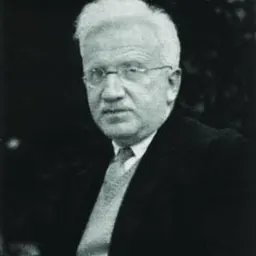
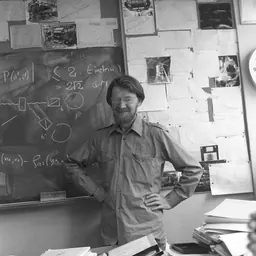
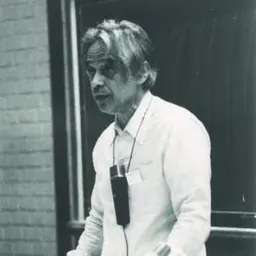

Related people
Same field, nearest in time
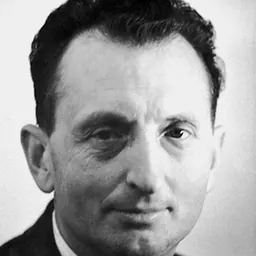

Contemporaries
People whose lives overlapped Josef-Maria Jauch's

Frequently asked questions
Who was Josef-Maria Jauch?
Swiss physicist (1914-1974)
When was Josef-Maria Jauch born?
Josef-Maria Jauch was born on 20 September 1914 in Lucerne.
When did Josef-Maria Jauch die?
Josef-Maria Jauch died on 30 August 1974 in Geneva.
What was Josef-Maria Jauch's occupation?
Josef-Maria Jauch was a physicist and university teacher.
What was Josef-Maria Jauch known for?
Josef-Maria Jauch was known for Jauch's theorem and Jauch-Piron theorem.
What nationality was Josef-Maria Jauch?
Josef-Maria Jauch was Swiss.
Sources & further reading
· Wikipedia: Josef-Maria Jauch
Cite this page
APA: Biography.guide. (2026). Josef-Maria Jauch. https://biography.guide/josef-maria-jauch/
MLA: "Josef-Maria Jauch." Biography.guide, https://biography.guide/josef-maria-jauch/.
Chicago: "Josef-Maria Jauch." Biography.guide. https://biography.guide/josef-maria-jauch/.
Data last updated: 2026-09-24 · Spot an error? Report a correction.
Portrait: Wikimedia Commons · author & licence
Page generated 2026-10-03 09:36 UTC