
About John Stewart Bell
Lived 1928 – 1990 (aged 62). John Stewart Bell was a British mathematician, physicist and translator, known for Adler–Bell–Jackiw anomaly, Bell state and Bell's spaceship paradox.
Biography
Early life and work Bell was born in Belfast, Northern Ireland to a working class family. Due to financial hardship, neither parent and none of his three older siblings completed high school, typically dropping out of school by age 14 to work. When he was 11 years old, he decided to be a scientist, and encouraged by his mother, at 16 he graduated from Belfast Technical High School. Bell became a vegetarian in his teen years. According to his wife, Bell was an atheist.
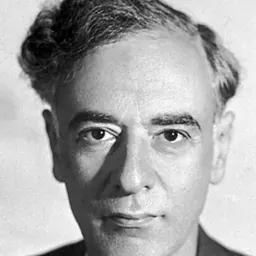
Bell's career began with the UK Atomic Energy Research Establishment, near Harwell, Oxfordshire, known as AERE or Harwell Laboratory. In 1960, he moved to work for the European Organization for Nuclear Research (CERN, Conseil Européen pour la Recherche Nucléaire), in Geneva, Switzerland. There he worked almost exclusively on theoretical particle physics and on accelerator design, but found time to pursue a major avocation, investigating the foundations of quantum theory. He was elected a Foreign Honorary Member of the American Academy of Arts and Sciences in 1987. Also of significance during his career, Bell, together with John Bradbury Sykes, M. J. Kearsley, and W. H. Reid, translated several volumes of the ten-volume Course of Theoretical Physics of Lev Landau and Evgeny Lifshitz, making these works available to an English-speaking audience in translation, all of which remain in print.
Bell was a proponent of pilot wave theory. In 1987, inspired by Ghirardi–Rimini–Weber theory, he also advocated collapse theories. He said about the interpretation of quantum mechanics: "Well, you see, I don't really know. For me it's not something where I have a solution to sell!"
Critique of von Neumann's proof Bell was impressed that the formulation of David Bohm's nonlocal hidden-variable theory did not require a "movable boundary" between the quantum system and the classical apparatus:
A possibility is that we find exactly where the boundary lies. More plausible to me is that we will find that there is no boundary. ... The wave functions would prove to be a provisional or incomplete description of the quantum-mechanical part, of which an objective account would become possible. It is this possibility, of a homogeneous account of the world, which is for me the chief motivation of the study of the so-called "hidden variable" possibility.
Bell also criticized the standard formalism of quantum mechanics on the grounds of lack of physical precision:
For the good books known to me are not much concerned with physical precision. This is clear already from their vocabulary. Here are some words which, however legitimate and necessary in application, have no place in a formulation with any pretension to physical precision: system, apparatus, environment, microscopic, macroscopic, reversible, irreversible, observable, information, measurement. ... On this list of bad words from good books, the worst of all is "measurement". (Due to publishing delays, this paper did not appear until 1966, two years after his more famous work on the Einstein–Podolsky–Rosen (EPR) paradox. does not prove the impossibility of hidden variables, as was widely claimed, due to its reliance on a physical assumption that is not valid for quantum mechanics – namely, that the probability-weighted average of the sum of observable quantities equals the sum of the average values of each of the separate observable quantities. Bell reportedly said, "The proof of von Neumann is not merely false but foolish!" In this same work, Bell showed that a stronger effort at such a proof (based upon Gleason's theorem) also fails to eliminate the hidden-variables program.
However, in 2010, Jeffrey Bub published an argument that Bell (and, implicitly, Hermann) had misconstrued von Neumann's proof, saying that it does not attempt to prove the absolute impossibility of hidden variables, and is actually not flawed, after all. (Thus, it was the physics community as a whole that had misinterpreted von Neumann's proof as applying universally.) Bub provides evidence that von Neumann understood the limits of his proof, but there is no record of von Neumann attempting to correct the near universal misinterpretation which lingered for over 30 years and exists to some extent to this day. Von Neumann's proof does not in fact apply to contextual hidden variables, as in Bohm's theory. Bub's conclusion has, in turn, been questioned.
Bell's theorem
In 1964, after a year's leave from CERN that he spent at Stanford University, the University of Wisconsin–Madison and Brandeis University, Bell wrote a paper entitled "On the Einstein–Podolsky–Rosen paradox". In this work, he showed that carrying forward EPR's analysis permits one to derive the famous Bell's theorem. The resultant inequality, derived from basic assumptions that apply to all classical situations, is violated by quantum theory.
Conclusions from experimental tests In 1972 an experiment was conducted that, when extrapolated to ideal detector efficiencies, showed a violation of Bell's inequality. It was the first of many such experiments. Bell himself concluded from these experiments that "It now seems that the non-locality is deeply rooted in quantum mechanics itself and will persist in any completion."
Bell seemed to have become resigned to the notion that future experiments would continue to agree with quantum mechanics and violate his inequality. Referring to the Bell test experiments, he remarked:
It is difficult for me to believe that quantum mechanics, working very well for currently practical set-ups, will nevertheless fail badly with improvements in counter efficiency ..." He felt that at the most fundamental level, physical theories ought not to be concerned with observables, but with "beables" – "The beables of the theory are those elements which might correspond to elements of reality, to things which exist. Their existence does not depend on 'observation'." Apart from his particle physics research, Bell often raised an issue of special relativity comprehension, and although there is only one written report on this topic available ("How to teach special relativity"), In 1989 on the occasion of the centenary of the Lorentz-FitzGerald body contraction Bell writes "A great deal of nonsense has been written about the FitzGerald contraction". Unknown to Bell, he had reportedly been nominated for a Nobel Prize that year.
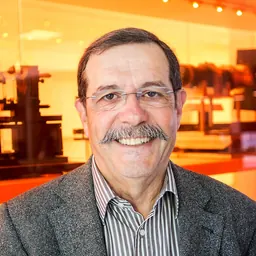
Legacy In 2008, the John Stewart Bell Prize was created by the Centre for Quantum Information and Quantum Control at the University of Toronto. The prize is awarded every other year for significant contributions first published during the six preceding years. The award recognizes major advances relating to the foundations of quantum mechanics and to the applications of these principles. In 2009, the first award was presented by Alain Aspect to Nicolas Gisin for his theoretical and experimental work on foundations and applications of quantum physics — notably quantum nonlocality, quantum cryptography, and quantum teleportation.
At the CERN site in Meyrin, close to Geneva, there is a street called Route Bell in honour of John Stewart Bell. In 2016, his colleague from CERN, Reinhold Bertlmann, wrote a lengthy piece, "Bell's Universe: A Personal Recollection", explaining in some detail his amazement at finding out about Bell's paper on Bertlmann's socks, in which Bell compared the EPR paradox with socks. A day was named after him, referring to the date he released Bell's Theorem, 4 November.
Northern Ireland
Since 2015, a street has been named "Bell's Theorem Crescent" in his city of birth, Belfast. The John Bell House, named in his honour, finished construction in 2016 and houses over 400 students in Belfast city centre. The pedestrian entrance to the Olympia leisure centre in Belfast located 200 meters from Bell's childhood home is named the "John Stewart Bell Entrance" in honour of the local man. In the Queen's University of Belfast one of the Physics lecture theatres is named in honour of John Stewart Bell. There is a blue plaque commemorating John Stewart Bell in Queen's University of Belfast main campus There is a blue plaque commemorating John Stewart Bell at his childhood home in Tates Avenue in Belfast In 2017 the Institute of Physics commissioned classical composer Matthew Whiteside's Quartet No 4 (Entangled) to be performed at the 2018 NI Science Festival inspired by Bell's work; the piece went on to become the title track on Whiteside's second album and was the inspiration for a short film by Marisa Zanotti.
Books 2004 edition with introduction by Alain Aspect and two additional papers: .
Don’t just read it —
keep it.
Full-length biographies made to live with: read them, listen on the way to work, watch them tonight.
- E-book
- Audio
- Video
Instant download · yours to keep · every purchase keeps this site free
Important facts
more
Chiral anomaly, Quantum entanglement, SuperdeterminismPeople in John Stewart Bell's life
Named in this biography and alive at the same time




Related people
Same field, nearest in time


Contemporaries
People whose lives overlapped John Stewart Bell's


Frequently asked questions
Who was John Stewart Bell?
Northern Irish physicist (1928–1990)
When was John Stewart Bell born?
John Stewart Bell was born on 28 June 1928 in Belfast.
When did John Stewart Bell die?
John Stewart Bell died on 1 October 1990 in Geneva.
What was John Stewart Bell's occupation?
John Stewart Bell was a mathematician, physicist and translator.
What was John Stewart Bell known for?
John Stewart Bell was known for Adler–Bell–Jackiw anomaly, Bell state, Bell's spaceship paradox, Bell's theorem, Bell–Kochen–Specker theorem and CPT symmetry.
What nationality was John Stewart Bell?
John Stewart Bell was British.
Sources & further reading
· Wikipedia: John Stewart Bell
Cite this page
APA: Biography.guide. (2026). John Stewart Bell. https://biography.guide/john-stewart-bell/
MLA: "John Stewart Bell." Biography.guide, https://biography.guide/john-stewart-bell/.
Chicago: "John Stewart Bell." Biography.guide. https://biography.guide/john-stewart-bell/.
Data last updated: 2026-09-20 · Spot an error? Report a correction.
Page generated 2026-09-27 05:34 UTC