
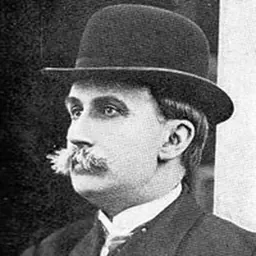
José María Velasco Ibarra
President of Ecuador (1934 - 1935) / (1944 - 1947) / (1952 - 1956) / (1960 - 1961) /
About José María Velasco Ibarra
Lived 1893 – 1979 (aged 86). José María Velasco Ibarra was an Ecuadorian professor, politician and president.
José María Velasco Ibarra (19 March 1893 – 30 March 1979) was an Ecuadorian politician. He became president of Ecuador five non-consecutive times from 1934 to 1972. Only in 1952–1956 did he complete a full term. In his four other terms, he was removed by military force, and several times he was installed as president through a military coup.
Early life and career
Velasco Ibarra was born on 19 March 1893 in Quito. His parents were Delia Ibarra and Alejandrino Velasco, a civil engineer. His father was a political activist in the conservative party during the dictatorship installed by the liberal revolution. He was home schooled by his mother. His father died when he was 16. He attended high school at Colegio San Gabriel and obtained a JD (Doctorate in Jurisprudence) from the Central University of Ecuador. As an author he published several books, including Conciencia y Barbarie, and was also a columnist for El Comercio.
His first public post was in Quito's Municipal Government, where he supervised works and visited communities. His political career began when he was named a Deputy of the Republic. In 1932, he was elected as Vice President of the Chamber of Deputies and several days later, President of the Chamber of Deputies.
Presidencies In 1933, he stood in the Ecuadorian presidential election and received 80% of the votes cast, the highest in Ecuadorian history. Velasco Ibarra traveled through several Latin American countries, including Peru, and restored Ecuador's global image. As president, he focused primarily on public works programs.
In 1952, he again won the presidential election, and began his third term as president on September 1, 1952. This time, he served his entire term, which ended on August 31, 1956. His third term was a time of progress for Ecuador: 311 schools were constructed, with another 104 in progress. More than 1359 km of roads were constructed, and 1057 km more were improved. Velasco Ibarra was a noted orator: in his political campaigns from town to town, he captivated people with eloquence, becoming a leader of the masses. Velasco Ibarra once said, "Give me a balcony and I will become president."
In 1960, he was elected president for the fourth time. In 1960, he nullified the Rio de Janeiro Protocol, which led to conflicts between Ecuador and Peru, including Paquisha in 1981 and the War of El Cenepa in 1995. He was ousted in a military coup on November 7, 1961.
There is debate about whether his rule can correctly be labelled as populist. Following Agustin Cueva, several authors have argued that in the midst of a hegemonic crisis Velasco rose to power on the votes of the coastal sub-proletariat, peasants who had migrated to urban centres as the cacao industry dwindled. The charismatic figure of Velasco, according to this view, emotionally captured the masses with promises of redemption. Others, among them Rafael Quintero, argue that the entrenched landowning elite was instrumental for Velasco's victory (at least in the 1930s), as the Coastal elite had been weakened by the end of the cacao boom.
Works Velasco Ibarra always had a special preoccupation with infrastructure. Many public works, including roads, hospitals, and bridges, were constructed during Velasco Ibarra's presidencies. He was the initiator of institutions such as the Supreme Electoral Tribunalián and Guamote. He decreed the law of weekly days off for workers, ordered the construction of irrigation canals, educational infrastructure, aircraft fields, and highways.
Death Velasco Ibarra's wife, Corina Parral de Velasco Ibarra died in Buenos Aires after falling from a bus. This precipitated the death of Velasco Ibarra, who said on his return to Ecuador, "I come to meditate and to die." He died in Quito, on 30 March 1979.
Don’t just read it —
keep it.
Full-length biographies made to live with: read them, listen on the way to work, watch them tonight.
- E-book
- Audio
- Video
Instant download · yours to keep · every purchase keeps this site free
Important facts
Family & relationships
People in José María Velasco Ibarra's life
Named in this biography and alive at the same time


Related people
Same field, nearest in time

Contemporaries
People whose lives overlapped José María Velasco Ibarra's


Frequently asked questions
Who was José María Velasco Ibarra?
President of Ecuador (1934 - 1935) / (1944 - 1947) / (1952 - 1956) / (1960 - 1961) / (1968 - 1972)
When was José María Velasco Ibarra born?
José María Velasco Ibarra was born on 19 March 1893 in Quito.
When did José María Velasco Ibarra die?
José María Velasco Ibarra died on 30 March 1979 in Quito.
What was José María Velasco Ibarra's occupation?
José María Velasco Ibarra was a professor, politician and president.
What nationality was José María Velasco Ibarra?
José María Velasco Ibarra was Ecuadorian.
Sources & further reading
· Wikipedia: José María Velasco Ibarra
· DBpedia: José María Velasco Ibarra
Cite this page
APA: Biography.guide. (2026). José María Velasco Ibarra. https://biography.guide/jose-maria-velasco-ibarra/
MLA: "José María Velasco Ibarra." Biography.guide, https://biography.guide/jose-maria-velasco-ibarra/.
Chicago: "José María Velasco Ibarra." Biography.guide. https://biography.guide/jose-maria-velasco-ibarra/.
Data last updated: 2026-09-20 · Spot an error? Report a correction.
Page generated 2026-09-27 05:33 UTC