
About José Joaquín de Silva-Bazán
Lived 1734 – 1802 (aged 67). José Joaquín de Silva-Bazán was a Spanish writer.
José Joaquín de Silva-Bazán y Sarmiento (3 December 1734 – 2 February 1802), 9th Marquis of Santa Cruz and Grandee of Spain, Knight of the Order of the Golden Fleece, was a Spanish aristocrat who served in the Royal House.
Biography He was also 8th Marquis of Villasor, 10th of Viso, 6th of Arcicóllar, 7th and last Marquis of Bayona and Montesanto, Baron of Sant Boi and Lord of Valdepeñas, twice Grandee of Spain, and Gentleman of the Bedchamber.
His parents were Pedro de Silva-Bazán y Alagón, 8th Marquis of Santa Cruz, Mayordomo of Prince Philip, Duke of Parma, and María Cayetana Sarmiento y Dávila. His brother was the academic Pedro de Silva y Sarmiento de Alagón and his younger sister was Mariana de Silva-Bazán y Sarmiento, Duchess of Huéscar and mother of the famous Duchess Cayetana de Alba.
He was only ten years old when his father died, from whom he inherited all his titles, under the supervision of his mother.
Three years later, back in Madrid, King Charles III appointed him his Mayordomo mayor, which made him the head of the court at the palace. In 1788, the new monarch Charles IV confirmed him in his position and named him tutor to his three eldest children, including the Prince of Asturias. They visited Paris, Brussels, Italy and Central Europe, attending courses and conferences given by the most relevant scientists of the moment, on a wide variety of subjects. They met the American inventor Benjamin Franklin and also French encyclopedists such as Voltaire and D'Alembert, coinciding with the death of Jean-Jacques Rousseau. Impressed by the scientific experiments they had witnessed, they acquired machines to reproduce them in Spain and they also brought numerous books with them back to Spain. He created an industrial soap factory and a school for men and another for women in Valdepeñas.
He was elected 7th director of the Royal Spanish Academy in 1776, after the death of the Duke of Alba. During his mandate, the first editions (1780, 1783, and 1791) of the Dictionary of the Castilian Language were published in a single volume "for easier use". The academic and illustrated edition of Don Quixote (1780) also appeared, known as the Don Quixote of Ibarra, in reference to its illustrious printer, Joaquín Ibarra.
Upon his death in 1802, his remains were placed in the parish church of San Martín, Madrid. Later, in 1844, they were transferred to the cemetery of San Nicolás de Bari and in 1911, to the Cementerio de la Almudena.
Don’t just read it —
keep it.
Full-length biographies made to live with: read them, listen on the way to work, watch them tonight.
- E-book
- Audio
- Video
Instant download · yours to keep · every purchase keeps this site free
Important facts
People in José Joaquín de Silva-Bazán's life
Named in this biography and alive at the same time
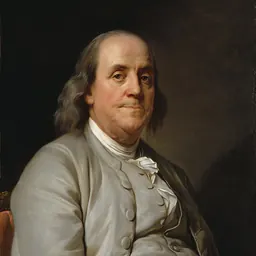
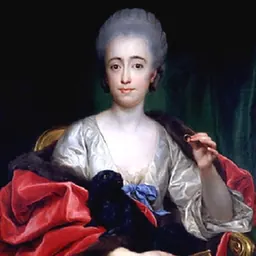
Related people
Same field, nearest in time

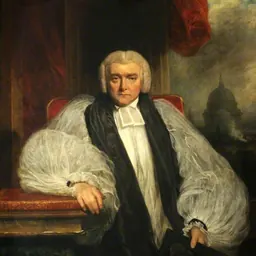


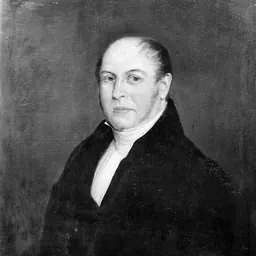
Contemporaries
People whose lives overlapped José Joaquín de Silva-Bazán's






Frequently asked questions
Who was José Joaquín de Silva-Bazán?
Spanish writer (1734-1802)
When was José Joaquín de Silva-Bazán born?
José Joaquín de Silva-Bazán was born on 3 December 1734 in Madrid.
When did José Joaquín de Silva-Bazán die?
José Joaquín de Silva-Bazán died on 2 February 1802 in Madrid.
What was José Joaquín de Silva-Bazán's occupation?
José Joaquín de Silva-Bazán was a writer.
What nationality was José Joaquín de Silva-Bazán?
José Joaquín de Silva-Bazán was Spanish.
Sources & further reading
· Wikipedia: José Joaquín de Silva-Bazán
· DBpedia: José Joaquín de Silva-Bazán, 9th Marquis of Santa Cruz
Cite this page
APA: Biography.guide. (2026). José Joaquín de Silva-Bazán. https://biography.guide/jose-joaquin-de-silva-bazan/
MLA: "José Joaquín de Silva-Bazán." Biography.guide, https://biography.guide/jose-joaquin-de-silva-bazan/.
Chicago: "José Joaquín de Silva-Bazán." Biography.guide. https://biography.guide/jose-joaquin-de-silva-bazan/.
Data last updated: 2026-09-26 · Spot an error? Report a correction.
Page generated 2026-09-27 05:14 UTC