
Jorge Juan y Santacilia
Spanish mathematician and naval officer
About Jorge Juan y Santacilia
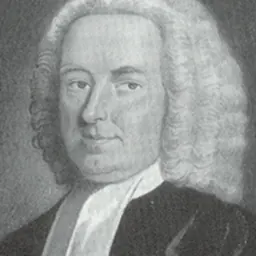
Lived 1713 – 1773 (aged 60). Jorge Juan y Santacilia was a Spanish astronomer, mathematician, seafarer, spy and naval officer.
Jorge Gaspar Juan y Santacilia (5 January 1713 – 21 June 1773) was a Spanish naval officer, mathematician, scientist, astronomer and engineer. He is generally regarded as one of the most important scientific figures of the Enlightenment in Spain. As a military officer, he undertook sensitive diplomatic missions for the Spanish crown and contributed to the modernization and professionalization of the Spanish Navy. In his lifetime, he came to be known as el sabio español ("the Spanish savant"). His career as a public servant constitutes an important chapter in the Bourbon Reforms of the 18th century.
As a young naval lieutenant, Juan participated in the French Geodesic Mission to the Equator of 1735–1744, which established definitively that the shape of the Earth is an oblate spheroid, flattened at the poles, as predicted in Isaac Newton's Principia. With his fellow lieutenant Antonio de Ulloa, Juan travelled widely in the territories of the Viceroyalty of Peru and made detailed scientific, military, and political observations of the region. They also helped to organize the defense of the Peruvian coast against the British squadron of George Anson, after the outbreak of the War of Jenkins' Ear in 1739.
After returning to Spain in 1746, Juan became a protégé and collaborator of the Marquess of Ensenada, a leading minister under King Ferdinand VI. Under Ensenada's orders, Juan undertook an eighteen-month mission of industrial espionage in London, after which he worked tirelessly to modernize and professionalize naval architecture and other operations in Spain. Juan's influence declined somewhat after Ensenada fell from power in 1754. In 1760 Juan was appointed as Squadron Commander, the most senior officer in the Spanish Navy, but ill health soon forced him to give up that role and instead take up diplomatic and educational missions.
As a mathematician and educator, Juan promoted the study and application of the infinitesimal calculus at a time when the subject was not taught in Spanish universities. He served as ambassador plenipotentiary to the Sultan of Morocco in 1766–1767, and as director of the Seminary of Nobles of Madrid from 1770 until his death in 1773.
Family and education
Jorge Juan was born of two distinguished hidalgo families: his father was don Bernardo Juan y Canicia, a relative of the Counts of Peñalba, while his mother was doña Violante Santacilia y Soler de Cornellá, who came from a prominent land-owning family in Elche. Both of his parents were widowed and had several children from their respective first marriages. Jorge Juan was born on 5 January 1713 in a home in the estate El Fondonet (also known, in Castilian, as El Hondón), owned by his grandfather don Cipriano Juan Vergara and located in Novelda, a town in the province of Alicante. He was baptised four days later in the parish church of the neighboring town of Monforte (now known as "Monforte del Cid"). His paternal uncle Antonio Juan was a canon of that church. At the time Monforte, but not Novelda, was considered to lie within the boundaries of the city of Alicante, and the statutes of the Collegiate Church of Saint Nicholas reserved its canonries to natives of Alicante. Jorge received his first education at the Jesuit school in Alicante, under the supervision of his uncle, the priest Antonio Juan. Another of Jorge's paternal uncles, Cipriano Juan, was the bailiff of Caspe in the Order of Malta (also known as the "Order of Saint John", or the "Knights Hospitaller"). Cipriano eventually took charge of the education of the young Jorge, sending him to study grammar in Zaragoza as preparation for higher education.
Knight of Malta Extract from the handwritten document on "Proofs of Nobility, Life, and Habits of Mr. Jorge Juan y Santacilia" of 1725, part of Juan's application to enter the Order of Malta
In 1725 Cipriano sent his nephew Jorge, aged twelve, to the island of Malta, where he served as page to António Manoel de Vilhena, the Grand Master of the Order of Malta. At the age of thirteen, Jorge was admitted as a member of that Order.
In 1729, aged sixteen, Juan received from the Grand Master the title of Commander of Aliaga (Comendador de Aliaga), a rank that he held for the rest of his life and which provided him with a benefice.
The equatorial expedition was led by three members of the French Academy of Sciences: the astronomer Louis Godin, and geographers Charles Marie de La Condamine and Pierre Bouguer. Their collaborators included the physician and naturalist Joseph de Jussieu and the engineer Jean-Joseph Verguin. On 26 May 1735, Juan and Ulloa left Cádiz in the company of the Marquess of Villagarcía, who had been appointed as the new Viceroy of Peru. They met the French scientists at the Caribbean port of Cartagena de Indias, on the mainland of South America. They then sailed together to Portobelo, crossed the Isthmus of Panama, and proceeded by boat to the Pacific port of Guayaquil. Juan and Ulloa then traveled inland with Godin, reaching the city of Quito in May of 1736.
The Arctic expedition was led by Pierre Louis Maupertuis and carried out its measurements in 1736–1737 in a part of Lapland that belonged at the time to the Kingdom of Sweden. Meanwhile, the mission to the equator, which had been organized first, proved much more challenging and took almost ten years to complete. Its members had to contend with the harsh climate and topography of the region, the prevalence of tropical diseases, and the suspicions of the local population and authorities.
The geodesic work around the equator finally began in September 1736 with the measurement of the distance between two base points chosen to lie on the plain of Yaruquí, outside the city of Quito. Those points then served as baseline for the triangulation with which the members of the mission measured an arc of about three degrees of latitude that extended to the south, past Riobamba and up to an endpoint near the city of Cuenca.
Map by Jorge Juan and Antonio de Ulloa of the triangulation carried out between Quito and Cuenca by the French Geodesic Mission to the Equator in 1735–1744.
In 1737, a personal dispute between Ulloa and the new president of the Audiencia de Quito, Joseph de Araujo y Río, caused Araujo to order the arrest of both Ulloa and Juan, while announcing his intention to have them killed. The young officers took refuge in a church and Ulloa then escaped through the cordon of Araujo's men, reaching Lima and obtaining the protection of the Viceroy. The corregidor of Cuzco, Diego de Esquivel y Navia, wrote to La Condamine in 1742 that
The legal papers presented in this case would much more appropriately be given to Molière for one of his comedies than presented before a judicial tribunal. That report paints a dire picture of the social and political situation of the Viceroyalty of Peru in 1730s and 1740s, alleging many grave instances of lawlessness and mismanagement by the civil and church authorities in the region. It also denounces in very strong terms the exploitation of the Native American population by unscrupulous governors (especially the corregidores) and priests (especially the members of the mendicant orders). The importance and reliability of that confidential report have been subjects of enduring controversy among historians of Spanish America.
Espionage and naval architecture
Drawing of the ship of the line Guerrero, built in 1755 in the naval shipyard of Ferrol, according to Jorge Juan's "English system"
In March of 1749, the Marquess of Ensenada gave Juan a sensitive mission of industrial espionage in England. Juan traveled to London incognito as "Mr Josues", a name that he chose after the biblical Joshua (in Spanish, Josué), who had been one of the Twelve Spies of Israel. Juan communicated back to Ensenada using a numerical cipher. His principal task was to learn about the design of the latest British warships and to recruit some of the constructors in order to help the Spanish Navy to improve its outdated fleet. He was also tasked with collecting information about the British manufacture of fine cloth, sealing wax, printing plates, dredges, and armaments, to purchase surgical instruments for the Royal College of Naval Surgeons, in Cádiz, and to procure steam engines to pump water out of mines.
In London, Juan befriended Admiral Anson and the Duke of Bedford. In November 1749 he was elected fellow of the Royal Society. With the help of a Catholic priest, Father Lynch, Juan was able to recruit about fifty naval artisans and workmen who defected to Spain. Some of these men, such as Matthew Mullan and Richard Rooth, went on to build the Spanish ships that would later fight in the American Revolutionary War and at the battle of Trafalgar.
In 1750, Juan was elected as member of the Prussian Academy of Sciences upon the recommendation of its director, Pierre Louis Maupertuis. Maupertuis had been one of the key figures in the determination of the figure of the Earth from geodesic measurements and was therefore aware of Juan's contribution to that effort and of his mathematical skills. After eighteen months in England, Juan finally fled the country to avoid arrest as a foreign spy.
Back in Spain, Juan was promoted to the full rank of captain (capitán de navío). The Marquess of Ensenada then put him in charge of all naval construction. Juan established his own system of shipbuilding, approved by the authorities in 1752. He carried out major improvements of the military shipyards, including those in Cartagena, Cádiz, Ferrol, and Havana. He implemented a modern industrial system of division of labor among the different disciplines involved in the construction of warships, such as dry-docks, shipyards, furnaces, rigging, and canvas making. Juan also modernized the armaments used by the navy.
Juan was chiefly concerned to build ships with the least possible expenditure of wood and iron consistent with the vessel's stability. Among the warships built under Juan's "English system" were the Oriente (1753) and the Aquilón (1754). However, after the Marquess of Ensenada fell from power in 1754, Juan's "English system" started to be abandoned in favor of the "French system" promoted by Julián de Arriaga, the new Secretary of the Navy.
Scientific and educational efforts
During Juan's lifetime, the universities in Spain were wholly controlled by the Catholic Church and offered no modern scientific instruction. Juan promoted the teaching of differential and integral calculus in the Spanish military academies and helped to supply those institutions with modern scientific equipment. Juan's goal was to lay the groundwork for the future establishment of a Spanish Academy of Sciences, something that came about only in 1847, long after Juan's death. Both Euler's and Juan's theories were eventually found to be incorrect and have been superseded by the modern theory based on viscosity.
In 1773, the year of his death, Juan published Estado de la Astronomía en Europa ("The State of Astronomy in Europe"). In that work, Juan argued that the Crown should intervene to put an end to the Spanish Inquisition's block on the teaching of Copernican heliocentrism as physically true. According to Juan, insisting on the immobility of the Earth "knocked down all the principles of mechanics, of physics, and even of astronomy", and prevented Spain from joining all other European kingdoms in embracing Newtonian physics. In the last series of peseta banknotes (the Spanish currency before the adoption of the euro in 2002), the highest-denomination bill (10,000 pesetas) carried Juan's portrait on the reverse side.
Works
As sole author
In collaboration with Antonio de Ulloa
Published in English as:
Available in a modern, abridged English translation as:
Don’t just read it —
keep it.
Full-length biographies made to live with: read them, listen on the way to work, watch them tonight.
- E-book
- Audio
- Video
Instant download · yours to keep · every purchase keeps this site free
Important facts
People in Jorge Juan y Santacilia's life
Named in this biography and alive at the same time


Related people
Same field, nearest in time



Contemporaries
People whose lives overlapped Jorge Juan y Santacilia's




Frequently asked questions
Who was Jorge Juan y Santacilia?
Spanish mathematician and naval officer
When was Jorge Juan y Santacilia born?
Jorge Juan y Santacilia was born on 5 January 1713 in Novelda.
When did Jorge Juan y Santacilia die?
Jorge Juan y Santacilia died on 21 June 1773 in Madrid.
What was Jorge Juan y Santacilia's occupation?
Jorge Juan y Santacilia was an astronomer, mathematician, seafarer, spy and naval officer.
What nationality was Jorge Juan y Santacilia?
Jorge Juan y Santacilia was Spanish.
Sources & further reading
· Wikipedia: Jorge Juan y Santacilia
· DBpedia: Jorge Juan y Santacilia
Cite this page
APA: Biography.guide. (2026). Jorge Juan y Santacilia. https://biography.guide/jorge-juan-y-santacilia/
MLA: "Jorge Juan y Santacilia." Biography.guide, https://biography.guide/jorge-juan-y-santacilia/.
Chicago: "Jorge Juan y Santacilia." Biography.guide. https://biography.guide/jorge-juan-y-santacilia/.
Data last updated: 2026-09-20 · Spot an error? Report a correction.
Page generated 2026-09-27 05:23 UTC