
Antonio de Ulloa
Spanish explorer, naval officer, colonial official, and naturalist
About Antonio de Ulloa
Lived 1716 – 1795 (aged 79). Antonio de Ulloa was a Spanish naturalist, writer, military personnel, astronomer, naval officer and seafarer.
Antonio de Ulloa y de la Torre-Guiral (12 January 1716 – 3 July 1795) was a Spanish Navy officer. He spent much of his career in the Americas, where he carried out important scientific work that earned him a reputation as one of the major figures of the Enlightenment in Spain. As a military officer, Ulloa achieved the rank of vice admiral. He also served the Spanish Empire as an administrator in the Viceroyalty of Peru and as governor of Spanish Louisiana.
At the age of nineteen, Ulloa joined the French Geodesic Mission to the Equator, which established that the shape of the Earth is an oblate spheroid, flattened at the poles, as predicted by Isaac Newton. The mission took more than eight years to complete, during which time Ulloa, in close collaboration with his fellow naval officer Jorge Juan, made many astronomical, natural, and social observations in South America. Ulloa and Juan also helped to organize the defense of the Peruvian coast against the English squadron of Commodore Anson, after the outbreak of the War of Jenkins' Ear in 1739.
The reports of Ulloa's scientific findings during his time in South America earned him an international reputation. Notably, Ulloa published the first detailed observations of platinum, later identified as a new chemical element. Ulloa returned to Europe in 1745. He was elected as a fellow of the Royal Society of London in 1746, and as a foreign member of the Royal Swedish Academy of Sciences in 1751.
From 1758 to 1764, Ulloa served as governor of Huancavelica, in Peru, and as superintendent of the mercury mines of the region. There, he fought unsuccessfully against the corruption of the local administration. Following the Seven Years' War, Ulloa became the first governor of Spanish Louisiana in 1766. His rule was strongly resisted by the French Creoles of New Orleans, who expelled him from the city during the Rebellion of 1768. Despite some controversies, Ulloa continued to serve in the Spanish Navy and ended his career as its chief of operations.
Life
Family background and education Birthplace of Jorge Juan in the city of Seville, located on the corner of Alfonso XII with Admiral Ulloa (formerly Clavel) streets.
Antonio de Ulloa was born in Seville, Spain, into a socially prominent and intellectually distinguished family. His father, Bernardo de Ulloa y Sousa, was noted for his writings on economics. His brother Fernando would become an engineer and the chief of works of the Canal de Castilla. Another brother, Martín, became a jurist, historian, and member of the Royal Spanish Academy.
The young Antonio was tutored in grammar and science by a priest and learned mathematics at the Colegio de Santo Tomás in Seville. At the age of thirteen he embarked from Cádiz on the galleon San Luis, bound for the port of Cartagena de Indias (in present-day Colombia). After returning to Cádiz, Antonio entered the Real Compañía de Guardias Marinas (the Spanish Naval Academy) in 1733. Soon thereafter he sailed to Italy, where the Spanish navy was fighting to wrest control of Naples and Sicily from the Habsburg monarchy.
South American expedition
At that time, the French Academy of Sciences was organizing a major scientific expedition to Quito, in present-day Ecuador, to measure the length of a degree of meridian arc (i.e., latitude) near the equator. This was part of an effort to determine in the precise figure of the Earth to settle the scientific debate between the defenders of René Descartes's physics and those who advocated the newer Newtonian mechanics. By comparing the length of a meridian arc at two very different latitudes, scientists would be able to determined whether the Earth is a prolate spheroid (i.e, flattened around the equator), as the Cartesians claimed, or whether it is instead an oblate spheroid (i.e, flattened at the poles), as predicted by Newtonian theory. However, García was soon dispatched to Naples in the context of the War of the Polish Succession and therefore had to withdraw from the geodesic expedition. Perhaps through the influence of his father, Ulloa (who was only nineteen years old) was then chosen to replace García.
Map by Jorge Juan and Antonio de Ulloa of the triangulation carried out between Quito and Cuenca by the French Geodesic Mission to the Equator, in 1735–1744.
Both Ulloa and another member of the French Geodesic Mission, Pierre Bouguer, reported that while walking near the summit of Mount Pambamarca they saw their shadows projected on a lower-lying cloud, with a circular "halo or glory" around the shadow of the observer's head. Ulloa noted that
This has been called "Ulloa's halo" or "Bouguer's halo". It is similar to the phenomenon that later came be known as the "Brocken spectre" after the Brocken, the highest peak in the Harz mountains in central Germany.
The final results of French Geodesic Mission, published by La Condamine in 1745, combined with the measurements of French Geodesic Mission to Lapland that had been published in 1738 by Pierre Louis Maupertuis, decisively vindicated the predictions first made by Newton in Book III of his Principia Mathematica of 1687.
Shortly after their return to Spain, Juan and Ulloa penned a confidential report to their political patron, the Marquess of Ensenada, on the state of the defenses and administration of the Spanish domains in South America. The document is highly critical of the corruption of both the civil authorities and the Catholic clergy, including their exploitation of the Native American population. That report, titled Discourse and political reflections on the Kingdoms of Peru, remained unpublished during the lifetimes of its authors. It only became public in 1826, after the independence of South America from Spain, when it was published in London by an Englishman named David Barry, who had himself returned disillusioned from the newly independent Spanish America.
In their preface to the Discourse, Juan and Ulloa wrote:
quote|[Governed] by people who often neglect the public interest for their own, those areas [of Peru] are now in a bad state because of the longevity and deep-rooted character of these ills. Justice does not have sufficient weight or reason enough power to counteract disorder and vice. Consequently, it is not surprising that abuses have been introduced into all affairs of the republic: the harm done from disobedience of the law or introduction of unjust procedures; excesses on the part of ministers and people in power, seriously detrimental to the weak and the helpless; scandals in the licentious behavior of all; and an almost continuous general drift away from what is right, desirable, and necessary for well-ordered societies. With no good example to follow and with the senseless spread of evil, it is not surprising that, with few exceptions, everyone is corrupted and powerless to re-establish conditions as they should be. From the beginning, Ulloa's relations with the local French Creole elite were strained, and Ulloa delayed taking formal possession of Louisiana while he awaited military reinforcements. In the meantime, he resided at the fort of La Balize, near the mouth of the Mississippi River, issuing his orders via the interim French governor Charles Philippe Aubry. In 1779, King Charles III promoted Ulloa to teniente general de la Armada ("lieutenant general of the Navy", equivalent to the modern rank of vice admiral). He is also credited for his reports of "Ulloa's halo" and other related optical and meteorological phenomena. While some authors, particularly in Spain, have minimized their importance and even dismissed their publication by Barry as an element of the "Black legend" against the Spanish empire, A large bust of Ulloa, together with those of members of the French Geodesic Mission to the Equator, adorns the Ciudad Mitad del Mundo monument in the outskirts of Quito. In 2013, the University of Seville opened a new Learning Resource Centre named after Antonio de Ulloa. In 2016 the Spanish Postal Service issued a stamp to mark the 300th anniversary of Ulloa's birth.
Major works
In collaboration with Jorge Juan Frontispiece and title page of Astronomical and Physical Observations Made by Order of His Majesty in the Kingdoms of Peru, published in 1748 by Jorge Juan and Antonio de Ulloa.
Published in English as:
Available in a modern, abridged English translation as:
As sole author
Juicio sobre el metal platino, y el modo más económico de explotarlo en el Virreinato de Santa Fe; manuscript, Biblioteca del Palacio Real de Madrid (1788)
Don’t just read it —
keep it.
Full-length biographies made to live with: read them, listen on the way to work, watch them tonight.
- E-book
- Audio
- Video
Instant download · yours to keep · every purchase keeps this site free
Important facts
People in Antonio de Ulloa's life
Named in this biography and alive at the same time
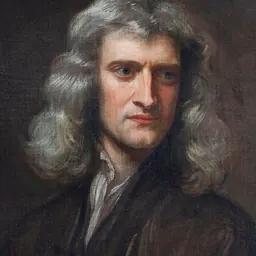
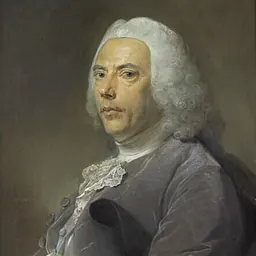

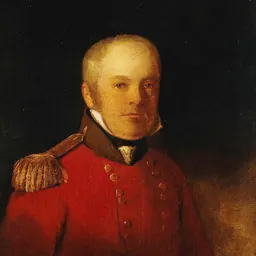
Related people
Same field, nearest in time





Contemporaries
People whose lives overlapped Antonio de Ulloa's

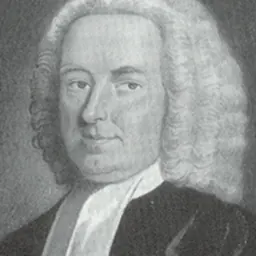


Frequently asked questions
Who was Antonio de Ulloa?
Spanish explorer, naval officer, colonial official, and naturalist
When was Antonio de Ulloa born?
Antonio de Ulloa was born on 12 January 1716 in Seville.
When did Antonio de Ulloa die?
Antonio de Ulloa died on 5 July 1795 in Isla de León.
What was Antonio de Ulloa's occupation?
Antonio de Ulloa was a naturalist, writer, military personnel, astronomer, naval officer and seafarer.
What nationality was Antonio de Ulloa?
Antonio de Ulloa was Spanish.
Sources & further reading
Cite this page
APA: Biography.guide. (2026). Antonio de Ulloa. https://biography.guide/antonio-de-ulloa/
MLA: "Antonio de Ulloa." Biography.guide, https://biography.guide/antonio-de-ulloa/.
Chicago: "Antonio de Ulloa." Biography.guide. https://biography.guide/antonio-de-ulloa/.
Data last updated: 2026-09-20 · Spot an error? Report a correction.
Page generated 2026-09-27 05:29 UTC