
About Johnny Dundee
Lived 1893 – 1965 (aged 71). Johnny Dundee was an Italian boxer.
Johnny "The Scotch Wop" Dundee (November 19, 1893 – April 22, 1965) was an American featherweight and the first world junior lightweight champion boxer who fought from 1910 until 1932. He was inducted into the Ring Magazine Hall of Fame in 1957 and the International Boxing Hall of Fame class of 1991.
Early life Giuseppe Curreri was born in Sciacca, Agrigento, Sicily, Italy to Calogero Curreri (1857 - 1937) and Ignazia Segreto (1859 - 1921). His father was a fisherman. His parents immigrated to the United States in 1909. He was raised on Manhattan's West Side where his father owned a fish shop on 41st Street and 9th Avenue.
Professional career Name Curreri was given his ring name in 1910 by his former manager, Scotty Montieth, of Dundee, Scotland.
In 1913, Dundee earned a world title fight in his 87th fight. He fought 20 rounds against World Featherweight champion, Johnny Kilbane in Vernon, California. The fight ended in a draw.
In 1921, Dundee won the junior lightweight championship when his opponent, George "KO" Chaney, was disqualified in the fifth round. The win made Dundee the first universally recognized junior lightweight champion in history.
A year later, Dundee knocked out Danny Frush. Following the win, he was recognized, in New York State, as the featherweight champion of the world.
On July 6, 1922, Dundee defeated "Little" Jackie Sharkey by unanimous decision in a fifteen-round Junior Lightweight title bout at Ebbets Field in Brooklyn. Sharkey was briefly down in the fourth round, and again in the fifteenth. Though the fight was close Dundee won "by a shade". He was criticized for the fight with the New York Evening World writing that Dundee was "losing his fighting fire" by allowing the bout to go fifteen rounds.
Dundee successfully defended his junior lightweight crown three times before losing it to Jack Bernstein on May 30, 1923. They fought at the Coney Island Velodrome, in front of a crowd of 15,000. Dundee was expected to win; however, he lost a unanimous fifteen-round decision despite knocking Bernstein down in the third round.
Less than two months later, Dundee was given the opportunity to fight featherweight champion, and war hero, Eugene Criqui. He lost 28 pounds in four weeks in order to fight him, making 126 pounds on the days of the fight. Criqui had beaten Johnny Kilbane two days after Dundee's fight with Bernstein, with a sixth-round knockout. However, part of the contract for this fight required that he give Dundee a shot at the title within sixty days. Fifty-four days later, on July 26, 1923, Dundee fought Criqui. He knocked him down four times and beat him by a fifteen-round decision.
Controversial decision On December 17, 1923, Dundee fought Jack Bernstein again at Madison Square Garden. The fight ended in a Split Decision. Several newspapers, including the New York Times, wrote that the judges made the wrong decision. Author Ken Blady wrote that several of the judges may have been influenced to vote against Bernstein. The Milwaukee Sentinel echoed by printing "By probably the worst decision in local boxing history, Johnny Dundee of Jersey City regained his Junior Lightweight championship from Jack Bernstein."
In contrast, the Milwaukee Journal noted that Dundee finished strong in the bout, and agreed with the decision. The paper also noted "the sentiment of the crowd, based on the fighters' round by round showing, was that Bernstein had won easily."
With the win, Dundee had unified the featherweight title and the junior lightweight title.
The last significant fight of his career was in 1927 when he challenged featherweight champion Tony Canzoneri, but lost a 15-round decision.
After a three-year retirement, Dundee tried to stage a comeback in 1932. However, two fights into it, he officially retired after posting a six-round decision win over Mickey Greb, and a 10th round lost to Al Dunbar.
Style In 1965, Al del Greco wrote that Dundee was regarded as a "good southpaw craftsman."
Johnny Dundee wasn't the greatest little man in boxing, but he was good, very good...no one could come off the ropes like him. Rivals backed away when Johnny sidles backward because he bounced off at the craziest angles. They lived at 301 W. 40th Street and had a daughter, also named Lucille, born in 1913.
After beating Frankie Callahan over 10 rounds, on March 16, 1915, the next day, Dundee filed a petition to divorce Lucille, claiming she "beat him up":
Several days later, his wife countersued on the grounds of his "uncontrollable temper." His wife claimed he knocked her unconscious six months into their marriage, and would often hit himself in the head with a pair of shoes, to the point of drawing blood. She also claimed he was a philanderer, and that when he left her he gave her a "farewell beating."
Legacy Dundee faced many great fighters in the featherweight, junior-lightweight, and lightweight divisions of his era including Benny Leonard (nine times), Lew Tendler (three times), and lightweight champions Freddie Welsh and Willie Ritchie. Dundee was knocked out only twice in his career – in 1917, he was knocked out in the first round by Willie Jackson in Philadelphia, and in 1929, he was knocked out in Montreal by Al Foreman in the 10th round.
Dundee was regarded as a skillful boxer with great footwork. Though he had little knockout power, he was widely regarded as being highly skilled at fighting off the ropes.
Statistical boxing website BoxRec lists Dundee as the #3 ranked featherweight of all time, while The Ring Magazine founder Nat Fleischer placed him at #4. The International Boxing Research Organization rates Dundee as the 5th best featherweight boxer ever and boxing historian Bert Sugar placed him 32nd in his Top 100 Fighters catalogue.
During his career he had 331 bouts. Only two fighters in history, Len Wickwar (463) and Jack Britton (350), had more fights.
Dundee was known to be highly regarded among the boxing community and his peers:
Johnny Dundee was strictly a product of a generation that has long since passed and will not return. He was a fighter in the era when boxing was in full flower, a superior craftsman among a lot of other superior craftsmen. Although he was once the featherweight champion of the world, he gained far more fame than fortune. When he died the other day, at the age of 74, the main legacy he left was the enduring friendships that this popular and amiable little guy collected over the years. unless otherwise stated.
Official record
All newspaper decisions are officially regarded as “no decision” bouts and are not counted in the win/loss/draw column.
Unofficial record
Record with the inclusion of newspaper decisions in the win/loss/draw column.
Don’t just read it —
keep it.
Full-length biographies made to live with: read them, listen on the way to work, watch them tonight.
- E-book
- Audio
- Video
Instant download · yours to keep · every purchase keeps this site free
Important facts
People in Johnny Dundee's life
Named in this biography and alive at the same time
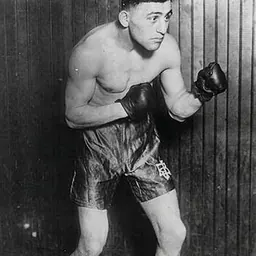


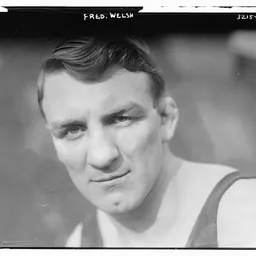

Related people
Same field, nearest in time



Contemporaries
People whose lives overlapped Johnny Dundee's


Frequently asked questions
Who was Johnny Dundee?
American boxer (1893–1965)
When was Johnny Dundee born?
Johnny Dundee was born on 19 November 1893 in Sciacca.
When did Johnny Dundee die?
Johnny Dundee died on 22 April 1965 in East Orange.
What was Johnny Dundee's occupation?
Johnny Dundee was a boxer.
What nationality was Johnny Dundee?
Johnny Dundee was Italian.
Sources & further reading
Cite this page
APA: Biography.guide. (2026). Johnny Dundee. https://biography.guide/johnny-dundee/
MLA: "Johnny Dundee." Biography.guide, https://biography.guide/johnny-dundee/.
Chicago: "Johnny Dundee." Biography.guide. https://biography.guide/johnny-dundee/.
Data last updated: 2026-09-26 · Spot an error? Report a correction.
Page generated 2026-09-27 05:14 UTC