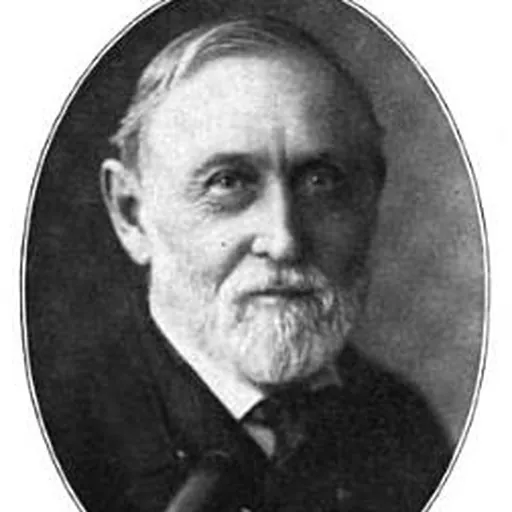
John William McGarvey
American minister, author and religious educator
About John William McGarvey
Lived 1829 – 1911 (aged 82). John William McGarvey was a christian minister, educator, theologian, author and parson.
John William (J. W.) McGarvey (March 1, 1829 – October 6, 1911) was a minister, author, and religious educator in the American Restoration Movement. He was particularly associated with the College of the Bible in Lexington, Kentucky (today Lexington Theological Seminary) where he taught for 46 years, serving as president from 1895 to 1911. He was noted for his opposition to theological liberalism and higher criticism. His writings are still influential among the heirs of the conservative wing of the Restoration Movement, the Churches of Christ and Christian churches and churches of Christ.
Youth McGarvey was born in Hopkinsville, Kentucky, to John McGarvey, an Irish immigrant who was proprietor of a general store, and Sarah Ann Thomson. John McGarvey died when J.W. was four years old, and after a very few years his mother married Gurdon Flower Saltonstall, a doctor and hemp farmer. The McGarvey/Saltonstall family moved to Tremont, Illinois, in 1839. J.W. attended a private school there taught by James Kellogg. Tremont was heavily populated with transplanted New Englanders, including his Connecticut-bred teacher Kellogg, and was a broadening experience for young McGarvey.
McGarvey's religious upbringing was significant; his mother had been a student of the prominent Restoration Movement leader Barton W. Stone, and his stepfather left a portion of his inheritance to Alexander Campbell's Bethany College, with the interest to go toward the tuition of any of his sons that might attend.
Bethany College McGarvey attended Bethany College from 1847 to 1850, where he was taught by Alexander Campbell, W. K. Pendleton, and Robert Richardson. McGarvey was baptized by Pendleton in 1848. Though he was pursuing Classical studies and not ministry at Bethany, he determined to become a preacher if his speaking ability developed sufficiently by the time of his graduation.
McGarvey received top honors in his graduating class, and was asked to deliver the traditional commencement address in Greek—which he said "was the result of a vast amount of hunting for Greek words in textbooks, lexicons and the New Testament." Alexander Campbell's opinion of him is seen in the fact that Campbell tried on multiple occasions to hire McGarvey to the faculty of Bethany College, first as professor of mathematics, then some years later with a more tempting position as professor of ancient languages. McGarvey declined to take the position; after graduation he rejoined his family, by then in Fayette, Missouri, where he taught a boys' school while pursuing his own studies of the Bible.
Civil War As the Civil War loomed nearer, McGarvey took a stand unpopular to both sides of the controversy. On a political level he was "against secession, and also against coercion," but on moral grounds he opposed Christian participation in armed conflict. The extreme partisanship in Missouri led to some of McGarvey's fellow preachers being imprisoned; in 1863 one Augustus Payne was even murdered, though the motivations remain unclear. Moses E. Lard, a prominent fellow leader of the Restoration Movement in Missouri, wrote to McGarvey confiding that he was afraid for his life and had greatly curtailed his travels; on McGarvey's advice he removed to Kentucky for the duration of the war. Though often "bitterly denounced by extreme partisans," McGarvey himself suffered nothing worse than censorship by the Missouri press. In 1845 (just before McGarvey's enrollment at Bethany College) his mentor Alexander Campbell published an influential series of articles on the slavery issue in which he declared himself opposed to slavery in principle, but desirous of a gradual emancipation and peaceful end to the institution. Central to the problem was this question: Does the New Testament's regulation of master-slave relationships legitimize the existence of the institution itself? He is known to have owned two slaves, given to him by his in-laws;
The congregation at Dover, Missouri, had a large attendance of slaves at its regular services, where by custom of the day they were forced to sit in the balcony. McGarvey preached an additional service each month for the African-American community, at which this rule was not observed. On one occasion during the winter of 1860–1861, a group of whites that McGarvey describes as "rude fellows of a baser sort" tried to prevent the gathering, claiming danger of sedition. Other whites arrived and protested this interference with a lawful religious assembly. When one disputant punctuated his argument with a well-aimed snowball, McGarvey interposed himself between the two groups, fearing that the next volley might come from pistols. He persuaded the men to disperse, and continued with the service.
In 1862 McGarvey followed the advice he had given Lard and took refuge in Kentucky, where his political neutrality reflected the mood of the majority. He was offered the ministry at the Main Street Christian Church in Lexington, Kentucky, and moved to the city where he would spend the remainder of his career.
College of the Bible In 1865 Kentucky University (formerly Bacon College) merged with Transylvania University and the state Agricultural and Mechanical School to form a newly chartered Kentucky University in Lexington. The theology faculty was reconstituted as the College of the Bible, the first full-fledged seminary associated with the Restoration Movement (the institution became independent from the University of Kentucky again in 1877, and is today known as Lexington Theological Seminary).
Preaching and publishing activities By 1867 the curriculum had expanded to the extent that McGarvey resigned his position with the Main Street church, though he continued to preach for various congregations on an appointment basis. When the Main Street Christian Church grew to the point of overflowing its meeting place, a second congregation was organized, the Broadway Christian Church. McGarvey preached for this group until it grew to the point of requiring a full-time minister, and maintained his membership there for decades.
Partly through gratitude for McGarvey's assistance in helping him find work in Kentucky during the war, Moses Lard requested McGarvey to be a regular contributor to a new religious publication, Lard's Quarterly. This journal contained, in McGarvey's later estimation, "some of the most admirable literature produced by the brotherhood," though it lasted through only five volumes (1863–1868). McGarvey's articles were sometimes written under the pseudonym "Kappa".
After the demise of Lard's Quarterly, Moses Lard assembled a larger editorial team including McGarvey for another new publication, Apostolic Times. After only three years, various circumstances left the paper in the hands of only McGarvey and one other editor. McGarvey contributed to this weekly publication for about seven years before his teaching and preaching duties caused him to withdraw. This publication included, in 1869–1870, his series of articles that later was published as A treatise on the eldership.
During the late 1870s McGarvey undertook one of his most ambitious projects. Lands of the Bible aimed at providing a more systematic survey of the Holy Lands than similar volumes had previously done. In his typically concentrated, systematic manner of working, he completed his research in the spring and summer of 1869 and published the work in 1870. He also issued a revision of his Commentary on the book of Acts.
The John Bryan Bowman affair In 1873 the regent of the College of the Bible, John Bryan Bowman, fell under criticism for his handling of the institution's finances. McGarvey was accused of being an agitator in this situation, with the intent of removing Bowman from his position. Whatever his role in the initial controversy may have been, when called upon to explain his concerns about the management of the college finances, McGarvey's public statements led to an open breach with Bowman. A vote of the board of curators removed him from his professorship. The dispute cost the college a number of supporters and students, and may have contributed to its eventual collapse and reorganization.
Perhaps to counter the decline of the College of the Bible, the board reinstated McGarvey in 1875, but the college was unable to meet its financial obligations and was forced to reorganize in 1877. The newly constituted College of the Bible was independent of Kentucky University and the state university's component, the Agricultural and Mechanical College. (In 1878 the state-sponsored portion of Kentucky University again became independent; it later became the University of Kentucky. Because of the ensuing confusion over nomenclature, Kentucky University reverted to its historic name of Transylvania University in 1908. The independent College of the Bible took its current name, Lexington Theological Seminary, in 1965.
Controversy in final years As the 19th century drew to a close, McGarvey witnessed increasing division within the Restoration Movement over specific interpretations of Scripture and over the hermeneutical approach as a whole. McGarvey held these tenets as essential to the Restoration plea: a belief in the plenary inspiration of the Bible, and a sola scriptura approach to Christian life, doctrine, and church polity. He accepted "lower criticism" (i.e., establishing the text of the Bible from the extant manuscript traditions) but rejected "higher criticism", which he saw as undermining the authority of the Bible and thus the foundations of Christian belief and practice. He died in Lexington, Kentucky, the scene of the majority of his work, in 1911.
List of works This list is an expansion on that compiled by Ernie Stefanik for Restoration Movement Texts, ed. Hans Rollmann, Memorial University of Newfoundland.
Commentaries and pedagogical materials A Commentary on Acts of Apostles: with a Revised Version of the Text.. Cincinnati: Wrightson, 1863. (Original published Lexington, KY: Transylvania Printing and Publishing, 1872.) New Testament Commentary: Vol. I--Matthew and Mark. Delight, AR: Gospel Light, 1875. Commentary on the Gospel of Mark. Cincinnati, OH: Central Book Concern, 1881. A Series of Fifty-Two Bible Lessons, for the Use of Intermediate and Advanced Classes in the Sunday School. Louisville, KY: Guide Printing and Publishing, 1889. New Commentary on Acts of Apostles. Cincinnati, OH: Standard Publishing Company, 1892. Class Notes on Sacred History, Vol. I: The Pentateuch, Joshua, Judges, Ruth and Job. 3rd ed. Lexington, KY: John Marcrom, 1893–1894. Class Notes on Sacred History, Vol. II: 1 Samuel to Nehemiah. 3rd ed. Lexington, KY: John Marcrom, 1893–1894. Class Notes on Sacred History, Vol. III: The Four Gospels. Revised ed. Bowling Green, KY: John Marcrom, 1893–1894. Class Notes on Sacred History, Vol. IV: Acts of the Apostles. Cincinnati, OH: Standard Publishing, 1893–1894. A Guide to Bible Study. Edited with introduction, notes, and appendix by Herbert L. Willett. Hand-book Series for the Bethany C. E. Reading Courses. Cleveland, OH: The Reading Committee, 1897. The Fourfold Gospel, or A Harmony of the Four Gospels. With Philip Y. Pendleton. Cincinnati, OH: Standard Publishing, 1914. Expanded electronic edition, 1997. Thessalonians, Corinthians, Galatians and Romans. With Philip Y. Pendleton. Standard Bible Commentary, v.3. Cincinnati, OH: Standard Publishing Company, 1916.
Topical books and tracts Letters to Bishop McIlvaine, on "Christian Union". New York: T. Holman, 1865. A Treatise on the Eldership. Lexington, KY(?), 1870. (Link is to a reprint published Murfreesboro, TN: DeHoff Publications, 1950.) Lands of the Bible: a Geographical and Topographical Description of Palestine, with Letters of Travel in Egypt, Syria, Asia Minor and Greece. Philadelphia, PA: J. B. Lippincott and Company, 1881. Evidences of Christianity. Cincinnati, OH: Guide Printing and Publishing Company, 1886. What Shall We Do about the Organ? With F. G. Allen. Louisville, KY: Guide Printing and Publishing, 1886. (Link is to reprint published Nashville, TN: McQuiddy Printing Company, 1903.) Jesus and Jonah. Cincinnati, OH: Standard Publishing Company, 1896. Baptism. Vest-Pocket Series Christian Tracts. Cincinnati, OH: Standard Publishing, 1900. Authorship of the Book of Deuteronomy, with its Bearings on the Higher Criticism of the Pentateuch. Cincinnati, OH: Standard Publishing Company, 1902. The Organ Question: a Visit to Texas. Unpublished MSS, 1903. (Held by Eastern Kentucky University.) Short Essays in Biblical Criticism Reprinted from columns in The Christian Standard, 1893–1904. Cincinnati, OH: Standard Publishing Company, 1910(?). The Autobiography of J. W. McGarvey (1829-1911). Edited with a foreword by De Loris Stevenson and Dwight E. Stevenson. Lexington, KY: The College of the Bible, 1960. (From McGarvey's unfinished notes ca. 1905-1906?) The Disciples of Christ. Cincinnati, OH: American Christian Missionary Society, ca. 1909.
Articles and contributions to larger works
"Hymns and Hymn Books." Lard's Quarterly 1 (March 1864), pp. 319–329. "Instrumental Music in Churches," Millennial Harbinger 35/11 (November 1864), pp. 510–514. Response by Amos Sutton Hayden, 36/1 (January 1865), pp. 38–41. Response by McGarvey, 36/2 (February 1865), pp. 88–91. Second response by Hayden, 36/4 (April 1865), pp. 182–186. Second response by McGarvey, 36/4 (April 1865), pp. 186–188. "The Term 'Confession'," Millennial Harbinger 36/6 (June 1865), pp. 241–244. "The Witness of the Spirit." The Living Pulpit of the Christian Church: a Series of Discourses, Doctrinal and Practical. Ed. W. T. Moore. Cincinnati, OH: R. W. Carroll and Co., 1868. pp. 327–338. "Jewish Wars as Precedents for Modern Wars." Lard's Quarterly 5/2 (April 1868), pp. 113–126. "Review of 'W.' on Missionary Societies." Lard's Quarterly 5/2 (April 1868), pp. 194–200. Review of "W."'s article "Missionary Societies," Lard's Quarterly 5/1 (January 1868), pp. 32–52. "The Indwelling Spirit." Gems of Thought by J. H. Smart. St. Louis, MO: Christian Publishing Company, 1883. pp. 10–15. "Palestine Exploration, What Remains to be Done." The Old Testament Student 6/3 (1886), pp. 69–70. "A 'symposium' on Expository Preaching." The Old and New Testament Student 10/6 (1890), pp. 369–378. "Grounds on Which We Receive the Bible as the Word of God, and the Only Rule of Faith and Practice." The Old Faith Restated, Being a Restatement, by Representative Men, of the Fundamental Truths and Essential Doctrines of Christianity as Held and Advocated by the Disciples of Christ, in Light of Experience and of Biblical Research. Ed. J. H. Garrison. St. Louis, MO: Christian Publishing Company, 1891. pp. 11–48. "Credibility and inspiration of the New Testament." The Old and New Testament Student 13/3 (1891). "Broadway Christian Church: Historical Sketch." The Church Record. New York: Church Record Publishing Co., 1897. pp. 40–43. "Introduction." Churches of Christ: A Historical, Biographical, and Pictorial History of Churches of Christ in the United States, Australasia, England, and Canada. Ed. John T. Brown. Louisville, KY: John P. Morton and Company, 1904. Pp. ix-x. "The Prints of the Nails." On the Lord's Day: A Manual for the Regular Observance of the New Testament Ordinances. Ed. J. A. Lord Cincinnati, OH: Standard Publishing Company, 1904. pp. 41–43. "Introduction." That They All May Be One: A Century's Progress and Brief Historical Review of the Effort to Promote Christian Union and Restore New Testament Christianity, 1809-1909. Ed. T. J. Gore. Melbourne: Austral Publishing Company, 1909. Pp. ix-x. "Alexander Campbell, Barton W. Stone and Walter Scott." Centennial Convention Report. Ed. W. R. Warren. Cincinnati, OH: Standard Publishing Company. pp. 381–384.
Sermons and addresses Dedicatory Sermon, Campbell Street Church of Christ, Louisville, KY. Lexington, KY: Transylvania Printing and Publishing, 1877. "Preachers' Methods." The Missouri Christian Lectures, Delivered at Independence, Mo., July 1883. St. Louis, MO: John Burns, 1883. pp. 83–112. With "Discussion on J. W. M'Garvey's Lectures" by A. Proctor, Isaac Errett, J. A. Dearborn, and W. S. Priest, pp. 112–116; "J. W. M'Garvey's Rejoinder," pp. 116–117. Coöperation in Mission Work: an Address Delivered by Prof. J. W. McGarvey before the Alabama Missionary Convention. Louisville, KY: Guide Printing and Publishing, 1891. "Church Government." The Missouri Christian Lectures, Selected from the Courses of 1889, 1890, and 1891. St. Louis, MO: Christian Publishing Company, 1892. pp. 188–209. Sermons, Delivered in Louisville, Kentucky, June-September, 1893. Louisville, KY: Guide Printing and Publishing, 1894. "Reminisence" in "The President's Address" by L. L. Carpenter. Centennial Convention Report. Ed. W. R. Warren. Cincinnati, OH: Standard Publishing Company. pp. 319–321 [317-332]. Chapel Talks, Delivered before the Student Body of the College of the Bible in 1910 and 1911. Lufkin TX: The Gospel Guardian Company, 1956.
Don’t just read it —
keep it.
Full-length biographies made to live with: read them, listen on the way to work, watch them tonight.
- E-book
- Audio
- Video
Instant download · yours to keep · every purchase keeps this site free
Important facts
People in John William McGarvey's life
Named in this biography and alive at the same time




Related people
Same field, nearest in time

Contemporaries
People whose lives overlapped John William McGarvey's




Frequently asked questions
Who was John William McGarvey?
American minister, author and religious educator (1829-1911)
When was John William McGarvey born?
John William McGarvey was born on 1 March 1829 in Hopkinsville.
When did John William McGarvey die?
John William McGarvey died on 6 October 1911.
What was John William McGarvey's occupation?
John William McGarvey was a christian minister, educator, theologian, author and parson.
Sources & further reading
· Wikipedia: John William McGarvey
· DBpedia: John William McGarvey
Cite this page
APA: Biography.guide. (2026). John William McGarvey. https://biography.guide/john-william-mcgarvey/
MLA: "John William McGarvey." Biography.guide, https://biography.guide/john-william-mcgarvey/.
Chicago: "John William McGarvey." Biography.guide. https://biography.guide/john-william-mcgarvey/.
Data last updated: 2026-09-20 · Spot an error? Report a correction.
Portrait: Wikimedia Commons · author & licence
Page generated 2026-09-27 04:58 UTC