
About John Tukey
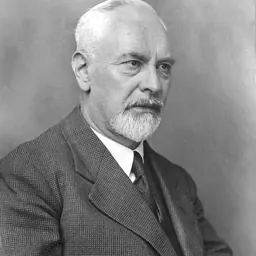
Lived 1915 – 2000 (aged 85). John Tukey was an American politician, statistician, university teacher, computer scientist, chemist and mathematician.
education =
John Wilder Tukey (; June 16, 1915 – July 26, 2000) was an American mathematician and statistician, best known for the development of the fast Fourier Transform (FFT) algorithm, the box plot and for laying the foundations of the field of exploratory data analysis. The Tukey range test, the Tukey lambda distribution, the Tukey test of additivity, and the Teichmüller–Tukey lemma all bear his name. He is also credited with coining the term bit and the first published use of the word software.
Biography Tukey was born in New Bedford, Massachusetts, in 1915, to a Latin teacher father and a private tutor. He was mainly taught by his mother and attended regular classes only for certain subjects like French.
During World War II, Tukey worked at the Fire Control Research Office and collaborated with Samuel Wilks and William Cochran. After the war, he returned to Princeton, dividing his time between the university and AT&T Bell Laboratories. In 1962, Tukey was elected to the American Philosophical Society. He became a full professor at 35 and founding chairman of the Princeton statistics department in 1965. Tukey's sister-in-law Phyllis married the English statistician Frank Anscombe.
Tukey retired in 1985. He died in New Brunswick, New Jersey, on July 26, 2000.
Accolades
Tukey was awarded the National Medal of Science by President Nixon in 1973.
Data analysis and foundations of data science
John Tukey contributed greatly to statistical practice and data analysis in general. In fact, some regard John Tukey as the father of data science. At the very least, he pioneered many of the key foundations of what came later to be known as data science.
Making sense of data has a long history and has been addressed by statisticians, mathematicians, scientists, and others for many many years. During the 1960s, Tukey challenged the dominance at the time of what he called "confirmatory data analysis", statistical analyses driven by rigid mathematical configurations. Tukey emphasized the importance of having a more flexible attitude towards data analysis and of exploring data carefully to see what structures and information might be contained therein. He called this "exploratory data analysis" (EDA). In many ways, EDA was a precursor to data science.
Tukey also realized the importance of computer science to EDA. Graphics are an integral part of EDA methodology and, while much of Tukey's work focused on static displays (such as box plots) that could be drawn by hand, he realized that computer graphics would be much more effective for studying multivariate data. PRIM-9, the first program for viewing multivariate data, was conceived by him during the early 1970s.
This coupling of data analysis and computer science is what is now called data science.
Tukey articulated the important distinction between exploratory data analysis and confirmatory data analysis, believing that much statistical methodology placed too great an emphasis on the latter. Though he believed in the utility of separating the two types of analysis, he pointed out that sometimes, especially in natural science, this was problematic and termed such situations uncomfortable science.
A. D. Gordon of the University of St. Andrews offered the following summary of Tukey's principles for statistical practice:
Tukey's lectures were described to be unusual. McCullagh described his lecture given in London in 1977:
Contributions to other fields
Tukey made wide-ranging contributions beyond statistics, once reportedly remarking, "The best thing about being a statistician is that you get to play in everyone's backyard." The term bit was first used in an article by Claude Shannon in 1948.
Tukey is also credited with the first use of the word software to describe computer programs in a 1958 article in American Mathematical Monthly.
Don’t just read it —
keep it.
Full-length biographies made to live with: read them, listen on the way to work, watch them tonight.
- E-book
- Audio
- Video
Instant download · yours to keep · every purchase keeps this site free
Important facts
People in John Tukey's life
Named in this biography and alive at the same time




Related people
Same field, nearest in time






Contemporaries
People whose lives overlapped John Tukey's



Frequently asked questions
Who was John Tukey?
American mathematician (1915-2000)
When was John Tukey born?
John Tukey was born on 16 June 1915 in New Bedford.
When did John Tukey die?
John Tukey died on 26 July 2000 in New Brunswick.
What was John Tukey's occupation?
John Tukey was a politician, statistician, university teacher, computer scientist, chemist and mathematician.
What nationality was John Tukey?
John Tukey was American.
Sources & further reading
Cite this page
APA: Biography.guide. (2026). John Tukey. https://biography.guide/john-tukey/
MLA: "John Tukey." Biography.guide, https://biography.guide/john-tukey/.
Chicago: "John Tukey." Biography.guide. https://biography.guide/john-tukey/.
Data last updated: 2026-09-20 · Spot an error? Report a correction.
Page generated 2026-09-27 05:23 UTC