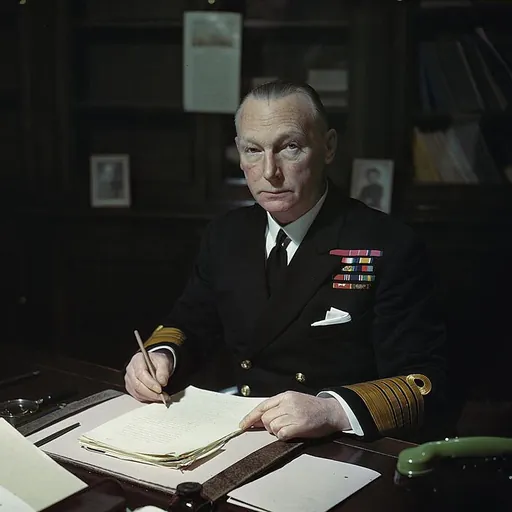
John Tovey, 1st Baron Tovey
Royal Navy admiral of the fleet
About John Tovey, 1st Baron Tovey
Lived 1885 – 1971 (aged 85). John Tovey, 1st Baron Tovey was a British military personnel, politician and admiral.
Admiral of the Fleet John Cronyn Tovey, 1st Baron Tovey, (7 March 1885 – 12 January 1971), sometimes known as Jack Tovey, was a Royal Navy officer. During the First World War he commanded the destroyer at the Battle of Jutland and then commanded the destroyer at the Second Battle of Heligoland Bight. During the Second World War he initially served as Second-in-Command of the Mediterranean Fleet in which role he commanded the Mediterranean Fleet's Light Forces (i.e. cruisers and destroyers). He then served as Commander-in-Chief of the Home Fleet and was responsible for orchestrating the pursuit and destruction of the . After that he became Commander-in-Chief, The Nore with responsibility for controlling the east coast convoys and organising minesweeping operations.
Early life and career Tovey was born on 7 March 1885 at Borley Hill, Rochester, Kent, the youngest child (of eleven) of Lieutenant Colonel Hamilton Tovey, RE, and Maria Elizabeth Goodhue. He was educated at Durnford School, Langton Matravers (joining the school shortly before another future British admiral, Geoffrey Oliver) and as a naval cadet in the training ship Britannia at Dartmouth (15 January 1900 – 15 May 1901). Tovey passed his Seamanship examination (1st class) and on his promotion to sub-lieutenant on 15 July 1904, he was transferred from Ariadne. In his time as a midshipman, his performance ratings had all been good or better with comments such as "zealous" and "painstaking", although not without criticisms ("Painstaking & steady" and "Manner bad with the men").
In 1905, Tovey attended courses in gunnery, torpedo, navigation and pilotage. In November, he was appointed to the flagship, , at the request of Admiral Sir Arthur Wilson, the Commander-in-Chief of the Channel Fleet.
Tovey was appointed, on 18 May 1908, to the armoured cruiser , on the China Station, where he served for two years. During 1910, 1911 and 1912, there was a series of appointments to ships of differing types. He was subsequently posted to the destroyer . and finally on a line of enemy battleships. Onslow had been severely damaged during the attack on the Wiesbaden, nonetheless, Tovey ordered that the remaining torpedoes be fired at the battleships, although no hits were scored. Despite heavy shelling, Onslow was towed to safety by (herself also damaged) and eventually both ships reached Aberdeen. As a result of this action, Tovey was promoted to commander (effective 30 June 1916), Mentioned in Dispatches and subsequently awarded the DSO in 1919.
Tovey remained on Onslow until October 1917, when he transferred to command the new destroyer HMS Ursa, which he commanded at the Second Battle of Heligoland Bight in November 1917. It was during this time that he was awarded the Croix de Guerre. In April 1918, Tovey took command of another new destroyer, , and was also appointed to the staff of the Captain Superintendent Torpedo-Boat Destroyers; these appointments lasted until June 1919, after the war's end. In August 1924, Tovey was briefly appointed as Captain (D), 2nd Destroyer Flotilla, for exercises before attending a course at the Senior Officers' School, Sheerness. ) to command the Naval Barracks at Chatham, an important depot and training establishment involved in the rapid naval expansion of the 1930s. When promoted to rear admiral on 27 August 1935, he continued at Chatham until he attended a Senior Officers Tactical Course from September 1937 and a Senior Officers' War Course at the Royal Naval War College, Greenwich, in December 1937. Until February 1938, Tovey also acted as Naval ADC to the King.
Second World War For some months after Britain and Germany had declared war, the Mediterranean was a backwater. Italy remained nominally neutral with her fleet as only a potential threat and France maintained a powerful naval force as a counter to the Italians. As a result, British naval forces were reduced as units were transferred to meet immediate threats elsewhere and Tovey's command was reduced to five elderly Australian and V and W-class destroyers The five British cruisers engaged the Italian flotilla at extreme range and sank the Espero, while the other two escaped. The British use of ammunition had been extensive and, due to this and the shortage of stores at Alexandria, convoys from Malta were postponed. Cunningham was not pleased and commented that the ammunition used was "tremendous ... to sink this one 1,000-ton destroyer".
On 9 July, Tovey commanded the Light Forces (cruisers and destroyers) at the indecisive Battle of Calabria. In October 1940 he became commander of the 1st Battle Squadron.
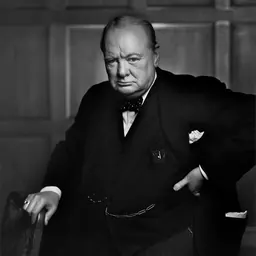
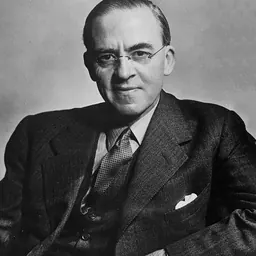
Admiral Tovey with Winston Churchill and Sir Stafford Cripps. In November 1940 Tovey was appointed Commander-in-Chief of the Home Fleet with the acting rank of admiral (he was promoted to the substantive rank on 30 October 1942). As commander of the Home Fleet he had several clashes with Dudley Pound, the First Sea Lord, and Winston Churchill but retained the post for the normal two and a half years' duration.
After the Bismarck action, Tovey resisted moves to court-martial the ' captain, John Leach, and Frederic Wake-Walker, the admiral commanding and , who had broken off the battle with Bismarck after had been sunk. Tovey was appalled and a row ensued between Tovey and his superior, Pound. Tovey stated that the two officers had acted correctly in the circumstances. He threatened to resign his position and appear at any court-martial as 'defendant's friend' and defence witness. No more was heard of the proposal. King George V was extremely short of fuel and had stayed at the scene far longer than Tovey had thought it could, so another cause for friction between Tovey and his political and professional superiors was a signal that his flagship was to remain in action until Bismarck had sunk, "Bismarck must be sunk at all costs ... even if it ... means towing King George V". In these circumstances it would have been highly likely that the ship would have been lost to either U-boats or aircraft. The signal had initially caused amusement amongst Tovey and his staff, but later its risks and implications angered them; Tovey later said "It was the stupidest and most ill-considered signal ever made" and he made it clear that he would have disobeyed and risked court-martial.
Tovey also had responsibility for the safe passage of the Arctic Convoys to Russia. The Soviet Union subsequently awarded him the Order of Suvorov, First Class, for "distinguished services in securing the passage of convoys to the U.S.S.R.", but Tovey never wore the medal or its ribbon. He had repeated disagreements with Pound and Churchill over the conduct of these convoys, arguing that summer operations were too dangerous due to the long daylight hours and the lack of air cover.
Despite these serious differences and although Churchill considered Tovey to be "obstructionist" and attempted to get him sacked, Tovey lasted the full two and a half years of his appointment. At the end of this appointment, when departing Scapa, Tovey was carried to Thurso by , the latter namesake of his notable World War I command. Other major responsibilities were the organisation of the logistics for the forthcoming Allied invasion of Sicily and the Normandy landings. In retirement, Tovey took up a number of appointments; his seat in the House of Lords, Third Church Estates Commissioner (1948–1952), President of The Royal Naval Benevolent Trust and of the King George's Fund for Sailors and President of the Shaftesbury Training Ships. These kept him so busy that he had little time for his pastimes of golf and fishing. His wife, Aida, suffered from arthritis and, as the condition worsened, Tovey gave up his external activities to devote his time to caring for her.
Don’t just read it —
keep it.
Full-length biographies made to live with: read them, listen on the way to work, watch them tonight.
- E-book
- Audio
- Video
Instant download · yours to keep · every purchase keeps this site free
Important facts
People in John Tovey, 1st Baron Tovey's life
Named in this biography and alive at the same time


Related people
Same field, nearest in time
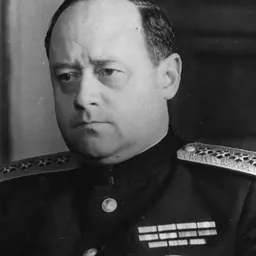
Contemporaries
People whose lives overlapped John Tovey, 1st Baron Tovey's
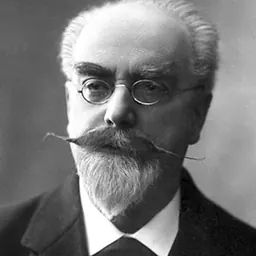
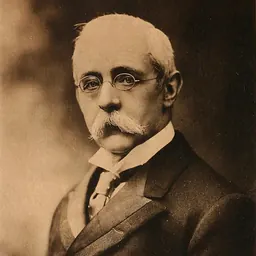
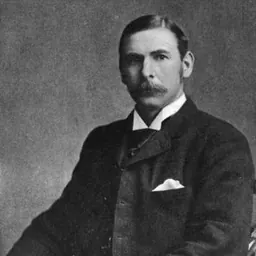

Frequently asked questions
Who was John Tovey, 1st Baron Tovey?
Royal Navy admiral of the fleet (1885-1971)
When was John Tovey, 1st Baron Tovey born?
John Tovey, 1st Baron Tovey was born on 7 March 1885 in Rochester.
When did John Tovey, 1st Baron Tovey die?
John Tovey, 1st Baron Tovey died on 12 January 1971 in Funchal.
What was John Tovey, 1st Baron Tovey's occupation?
John Tovey, 1st Baron Tovey was a military personnel, politician and admiral.
What nationality was John Tovey, 1st Baron Tovey?
John Tovey, 1st Baron Tovey was British.
Sources & further reading
· Wikipedia: John Tovey, 1st Baron Tovey
· DBpedia: John Tovey, 1st Baron Tovey
Cite this page
APA: Biography.guide. (2026). John Tovey, 1st Baron Tovey. https://biography.guide/john-tovey-1st-baron-tovey/
MLA: "John Tovey, 1st Baron Tovey." Biography.guide, https://biography.guide/john-tovey-1st-baron-tovey/.
Chicago: "John Tovey, 1st Baron Tovey." Biography.guide. https://biography.guide/john-tovey-1st-baron-tovey/.
Data last updated: 2026-09-25 · Spot an error? Report a correction.
Portrait: Wikimedia Commons · author & licence
Page generated 2026-10-04 09:56 UTC