
About John Pine
Lived 1690 – 1756 (aged 65–66). John Pine was a cartographer, exlibrist, engraver, reproductive printmaker, illustrator and copper engraver.
John Pine (1690–1756) was an English engraver, print-seller with a shop on St Martin's Lane in London, print publisher, and cartographer notable for his artistic contribution to the Augustan style and Newtonian scientific paradigm that flourished during the British Enlightenment.
Early life and apprenticeships
Little is known of Pine's parents or ancestry. Biographical sketches frequently refer to him as black or of African ancestry, especially in the lore of Freemasonry, a society with which he became affiliated. However, the United Grand Lodge of England has not been able to verify such claims.
Pine began his career as an apprentice goldsmith. He was also apprenticed to the French engraver Bernard Picart (1673–1733), who was associated with a movement described by historian Margaret Jacob as the "Radical Enlightenment".
Career
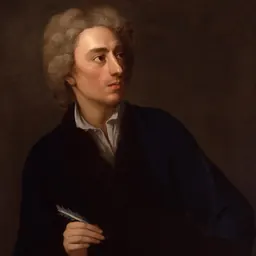
Pine was a close friend of William Hogarth, who also began his career as an engraver. It appears likely that their careers were mutually reinforcing, even though Pine remained principally in the field of engraving while Hogarth became a famous painter. Hogarth painted Pine several times; once, in his 1749 engraving The Gate of Calais, depicting him as a fat friar. Both men served as governors of the Foundling Hospital, He entirely engraved text and illustrations for the two volumes, which consist of hundreds of pages. Subscribers who underwrote the project included the Prince of Wales, Handel, Alexander Pope, and Hogarth. Pine's daughter, Charlotte, married the painter Alexander Cozens, so John Robert Cozens was his grandson.
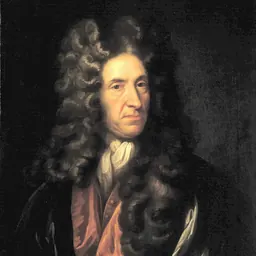
Selected works The "Armada 1588. 22 July: the burning and capture of Miguel de Oquendo's ship San Salvador" (Plate V, from The Tapestry Hangings of the House of Lords), published by Pine in 1739 Frontispiece, Daniel Defoe's Robinson Crusoe, 1719 (a collaboration with John Clark (1683-1736)) Illustrations, Edward Ward's Nuptial Dialogues and Debates, 1722 Frontispiece, Constitutions of the Free-Masons, 1723 Illustrations, King George I at ceremonies restoring the Order of the Bath, 1725 Illustrations, Henry Pemberton's View of Newton's Philosophy, 1728 Frontispiece, "Some Account of the Design of the Trustees for the Establishment of the Colony of Georgia in America", 1732 Reproduction of "King John's Great Charter", 1733 Quinti Horatii Flacci Opera, 1733–1737 The Tapestry Hangings of the House of Lords: representing the several engagements between the English and Spanish fleets, in the ever memorable year MDLXXXVIII, 1739 "A Plan of the Cities of London and Westminster", 1746, in 24 sheets (a collaboration with surveyor John Roque) "A View of the House of Commons", 1749 "Virgil", containing the Bucolics and Georgics, 1753
Don’t just read it —
keep it.
Full-length biographies made to live with: read them, listen on the way to work, watch them tonight.
- E-book
- Audio
- Video
Instant download · yours to keep · every purchase keeps this site free
Important facts
People in John Pine's life
Named in this biography and alive at the same time





Related people
Same field, nearest in time




Contemporaries
People whose lives overlapped John Pine's


Frequently asked questions
Who was John Pine?
British engraver (1690–1756)
When was John Pine born?
John Pine was born in 1690 in London.
When did John Pine die?
John Pine died on 4 May 1756 in London.
What was John Pine's occupation?
John Pine was a cartographer, exlibrist, engraver, reproductive printmaker, illustrator and copper engraver.
Sources & further reading
Cite this page
APA: Biography.guide. (2026). John Pine. https://biography.guide/john-pine/
MLA: "John Pine." Biography.guide, https://biography.guide/john-pine/.
Chicago: "John Pine." Biography.guide. https://biography.guide/john-pine/.
Data last updated: 2026-09-20 · Spot an error? Report a correction.
Page generated 2026-09-27 05:22 UTC